


A lively science musical, hands-on experiments and hundreds of eager students brought German–Indonesian educational cooperation to life in Jakarta on October 6. At the opening of Science Film Festival 2026, artificial intelligence became an invitation to explore how technology works—and how to use it responsibly.
Bringing Science Within Reach
Now in its 17th Indonesian edition, the Goethe-Institut initiative runs through November 14, combining film screenings and experiments for elementary to senior high school students. According to the festival’s organizer, this year’s programme presents 20 films from seven countries, with activities planned across 70 cities and regencies.
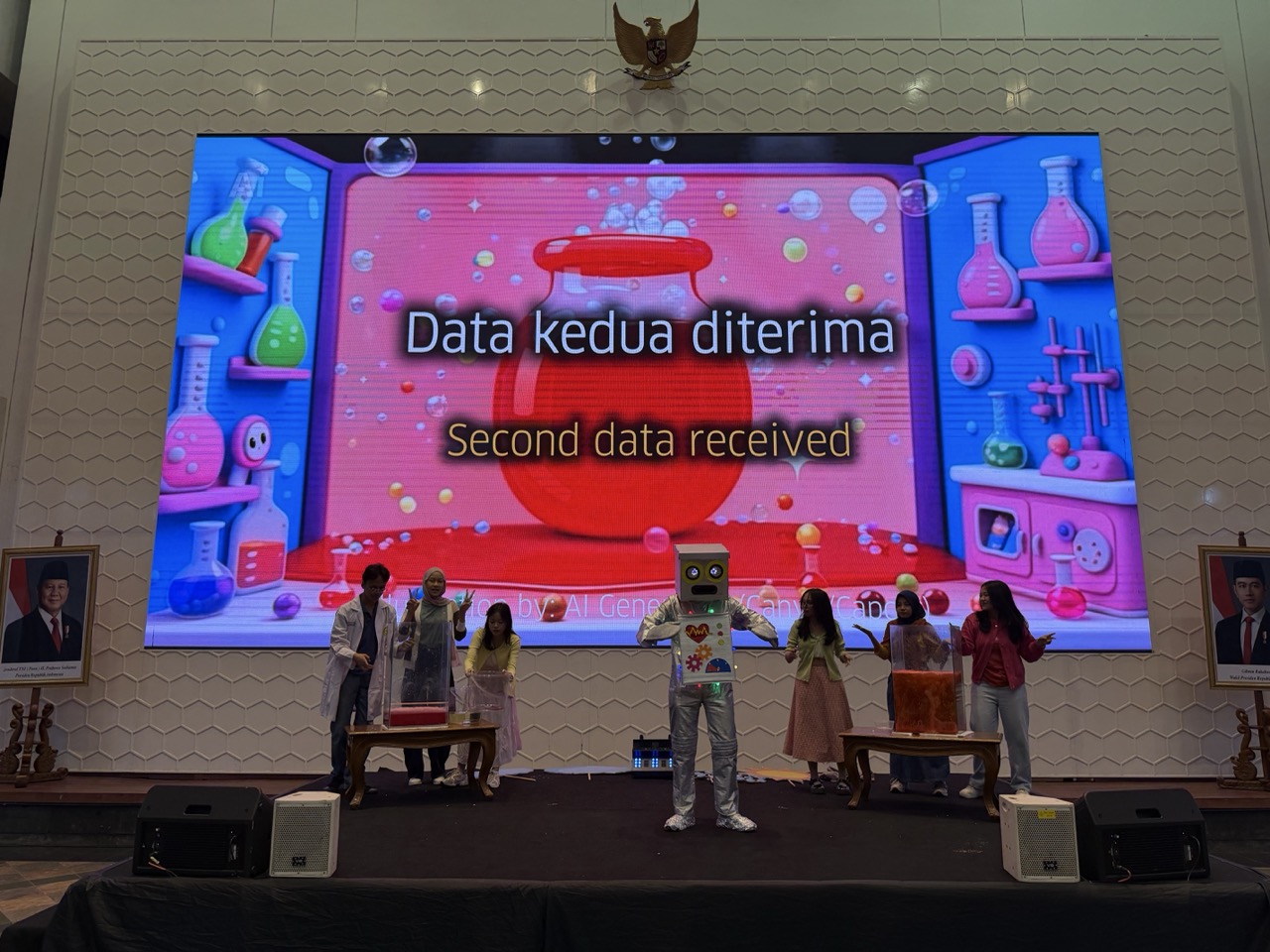
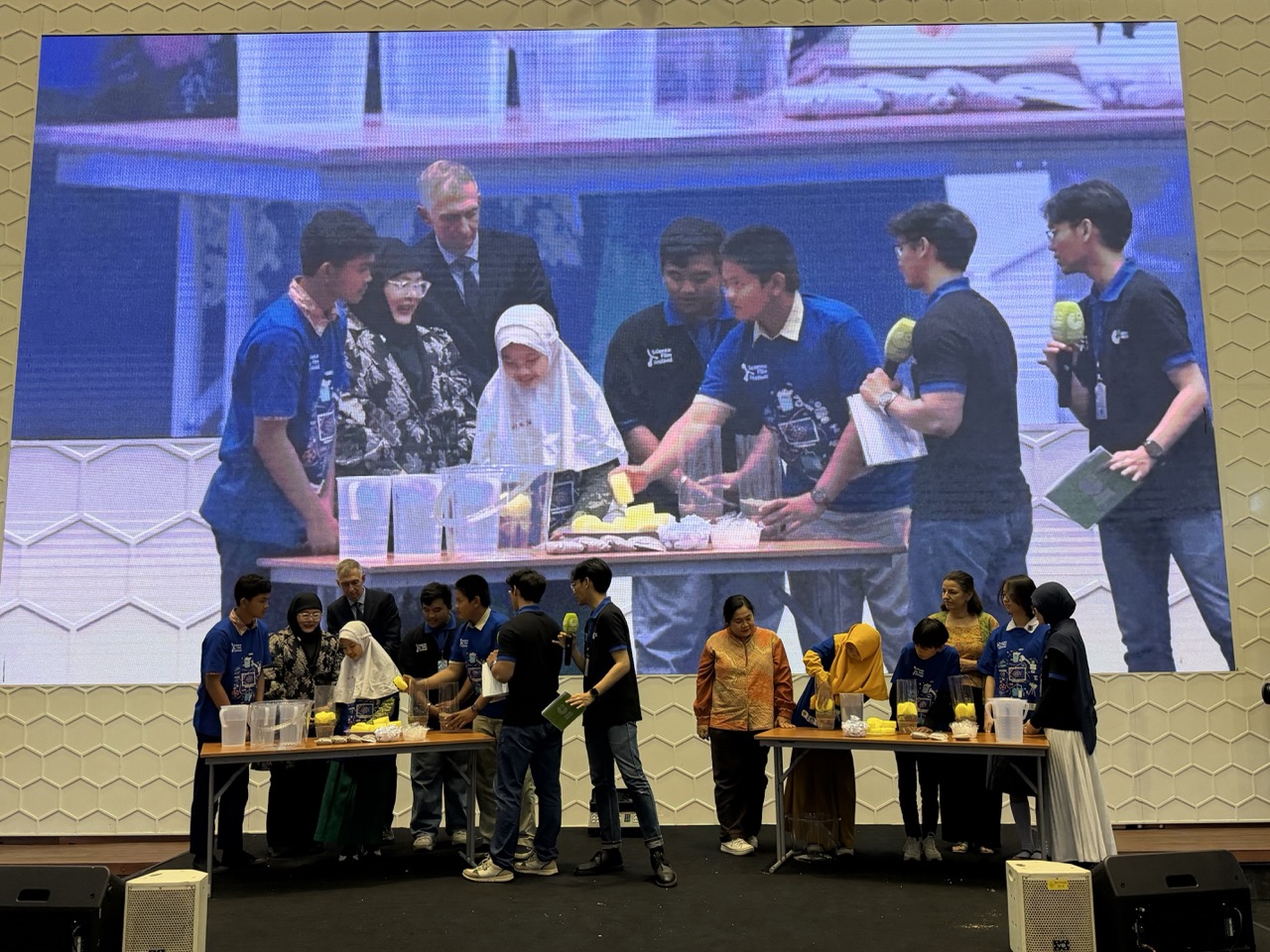
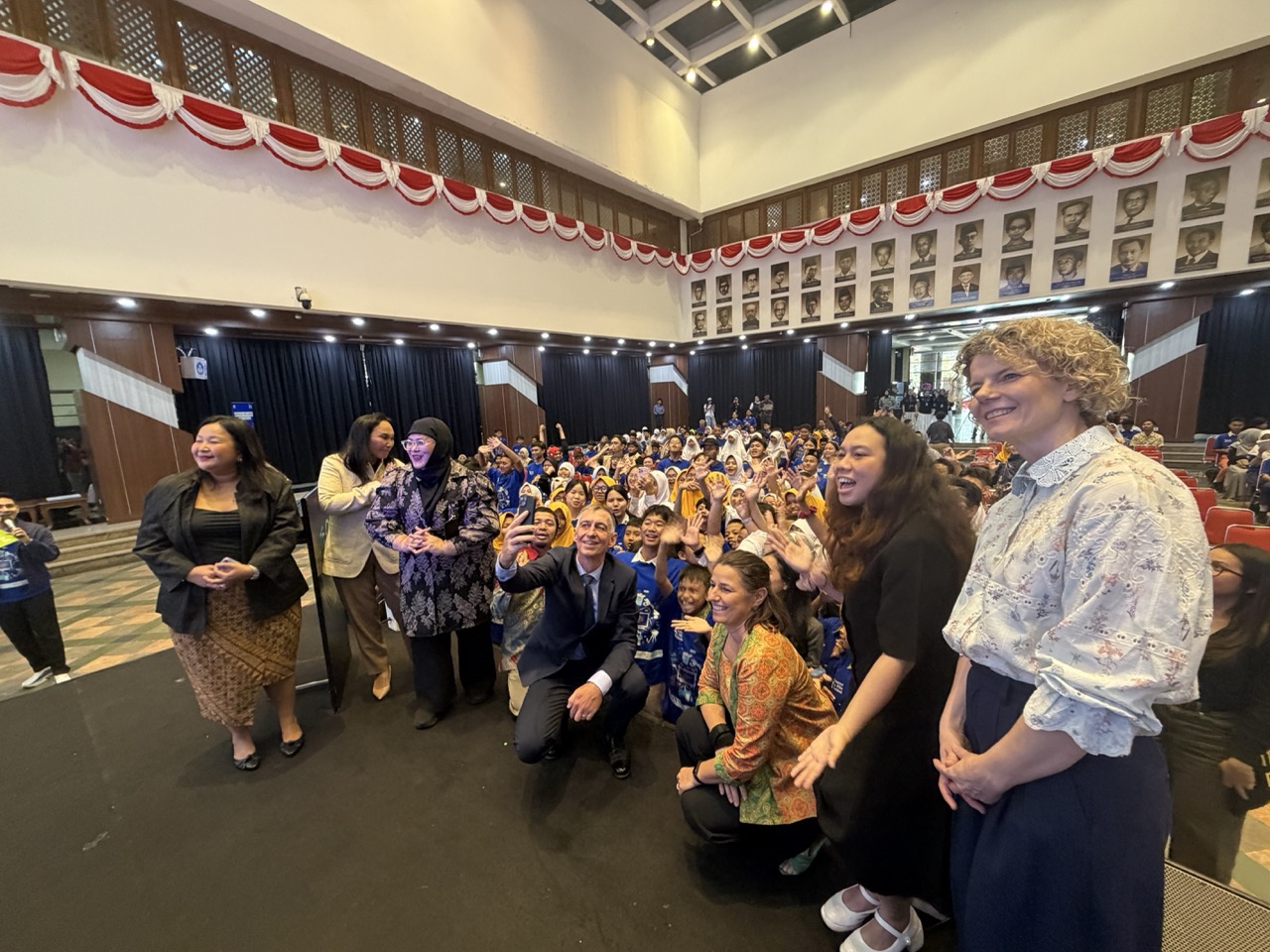
More than 250 students attended the opening at the Ministry of Primary and Secondary Education’s Plaza Insan Berprestasi in Central Jakarta. A spirited musical performance preceded experiments featuring dancing bubbles, chemical reactions and disappearing colours, giving young audiences opportunities to observe, question and discover.
Opening remarks were delivered by Constanze Michel, Goethe-Institut regional director for Southeast Asia, Australia and New Zealand; German Ambassador Ralf Beste; and Maila Dinia Husni Rahiem, the education minister’s special adviser for STEM development and teacher competencies.
“Through film screenings from around the world, we hope to inspire young people in Indonesia to explore science in an engaging and fun way,” Michel said in the festival’s opening.
Helping Students Think Critically About AI
Two German films screened at the opening placed familiar digital habits under the microscope: Nine and a Half – ChatGPT in the Classroom and Nine and a Half – Protecting the Climate in the Digital World.
Their subjects connect directly with students’ lives. What happens when a chatbot helps with schoolwork? How can learners assess its answers? What environmental costs accompany the digital services they use?
These questions give the festival an educational purpose beyond introducing new technology. Understanding AI also means examining accuracy, authorship, privacy and the electricity and resources required to operate digital systems.
“At the same time, we must ensure that AI is developed and used responsibly, with people, transparency, data protection and scientific integrity at its heart,” Beste said in the press release.
The international programme similarly explores AI’s potential to monitor biodiversity, improve renewable energy systems and model climate change, alongside its ethical and environmental challenges. Its 2026 official selection comprises 96 films from 29 countries, with selections varying between participating countries.
Among the students, the message could be refreshingly straightforward. Asked what advice he would offer his friends, Faiz from East Jakarta said: “Don’t spend too much time on your phone.”
His response brought a human perspective to an afternoon devoted to technology: digital literacy includes knowing when to step away from the screen.
Building Connections Through Discovery
For Beste, presenting German films to Indonesian audiences is also a form of diplomacy—an opportunity to learn about one another as technological change reshapes societies.
That exchange depends on sustained cooperation between cultural institutions, educators and students. This year’s partners include the Ministry of Primary and Secondary Education, the German Embassy, Rolls-Royce and Universitas Negeri Jakarta.
The partnership already has a substantial educational footprint. Goethe-Institut’s 2025 report recorded 74,857 participants across 70 Indonesian cities, with experiments led by 22 Universitas Negeri Jakarta students. Their involvement illustrates how university students can help younger learners approach science with confidence.
Taking Curiosity Beyond Jakarta
The 2026 programme extends to locations including Aceh Besar, Ende, Tobelo, Kupang, Maumere and Waingapu. Screenings at schools, universities, science centres and community spaces, alongside online sessions, are intended to bring the experience closer to students across the archipelago.
Its reach rests on a practical combination: international films introduce ideas, while local educators help students explore them through discussion and experimentation. The challenge is to turn a memorable festival visit into curiosity that continues in classrooms and at home.
As AI becomes more familiar, this German–Indonesian collaboration offers young audiences something essential: space to ask questions. The lasting achievement will be students who leave excited about science—and better prepared to think for themselves.


