The Airbus A380 is usually named as the world's largest passenger aircraft. But it was never the biggest plane in the sky. That title belonged to a Soviet-built cargo aircraft that only one airline ever flew, and only one aircraft was ever finished.
The Antonov An-225 Mriya, the heaviest aircraft ever to fly, with a maximum takeoff weight of 640 tonnes. It was built in Ukraine in the 1980s to carry a space shuttle on its back. In February 2022, it was destroyed in the fighting at Hostomel Airport near Kyiv during the Russo-Ukrainian war.
Before that, the Mriya made a handful of stops in Southeast Asia, and one country in saw it more often than any other.
Meet the An-225 Mriya
The An-225 began as part of the Soviet space programme.
In the 1980s, the Soviet Union needed an aircraft to carry the Buran space shuttle and components of the Energia rocket, so Antonov, the Soviet aircraft manufacturer, developed and built the Mriya for the job. According to Antonov, the aircraft first flew on 21 December 1988.
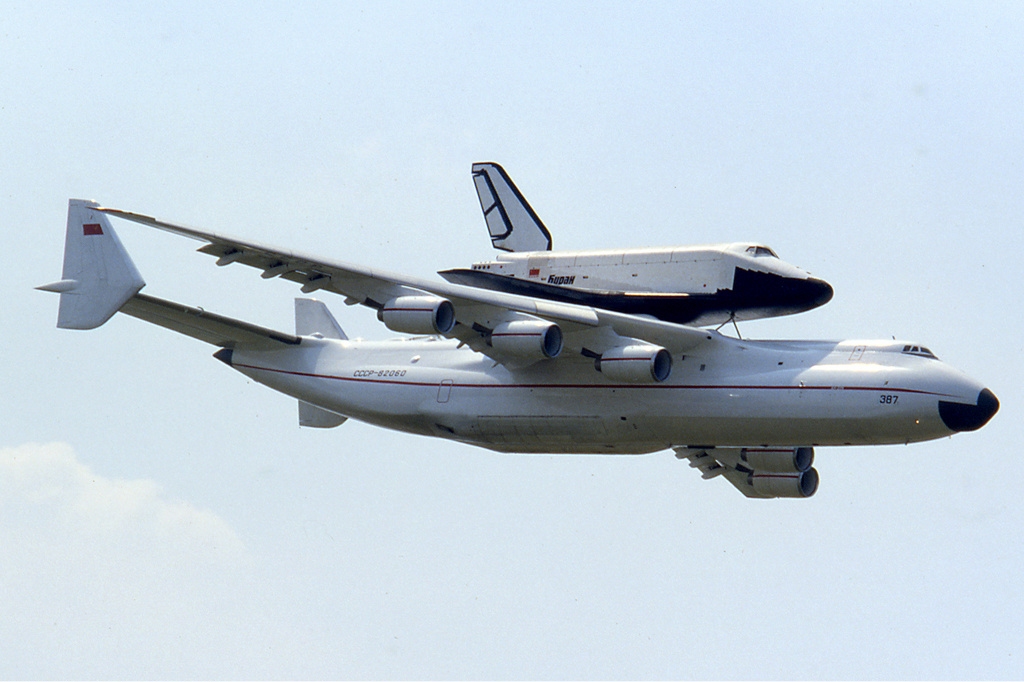
Its name is Ukrainian for "dream".
Antonov lists the aircraft at 84 meters long with an 88.4 meter wingspan and a maximum takeoff weight of 640 tonnes. Six turbofan engines powered the aircraft, which could carry up to 250 tonnes of cargo.
The Buran programme did not last. After the Soviet Union collapsed, it was eventually cancelled in 1993, leaving the Mriya without its original mission. The aircraft was later overhauled and returned to flight in 2001, when it also received its type certificate. It then entered commercial service as a heavy-lift freighter, according to Antonov.
It went on to haul loads few other aircraft could take, including generators and other oversized industrial cargo, and set around 240 world records, according to Antonov. Among them were a total payload of about 253.8 tonnes, a single piece of cargo weighing 187.6 tonnes, and a load 42.1 meters long.
Guinness World Records also lists the 187.6 tonne generator as the heaviest single item ever airlifted. Only one An-225 was ever completed and flown. A second airframe was partly built, but it was never finished, according to Antonov.
Three Visits to Malaysia
Few airports could accommodate the An-225.
At maximum weight, the aircraft required a takeoff run of about 3,500 meters, according to EUROCONTROL. Its 88.4 meter wingspan also made runway, taxiway and apron clearance an important consideration. Its 32 wheel landing gear helped distribute the aircraft's enormous weight, although pavement strength remained a key requirement.
Kuala Lumpur International Airport (KLIA) met those requirements. Its three runways are 4,019, 4,000 and 3,960 meters long, all 60 meters wide, with flexible pavement sections rated PCN 100. Malaysia's Ministry of Transport also lists the An-225 among the largest cargo aircraft handled at KLIA.
The Mriya's first visit to Malaysia came on 2 December 2007. It was supposed to fly to Langkawi to deliver five helicopters for the Langkawi International Maritime and Aerospace Exhibition (LIMA), but the airport's apron could not accommodate its wingspan. It landed at KLIA instead, according to Malaysia Airports.
The second visit came on the morning of 14 May 2016. The Mriya was flying from Prague to Perth with a 117-tonne generator for Worsley Alumina Refinery in Western Australia, stopping in Turkmenbashi, Hyderabad and Kuala Lumpur along the way. It arrived at KLIA at around 8.30am and left for Perth at 5.30am the following day.
Presenting to you, Mriya! #MYairportsaircraft #plane #antonov #an225 https://t.co/44qNvll33O
— Malaysia Airports (@MY_Airports) May 14, 2016
About 150 KLIA and airline staff gathered to see the aircraft.
The third visit was on 14 April 2018, when the Mriya landed at KLIA at 7.10am. It was the aircraft's first commercial flight to Malaysia after more than a year of upgrades. It arrived from Dammam, Saudi Arabia, after an earlier stop in Leipzig, Germany, and its 24 crew stayed in Malaysia for three days before returning to Saudi Arabia.
Aku kerja malam ni. Ada Antonov AN225 parking kat klia skrg, aircraft paling besar dgn 6 enjin turbofan https://t.co/icTmGy7Z8j
— 𝐍𝐚𝐬 (@NasSuha_) April 14, 2018
Singapore had hosted the aircraft earlier, in 1994, when it appeared at the Asian Aerospace exhibition. After that, the Mriya returned to Southeast Asia three times, all through Malaysia.
What Happened to the Mriya?
The Mriya was at Hostomel Airport, near Kyiv, when Russia launched its full-scale invasion in February 2022. The airfield was one of the first major targets of the invasion, and the aircraft was reported destroyed on 27 February.
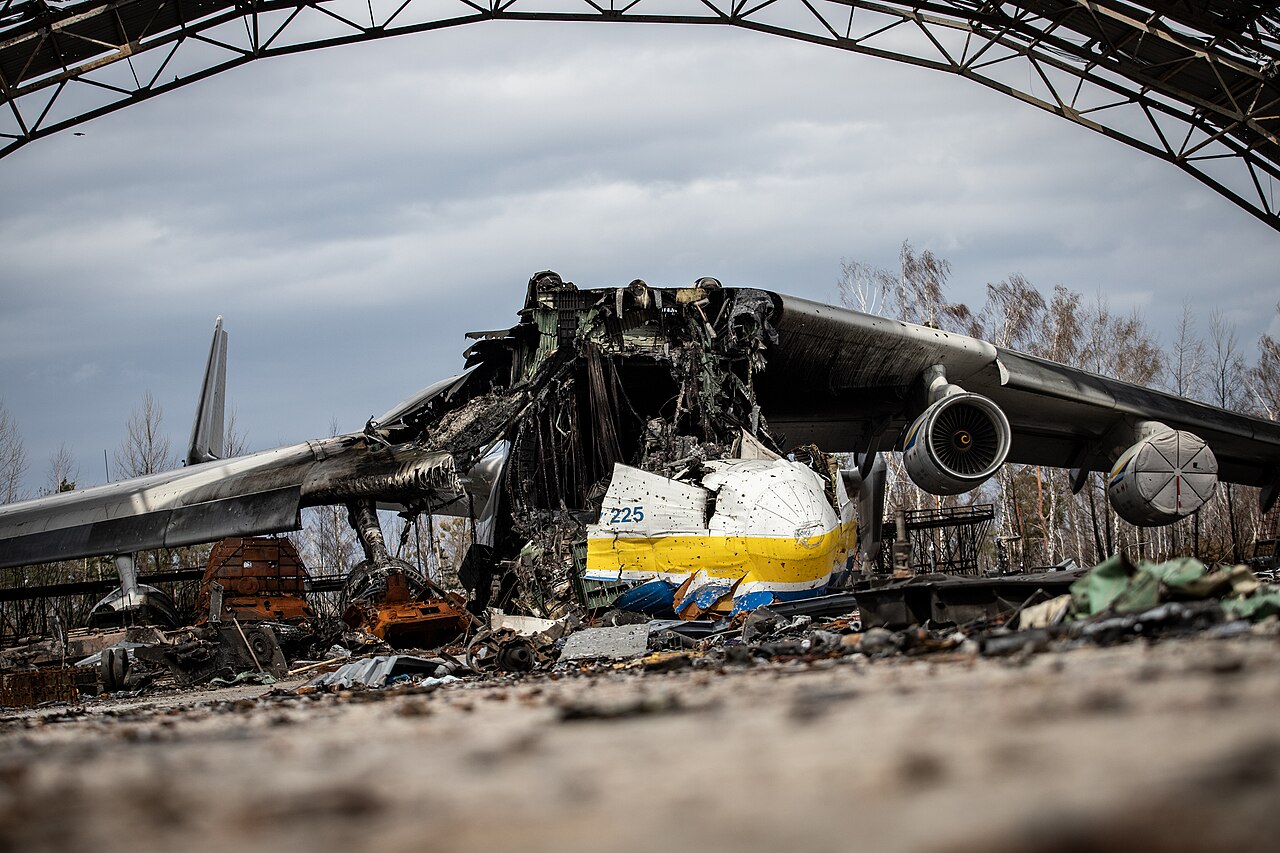
President Volodymyr Zelensky said Ukraine would build another Mriya.
In November 2022, Antonov said design work had begun on a replacement. The company said about 30% of the components needed were already available, while the plan involved the unfinished second airframe, usable parts from the wreck and new components. Antonov estimated the project would cost at least €500 million (roughly US$560 million).
Four years later, the project remains on hold. Antonov completed its initial assessment and salvage work in 2024, but said further reconstruction would resume after the end of hostilities. The final cost has also not been determined.