


A teacher’s work does not always end when a class is over. In schools and communities across Indonesia, teachers are also finding ways to address learning challenges, encouraging their peers to try new approaches, and sharing what they learn from the process.
That approach has now gained global recognition. The Collective Teacher Leadership Development Programme, developed by Guru Belajar Foundation, has been named one of three laureates of the UNESCO-Hamdan Prize for Teacher Development 2026.
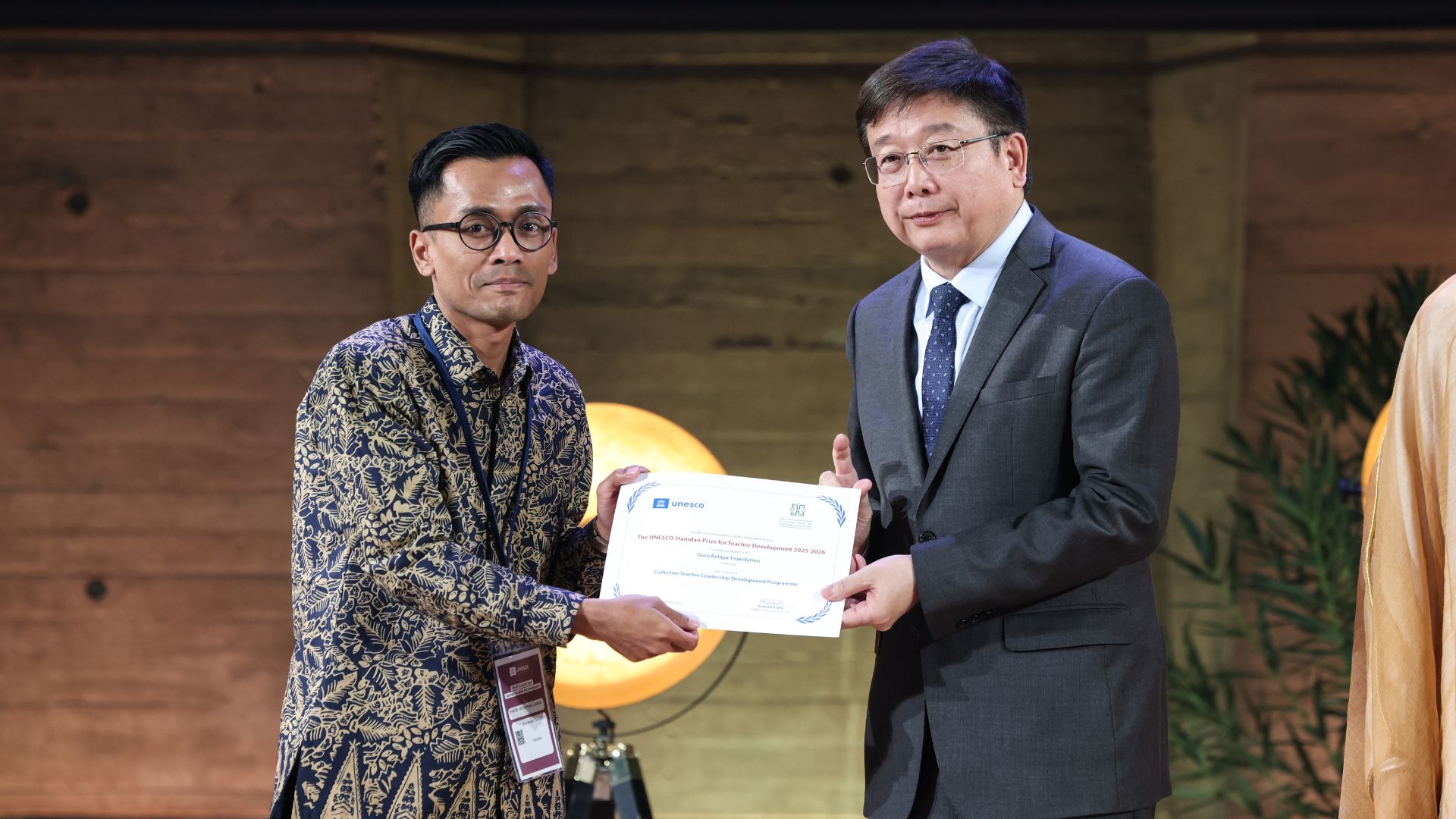
The award was announced during the World Teachers’ Day celebrations and UNESCO-Hamdan Prize ceremony at UNESCO Headquarters in Paris on October 5, 2026. The programme had previously been selected as one of 10 finalists from different countries.
Teachers Leading Change Together
The programme places teachers not simply as recipients of professional development, but as leaders who can help drive change within their schools and communities.
Teachers are encouraged to identify challenges around them, try actions to address those challenges, reflect on the results, and share their experiences with other educators.
According to UNESCO’s finalist profile, the programme has involved 61,717 teachers across 91 districts and cities in Indonesia. The idea of leadership here is not simply about one teacher leading others, but about turning individual experiences into knowledge that can be shared and built upon collectively.
“What we are building is collective teacher leadership,” said Bukik Setiawan, Strategic Development at Guru Belajar Foundation.
A Classroom Problem Becomes a Learning Mission
The approach is carried out through the Teacher Leadership Program, which has three stages of teacher development: Guru Belajar (Learning Teacher), Guru Berdampak (Impactful Teacher), and Guru Berdaya (Empowered Teacher).
The journey is supported by four principles known as 4K: Kemerdekaan (independence), Kompetensi (competence), Kolaborasi (collaboration), and Karier (career).
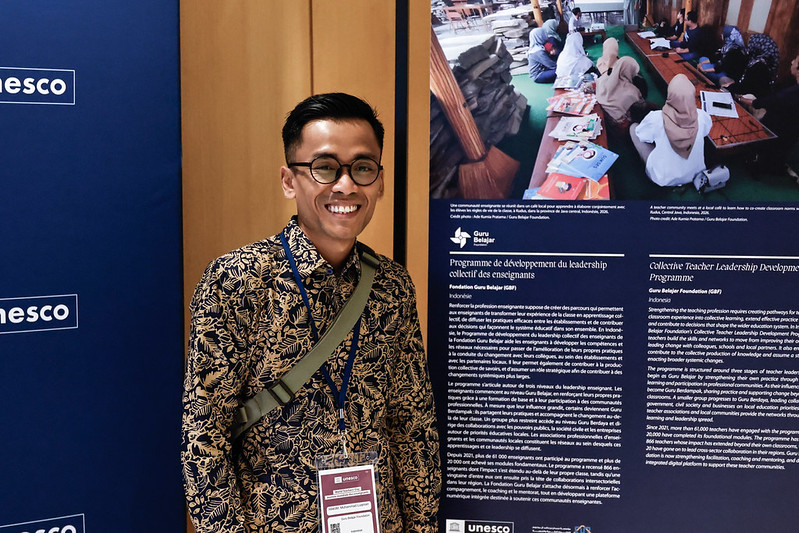
One key part of the programme is the misi belajar or learning mission. Teachers identify a challenge in their classroom, school, or community, then design and try an action to respond to it. They reflect on what happened rather than simply moving on to the next lesson or activity.
That experience is then documented through stories of change. Teachers describe their goals, challenges, actions, responses, reflections, and observed changes, along with the evidence available.
These stories allow other teachers to see not only the outcome, but also the process behind it. Through Temu Pendidik Nusantara, or the Nusantara Educators’ Gathering, teachers can share their experiences, learn from one another, and build collaborations.
From One Teacher’s Experience to Wider Change
For Najelaa Shihab, Founder of Guru Belajar Foundation, the approach is rooted in a belief that teachers can become leaders of change when they have the freedom and support to grow.
“Since the beginning, we have believed that teachers can become leaders of change when they have independence, competence, space to collaborate, and opportunities to develop their careers,” she said.
The UNESCO-Hamdan Prize therefore represents more than recognition for a teacher development programme. For Guru Belajar Foundation, it also brings a challenge to demonstrate how collective teacher leadership can create wider change across different contexts.
“The recognition from UNESCO-Hamdan strengthens our confidence in this approach. Our next task is to strengthen the evidence of change across different contexts,” Bukik said.
The foundation also sees collective teacher leadership as a possible way to address issues affecting schools, families, and communities. New applications will begin on a limited scale with partners and be evaluated before being expanded.
Over the next 12 months, Guru Belajar Foundation plans to consolidate its digital infrastructure to support teachers’ leadership journeys, while strengthening locally grounded facilitation, coaching, and mentoring.
Bringing Indonesian Teachers’ Experiences to the World
At the award ceremony in Paris, Guru Belajar Foundation was represented by Muhammad Luqman Hakim. For Luqman, the moment was not simply about representing an organisation on the global stage. It was also about bringing the experiences of teachers and communities that have shaped the programme over the years.
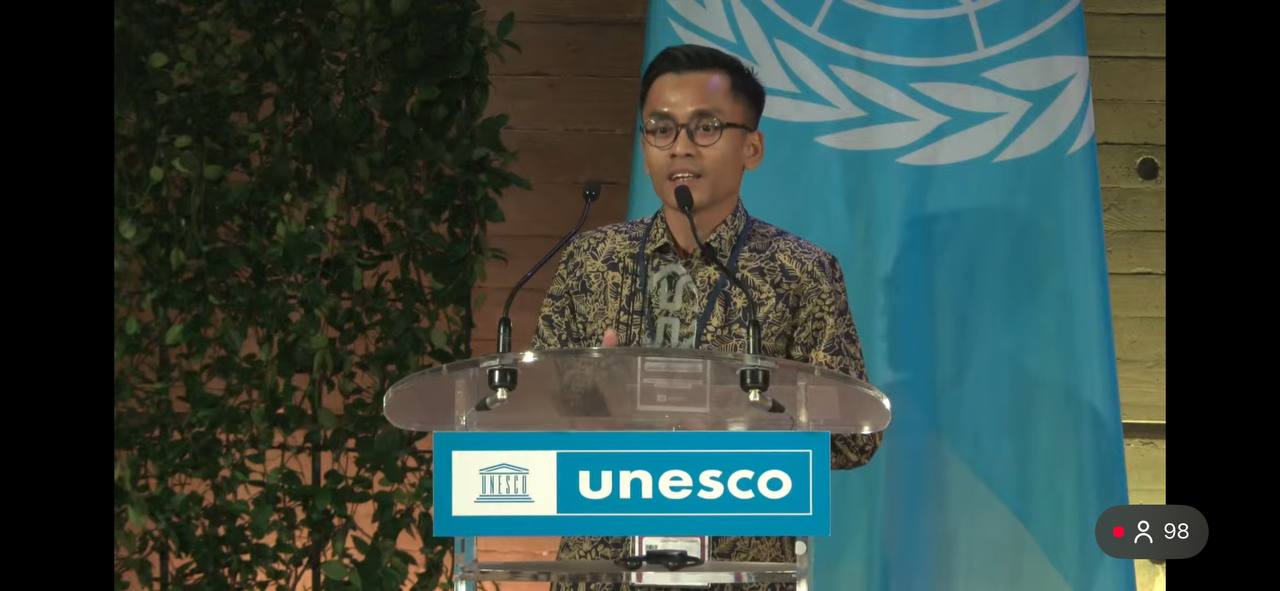
“When the name of Guru Belajar Foundation and Indonesia was mentioned at UNESCO, what came to my mind were teachers in different parts of the country who have been learning and moving together with their communities,” he said.
The award places those experiences in a broader global conversation about teacher development. It also shows how an approach built through teachers’ everyday experiences in Indonesia can travel beyond the classroom, and beyond Indonesia, as an example of how educators can learn, lead, and create change together.


