Operation Alpha, the secret acquisition of 32 former Israeli A-4 Skyhawks for the Indonesian Air Force, ran from 1978 to 1982 without any diplomatic relationship between Jakarta and Tel Aviv.
Intelligence personnel arranged both the purchase and the training of the crews.
It took years before the public learned they had really trained in Israel, and the pilots only began speaking publicly after Reformasi, the movement that brought down President Suharto in 1998 and ended his 32 year rule.
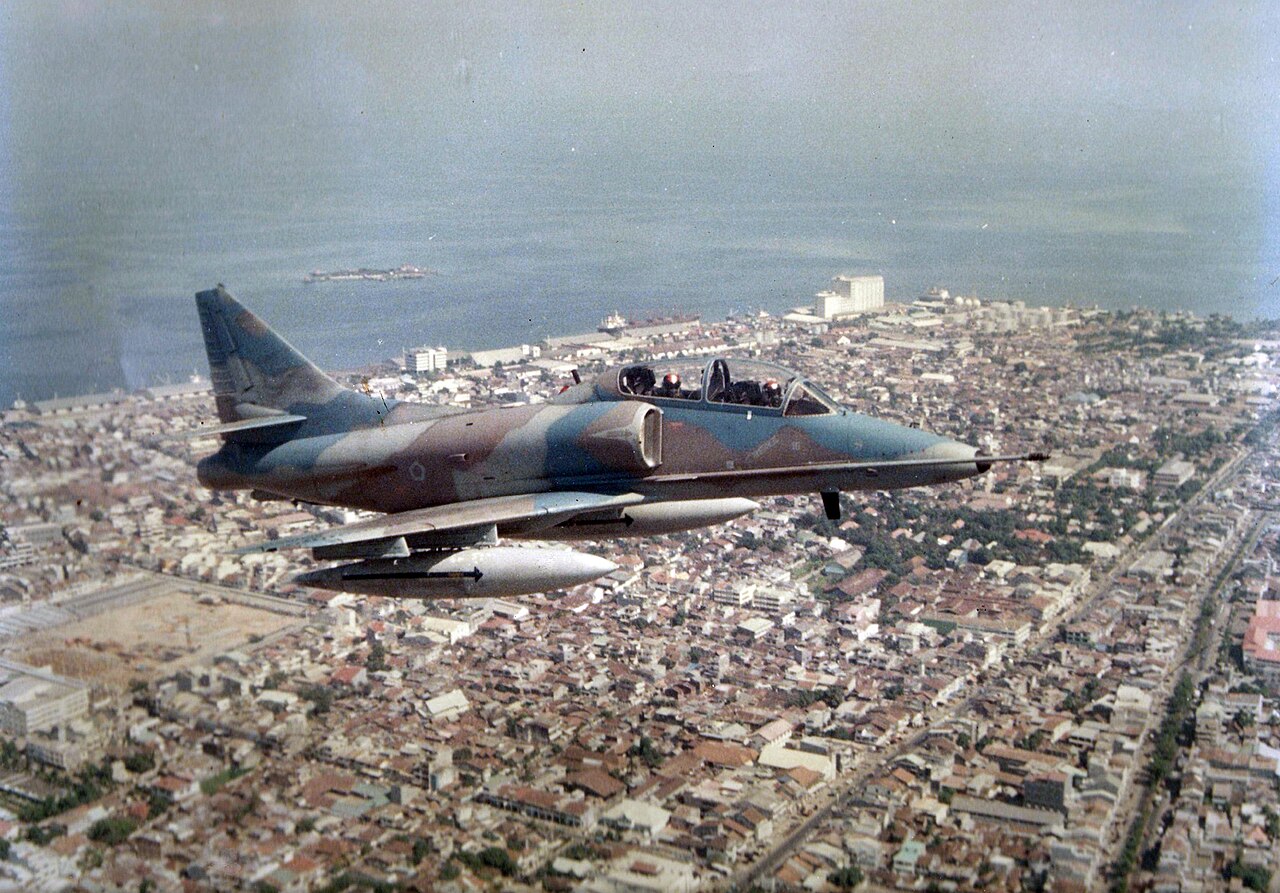
Why Indonesia Needed New Fighter Jets
A 2025 study in the Journal of Maritime Studies and National Integration, titled “National Interests are above International Affairs: Indonesian-Israeli Intelligence Operations on the Purchase of A-4 Skyhawks, 1978-1982”, lays out how the deal came together.
Indonesia’s air force had barely received a new aircraft since 1976.
After Jakarta fell behind on roughly $800 million in Soviet arms debt, Moscow cut off credit and spare parts in 1965, and much of the Soviet supplied fleet was grounded. When General M. Jusuf became defense minister in 1978, he set out to replace it with used but serviceable Western aircraft.
The A-4 Skyhawk was one of the aircraft Indonesia wanted to acquire. Jakarta initially sought 28 A-4Cs from the US for about $33.7 million, but the financing got held up in Congress. The Skyhawks, along with a planned purchase of F-5 fighters and M-16 rifles, would cost $176 million in total, leaving Indonesia $145 million short.
The US embassy advised Jakarta to wait. About a year later, Israel offered an alternative. It would supply 16 refurbished A-4s for $25 million, and a US embassy cable estimated the saving at about $900,000 per aircraft, with delivery sooner than the American route.
On paper, a European company would handle the refurbishment and shipping, making it appear to be the seller rather than Israel. The planes were sold “as is, where is,” meaning the seller was not responsible for any damage during transport, and the aircraft came with no warranty until they arrived in Indonesia.
The catch was political. Indonesia backed Palestinian independence and did not recognize Israel, so an open arms deal was out of the question. With US permission, the two governments handed the job to their intelligence services.
How Operation Alpha Worked
Officially, Indonesia was buying its Skyhawks from the United States, and the training was staged to match.
According to a 2020 account by aviation writer Sudiro Sumbodo, titled “Operasi Alpha I, II, AOCC, dan Bolleros” the first group, 32 technicians (12 officers, the rest NCOs), left Jakarta in November 1979 via Singapore for Washington, DC, believing they were going to train in America.
Only there were they told the real destination was Israel. Their Indonesian passports and papers were destroyed, and they were sent on in groups of two or three over eight flights on different airlines. They trained at Eilat air base and returned the same way, reaching Indonesia in February 1980.
The ten aviators already had hundreds of hours of flying experience on T-33 trainers and Avon Sabres. In Singapore, intelligence officers instructed them to keep quiet and, if they had to speak, to pose as ethnic Malay Singaporeans. Their documents were destroyed before they flew together via Frankfurt to Tel Aviv.
In Israel, they trained at Eilat air base and studied theory and flight simulators in Beersheba. Each pilot logged 20 hours of flying time, and two qualified as test pilots. On their way home, they were routed through Washington, DC, for two weeks of sightseeing, including trips to New York and Disneyland.
They then travelled to Yuma, Arizona, where they received certificates stating that they had graduated from a US Marine Corps training course.
They landed in Indonesia on May 20, 1980. Two weeks later, on the night of June 4, the first 16 Skyhawks came into Tanjung Priok by ship, labeled as F-5 Tiger IIs, and were later flown to Iswahyudi air base in Madiun to form the 11th Air Squadron.
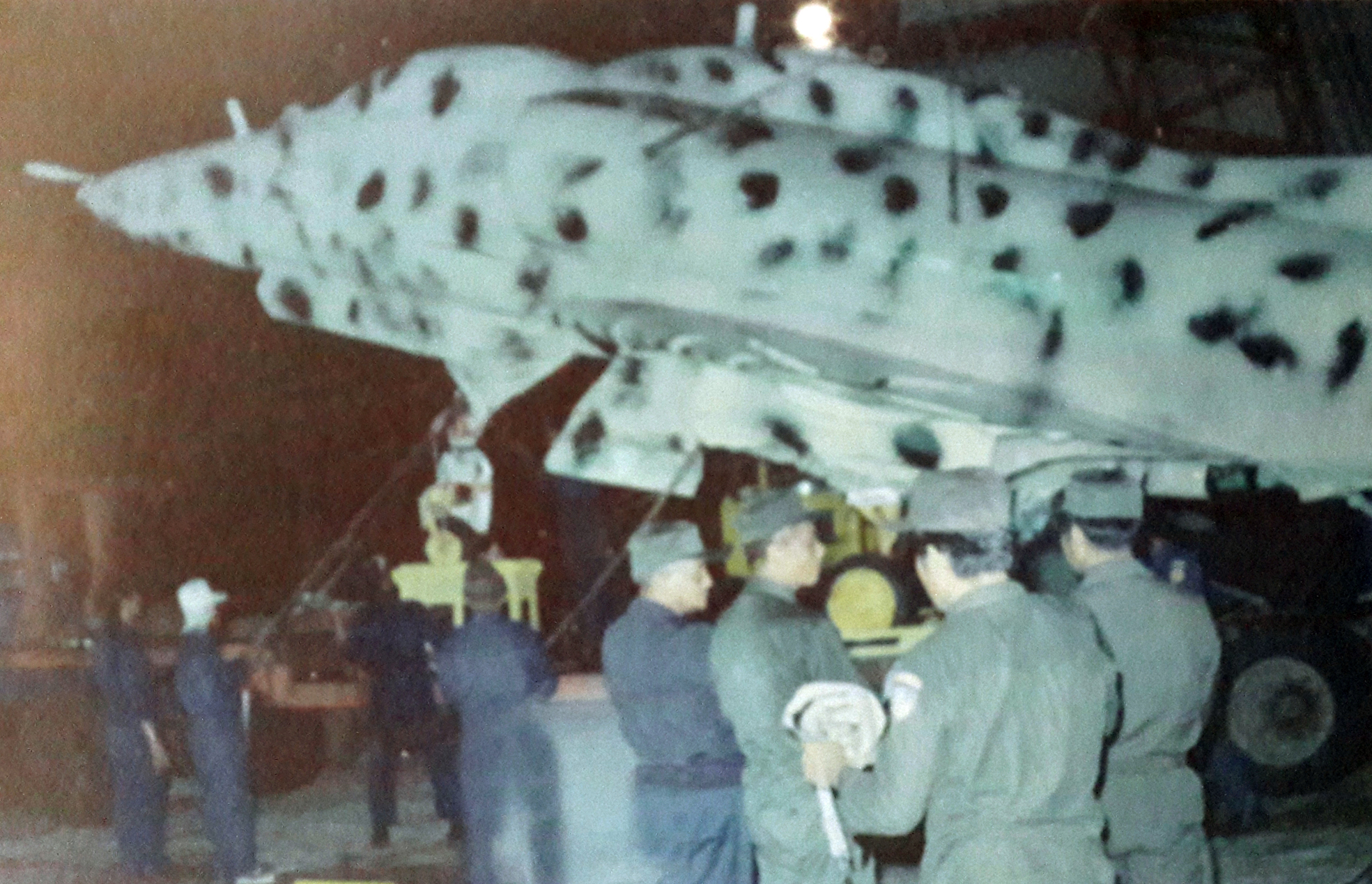
A second operation followed in 1981, when Indonesia signed for 16 more ex-Israeli aircraft at $26.8 million, plus one replacement for a Skyhawk damaged in East Timor.
After Operation Alpha
Indonesia’s non-recognition of Israel had several sources, among them religious solidarity with Palestinians, official support for Palestinian independence, and ties to Arab states that had backed Indonesia’s own independence.
Suharto was more pragmatic than Sukarno, but he never opened diplomatic relations, partly because of opposition from Indonesia’s Islamic community. Israel had approached Jakarta informally more than once. The Skyhawk deal marked the start of an unofficial relationship between the two countries, run through their intelligence services.
The operation was run by Indonesia’s armed forces intelligence agency, together with Israel’s Mossad. According to Major General Teddy Rusdy, Moerdani’s right-hand man, a Mossad officer named Jerry “Yorram” Hessel facilitated the shipment and later served in Indonesia as an Israeli liaison officer.
By Sumbodo’s account, before leaving Israel the ten pilots had to burn their training papers in front of Indonesian intelligence officers, but what burned were color photocopies their instructors had suggested making first.
The pilots only began telling the story after the 1998 Reformasi, when one of them, retired Air Vice Marshal Djoko Poerwoko, spoke publicly.