


Amid the formalities and protocol of royal life, one Thai king made time to play the saxophone, compose jazz music, and perform alongside some of America’s most celebrated musicians.
He was Bhumibol Adulyadej (1927-2016), or Rama IX, who composed around 48 songs during his lifetime. In July 1960, he even played music with Benny Goodman, the legendary American clarinetist known as the King of Swing, at Goodman’s home in New York.
Bhumibol’s love of music began long before he became king. Born in Cambridge, Massachusetts, in 1927, he spent his childhood and teenage years in Switzerland. At the age of 13, he began studying the saxophone and music theory.
According to the Bangkok Post, his first saxophone was secondhand and cost 300 Swiss francs. Bhumibol and his older brother covered part of the price with their pocket money, while their mother paid the rest.
Before taking up the saxophone, he had learned to play the accordion. His switch to the wind instrument began when his older brother, King Ananda Mahidol, declined to attend a music lesson and encouraged Bhumibol to take his place. From then on, music became a lifelong pursuit.
In April 1946, at the age of 18, Bhumibol composed his first song, Candlelight Blues, known in Thai as Saeng Tian. That same year, he also composed Love at Sundown and Falling Rain.
When he became king in June 1946, he continued making music even as his royal responsibilities grew.
The Palace as a Place to Play Music
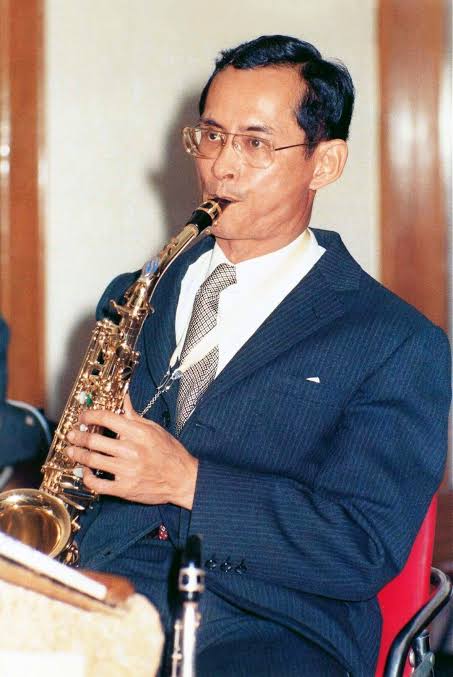
After returning to Thailand in the early 1950s, Bhumibol brought his love of jazz into the palace. He formed a musical group called Lay Kram, later known as Au Sau Wan Suk.
In 1952, he established the Aw Saw radio station to broadcast his music and create a channel of communication between the monarchy and the public.
His musical group was far from an ordinary professional band. According to The Seattle Times, its members came from a range of backgrounds, including bankers, students, professors, and admirals. They also included Seni Pramoj, a former Thai prime minister who played the bass and trombone.
The group regularly gathered at the palace for jam sessions on Friday nights. In a setting usually defined by royal protocol, these sessions gave Bhumibol a chance to do something he loved alongside people from outside the royal circle.
Bhumibol believed music could inspire people, bring them together, and give them strength. He also saw it as a way to bring the palace closer to the public.
Benny Goodman Almost Had a King in His Band
In 1956, Benny Goodman and his orchestra visited Thailand as part of an Asian tour sponsored by the US Department of State. At the height of the Cold War, jazz had become an instrument of American cultural diplomacy. The US government used the music to introduce American culture abroad and counter Soviet propaganda.
In Bangkok, Goodman played with Bhumibol at Ambara Throne Hall. Four years later, they met again in New York. During a jam session at Goodman’s home in 1960, Bhumibol also played alongside drummer Gene Krupa and trombonist Urbie Green.
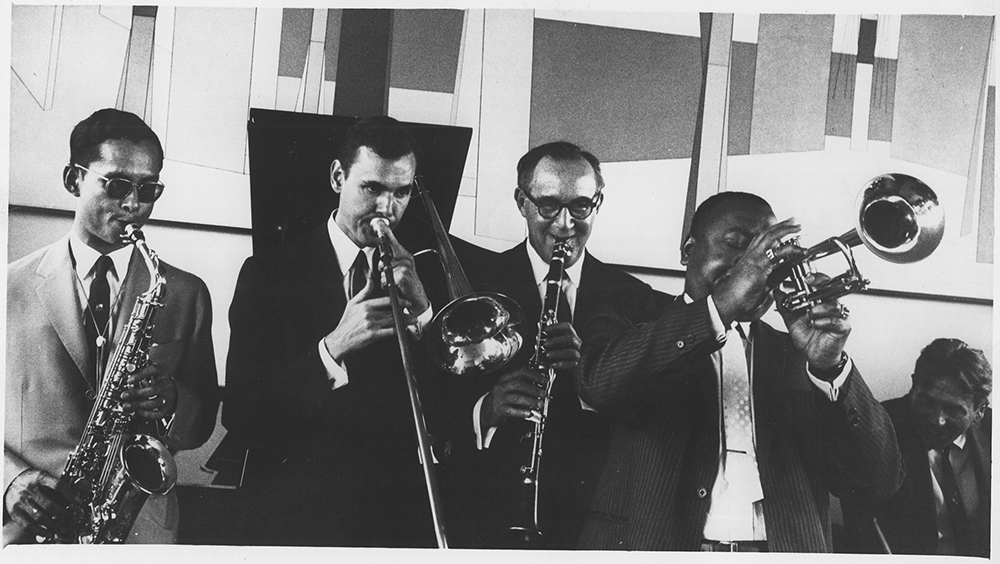
Goodman once joked that he would recruit the king into his band if Bhumibol ever found himself out of a job. Jazz musician Lionel Hampton, who had also played with Bhumibol at the palace, gave him another memorable compliment, calling him “the coolest king in the land.”
The Music That Became Part of His Legacy
Bhumibol’s compositions eventually earned international recognition. In 1964, the Institute of Music and Arts of Vienna made him an honorary member.
According to Thailand’s Ministry of Foreign Affairs, UNESCO named Falling Rain its Song of Asia in 1980. Bhumibol later received the Sanford Medal from Yale School of Music in 2000 and an honorary doctorate in music from the University of North Texas in 2003.
His compositions extended beyond jazz, swing, and blues. He also wrote marches, waltzes, Thai patriotic songs, and university anthems. Together, these works reflected a musical interest that had grown far beyond the teenage hobby that first drew him to the saxophone.
The world knew Bhumibol as Thailand’s king, but music offered another way to understand him. Beyond the titles and royal protocol was a musician who wrote songs, gathered friends for late-night jam sessions, and shared the stage with some of the biggest names in jazz.


