


In 1962, Indonesia joined the Organization of the Petroleum Exporting Countries (OPEC), an organization of oil-exporting countries that coordinate their oil production. At the time, Indonesia was still a net oil exporter.
However, in 2008, Indonesia announced its withdrawal from the organization because domestic oil demand had surpassed its production.
This shift reflects a challenge Indonesia continues to face. As production declines and consumption rises, the country must import more oil, while fuel prices and subsidies remain a burden on the government.
Indonesia’s Oil Trade Before OPEC
Oil from Indonesia had been traded internationally since the colonial era. In 1890, Royal Dutch was established in The Hague after securing an oil drilling concession in Sumatra. The company later merged with Shell Transport and Trading in 1907.
Decades later, five countries, Iran, Iraq, Kuwait, Saudi Arabia, and Venezuela, founded OPEC in Baghdad in September 1960. The organization was established to strengthen oil-producing countries' position in the global market by coordinating production. When supply is reduced, oil prices may rise.
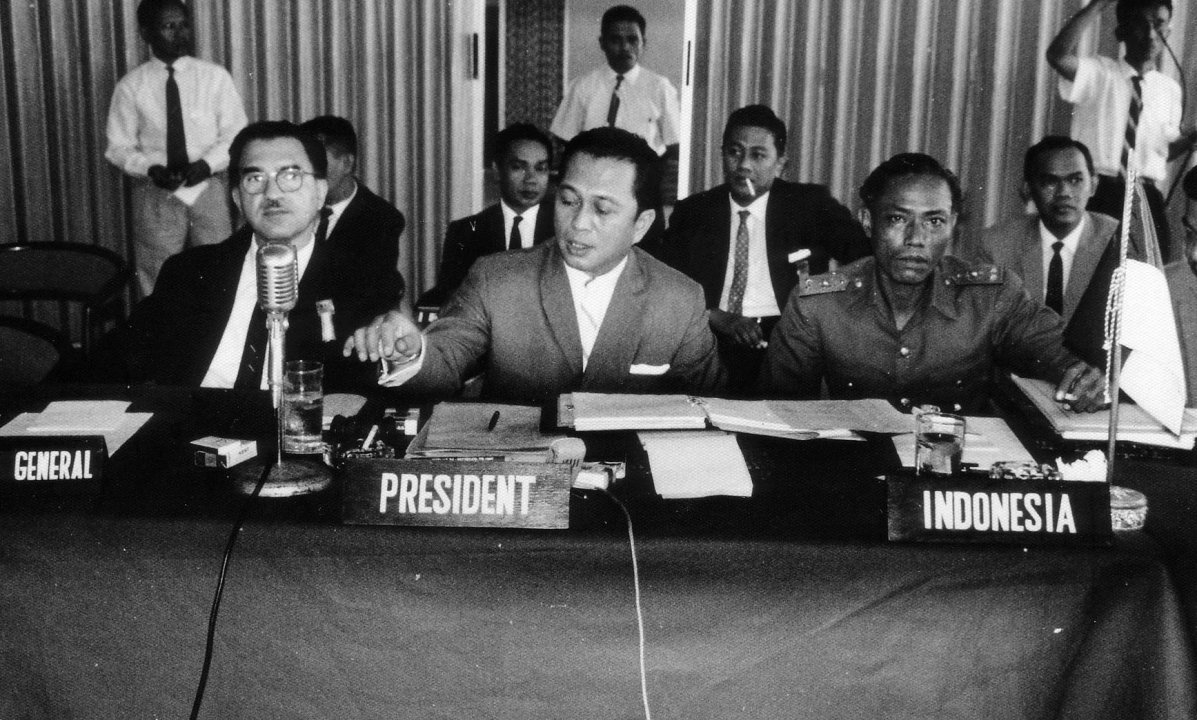
Indonesia joined in 1962. However, being an oil producer did not mean the government was free from domestic fuel price pressures.
Rising Oil Prices, Growing Fiscal Pressure
Fuel price changes had been taking place since the early years of Indonesia's independence. According to Kompas, on November 22, 1965, the government raised the prices of Premium gasoline to Rp0.30 per liter and diesel fuel to Rp0.20 per liter.
Price adjustments continued over the following decades. During Soeharto's presidency, fuel prices were reportedly changed around 21 times. Toward the end of his rule, Premium reached Rp1,200 per liter on May 5, 1998, before being reduced to Rp1,000 just 11 days later.
Behind these price changes, the government faced growing pressure whenever global oil prices rose. To keep fuel affordable, it had to spend more on subsidies.
At the same time, Indonesia's oil production was increasingly struggling to meet domestic demand. According to the U.S. Energy Information Administration (EIA), Indonesia had become a net oil importer by 2004 at the latest.
This meant the country was consuming more oil than it could supply through domestic production and therefore had to rely on imports.
The Oil Price Surge Behind Indonesia’s OPEC Exit
Indonesia's reliance on imports became more apparent when global oil prices surged in 2008. The government raised Premium prices from Rp2,400 to Rp4,500 per liter in October 2005, then to Rp6,000 on May 24, 2008.
At the time, global oil prices stood at around US$130 per barrel, making fuel subsidies an increasingly heavy burden on the state budget.
Four days after the price hike, Indonesia's energy minister announced that the country would leave OPEC. As quoted by Al Jazeera, he stated that Indonesia had become an oil-consuming country. Its membership ended in late 2008.
According to the EIA, Indonesia's changing position was driven by three main factors: rising domestic energy demand, declining output from aging oil fields, and limited investment to expand production capacity.
With domestic demand exceeding production, Indonesia's interests no longer fully aligned with those of countries seeking to coordinate production to influence global oil supply.
Rejoining OPEC, Then Leaving Again
Although Indonesia had withdrawn, it rejoined OPEC in January 2016 after the organization approved its return in December 2015. According to the EIA, membership was expected to give Indonesia better access to crude oil supply contracts and help attract investment in the oil and gas sector.
However, the situation changed in November 2016, when OPEC agreed to cut oil production to reduce global supply and support prices. As a member, Indonesia was also asked to cut its output by around 37,000 barrels per day.
For Indonesia, this posed a problem because domestic oil demand already exceeded production. Cutting output would mean less oil available from domestic sources, while the needs of households and industries would still have to be met. As a result, Indonesia could have to import more oil. OPEC's effort to support global prices by reducing supply therefore conflicted with Indonesia's need to maintain adequate domestic oil supplies.
On November 30, 2016, Indonesia suspended its membership again. The decision reflected a dilemma facing the country: the interests of oil exporters seeking to manage supply did not always align with Indonesia's need to meet domestic consumption.
Production Continues to Decline
Leaving OPEC did not resolve Indonesia's oil supply challenges. In 2022, diesel shortages and queues emerged again as distribution was restricted to keep consumption within the national quota of 15.1 million kiloliters.
That same year, the price of Pertalite gasoline rose from Rp7,650 to Rp10,000 per liter in September, an increase of around 30.7%.
EIA data for 2024 showed that Indonesia's crude oil production stood at around 582,000 barrels per day, down 4% from the previous year. By contrast, consumption reached approximately 1.7 million barrels per day.
To meet this demand, Indonesia imported around 354,000 barrels per day of crude oil and condensate, as well as approximately 791,000 barrels per day of petroleum products.
The gap between production and consumption explains Indonesia's changing position since joining OPEC. When the country was still an exporter, it had an interest in coordinating production with other oil-producing nations.
Today, with domestic demand far exceeding output, securing supplies and managing import costs have become more pressing challenges.


