Kampot pepper holds a reputation as one of the finest and most prized spices in the world. Southern Cambodia produces this world-famous spice.
Documents from Chinese explorer Zhou Daguan confirm that local farmers grew pepper vines here back in the thirteenth century. Top Parisian chefs later propelled this Cambodian spice to global fame during the French colonial era.
The Khmer Rouge regime nearly wiped out these historic plantations in the nineteen-seventies by forcing growers into rice farming. Dedicated farming families eventually restored their ancestral fields thirty years later to save this rare crop.
To safeguard its heritage and quality, Kampot pepper was granted Protected Geographical Indication (PGI) status in the European Union in 2016.
Traditional Organic Farming
The geographic location between the Elephant Mountains and the Gulf of Thailand creates a unique microclimate for pepper cultivation. Sloping mountain terrain and quartz-rich soils deliver perfect drainage while feeding the roots essential minerals.
Farmers construct raised soil mounds surrounded by deep ditches to drain heavy tropical rainwater away from the vines. Coastal sea winds sweep across the plantations, depositing mineral moisture onto the vine leaves every morning.
Strict geographical indication guidelines forbid growers from using chemical fertilizers or synthetic pesticides. Workers nourish the crops naturally with organic composts, cow dung, bat guano, and nutrient-dense virgin soil.
Experienced farm workers carefully select each bunch of berries by hand during the annual harvest season. Tropical sunlight naturally dries the harvested berries on wooden mats, preserving their rich essential oils and complex aromas.
Distinct Varieties
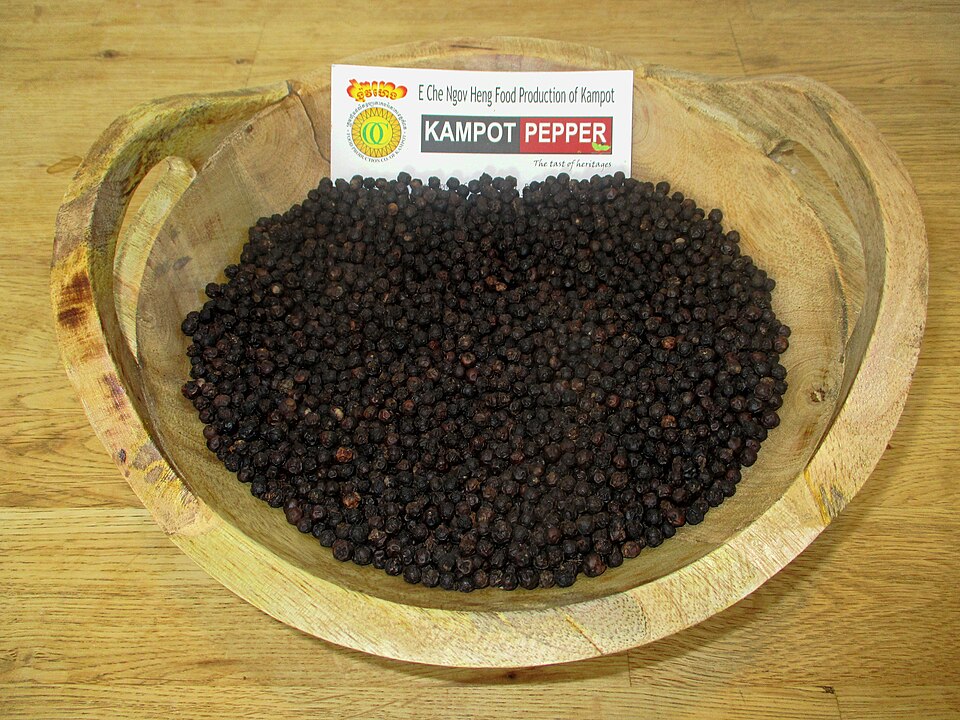
Every variety of Kampot pepper such as green, black, red, and white originates from the same Piper nigrum vine species. Harvest timing and post-harvest processing methods determine the final color, heat, and flavor of each peppercorn type.
Farmers pick young green peppercorns early for fresh cooking or ferment them with coastal sea salt flower. Sun-dried black peppercorns offer robust warmth alongside lingering notes of citrus, eucalyptus, pine, and cocoa.
Rare red peppercorns ripen completely on the vine, developing a noticeably sweet, fruity aroma similar to dried fruits. Soaking fully mature red peppercorns in natural spring water removes the outer husk to reveal smooth white peppercorns.
White Kampot pepper delivers an intense bouquet with citrus undertones, delicate floral notes, and a persistent, clean heat. These diverse flavor profiles allow cooks to treat Kampot pepper as a precision ingredient rather than a basic table seasoning.
Culinary Versatility
The Kampot Pepper Producers Association inspects local estates to maintain rigorous international quality standards. Protected certification guarantees fair market prices for local farming communities while preventing counterfeit products in global markets.
Culinary masters consider black Kampot pepper the ideal match for juicy steaks, rich stews, and roasted meats. Cambodian cooks stir-fry fresh green peppercorns with garlic, palm sugar, and local crab to create the famous Kep pepper crab.
The fruity sweetness of red Kampot pepper pairs surprisingly well with dark chocolate, fresh strawberries, and artisanal cheeses. Craft distillers even infuse red peppercorns into specialty rums, gins, and dessert sauces to highlight their complex aroma.
Grinding whole peppercorns directly over finished dishes releases their maximum aromatic intensity right before serving.