Every year, Singapore generates million tonnes of solid waste on an island with limited space for landfills.
According to the National Environment Agency (NEA), Singapore’s overall recycling rate stood at 52% in 2025, while the domestic recycling rate was just 11%.
Waste that is not recycled is largely incinerated at four waste-to-energy plants, which reduce its volume by about 90% while generating electricity. The remaining ash, along with non-incinerable waste, is sent to Semakau Landfill, Singapore’s only landfill, which is projected to reach full capacity around 2035 at current disposal rates.
Singapore has developed an extensive system to manage the waste it produces, but its low domestic recycling rate remains a major challenge.
Turning Waste Into Energy
Incineration does most of the heavy lifting in Singapore’s waste system. Four waste-to-energy plants burn much of the waste that isn’t recycled, reducing its volume by about 90%. The heat generated is used to produce steam, which drives turbines to generate electricity.
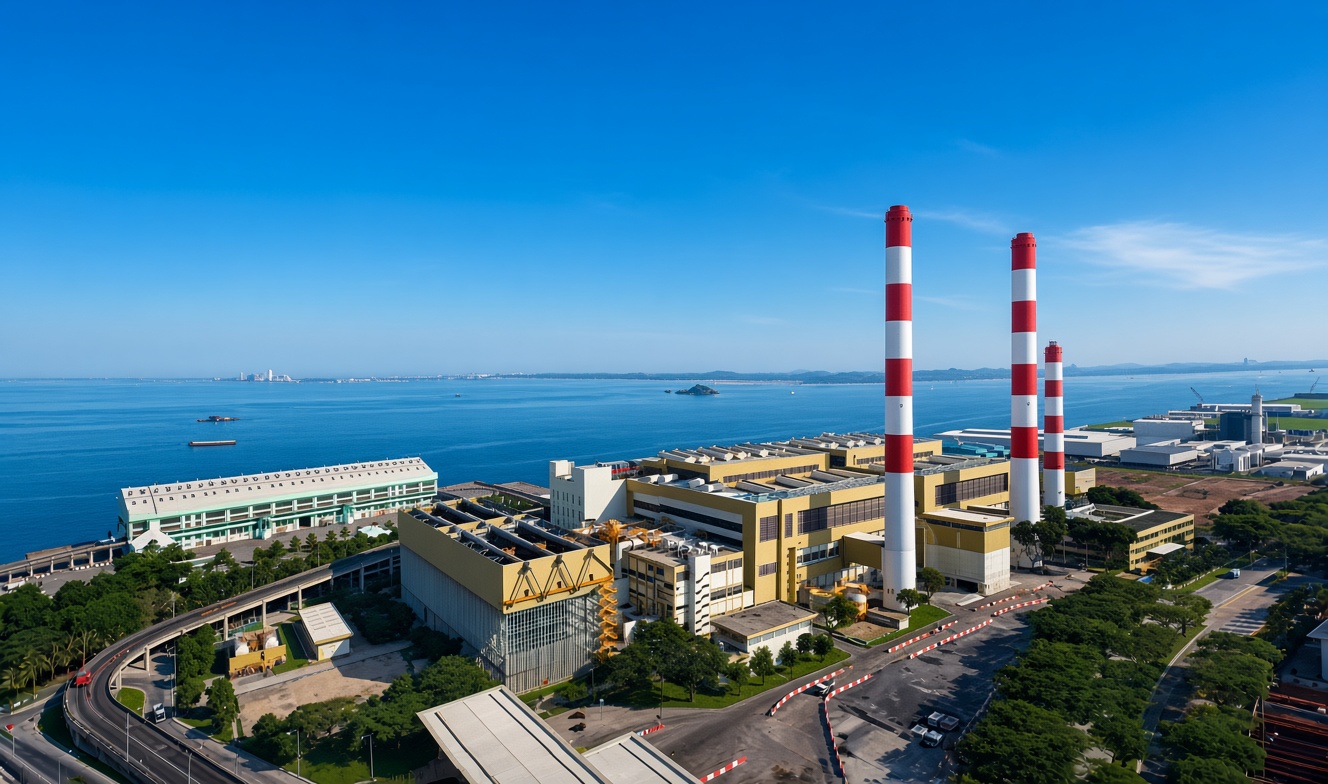
Burning waste isn’t without consequences. It leaves behind ash that still needs to be disposed of, and destroys materials that might otherwise have been recovered through recycling. Some metals can still be recovered from the ash, but incineration is no substitute for sorting and recycling materials where feasible.
Only One Landfill
Even with advanced incineration, Singapore cannot eliminate landfilling. Ash and non-incinerable waste go to Semakau Landfill, created by enclosing 350 hectares of sea between Pulau Semakau and Pulau Sakeng. It opened on 1 April 1999 and remains Singapore’s only landfill.
Minister Grace Fu reaffirmed in Parliament in October 2025 that the landfill is still on track to reach capacity around 2035, based on current disposal rates. Singapore’s 2019 Zero Waste Masterplan set a target of reducing waste sent to landfill per capita per day by 30% by 2030, using 2018 as the baseline.
Singapore disposed of 3.36 million tonnes of waste in 2025, up from 3.02 million tonnes in 2015. That was the highest figure in the past decade, even though each person is generating less domestic waste than before.
NEA is also exploring ways to recover and reuse waste residues, including incineration ash, to extend the landfill’s lifespan.
Integrated System
Singapore’s next big bet is Tuas Nexus, where NEA’s Integrated Waste Management Facility (IWMF) is being built alongside PUB’s Tuas Water Reclamation Plant.
The idea is to make the two facilities work together. Food waste will be processed and mixed with sludge from wastewater treatment to produce more biogas, while dried sludge will be incinerated at the IWMF. Heat and electricity generated by the waste facility will also support operations across the complex.
The project is not fully operational yet. When construction plans were announced in 2020, the first phase was expected to be completed progressively from 2025. NEA now expects it to be completed in stages from 2027 onwards.
The point is to get more out of the waste Singapore already produces. Instead of treating solid waste and wastewater as separate problems, Tuas Nexus is designed to recover energy and resources from both.
The Recycling Problem
The overall recycling rate was 52% in 2025, but the figure hides a wide gap between non domestic waste, recycled at a rate of 67%, and domestic waste, at just 11%. The domestic rate has fallen from 17% in 2019.
NEA’s domestic category covers households as well as trade premises such as shophouses, schools, petrol stations and hawker centres. Non domestic waste comes mainly from commercial and industrial activities, including construction and demolition waste, which is recycled at a very high rate.
That helps explain why the national figure can look relatively healthy even as everyday recycling remains a challenge. The overall rate rose from 50% in 2024 to 52% in 2025, partly reflecting changes in the amount of construction waste recycled.
More households are recycling, according to NEA’s survey. In 2025, 78% said they recycled, up from 72% in 2023. Singapore recycled just 18% of its food waste that year. Contamination remains a problem, while higher collection and shipping costs and stricter rules in overseas markets make it harder to sell recyclables. Much of what Singapore collects is sent abroad for processing.
The 2019 Zero Waste Masterplan set a target of a 70% overall recycling rate by 2030, supported by targets of 30% for domestic waste and 81% for non domestic waste. The government announced a review of the plan in June 2026 and said the targets would be assessed for relevance.
An Advanced System, but Not a Complete Solution
Singapore burns most of its non-recyclable waste to cut its volume, then sends the ash to Semakau Landfill. Tuas Nexus is the next step, bringing waste incineration and wastewater treatment together at one site.
There has been progress in reducing waste, too. The amount of domestic waste generated per person each day fell by 21% between 2015 and 2025.
Singapore is generating less domestic waste per person, but its recycling rate remains low. The total amount of waste disposed of has also risen over the past decade. The government is now reviewing its Zero Waste Masterplan, including the targets set for 2030.