A Douglas DC-4 left Manila on July 31, 1946, carrying 40 American servicemen bound for California.
The DC-4 was a four engine propeller aircraft with piston engines and an unpressurized cabin. Without pressurization, the air inside the cabin was as thin as the air outside, so the aircraft cruised at lower altitudes where passengers could breathe without oxygen masks, and it flew through much of the weather along its route.
Jet airliners would not enter commercial service until 1952. The DC-4 could not cross the Pacific in a single hop, so the journey took 41 hours and required several stops. The flight was a charter, and Philippine Airlines (PAL) records it as the first crossing of the Pacific by an Asian airline.
The Bamboo Fleet and the Postwar Restart
PAL made its first flight on March 15, 1941, when a Beechcraft Model 18 flew from Manila to Baguio, according to Philippine Airlines’ official historical timeline.
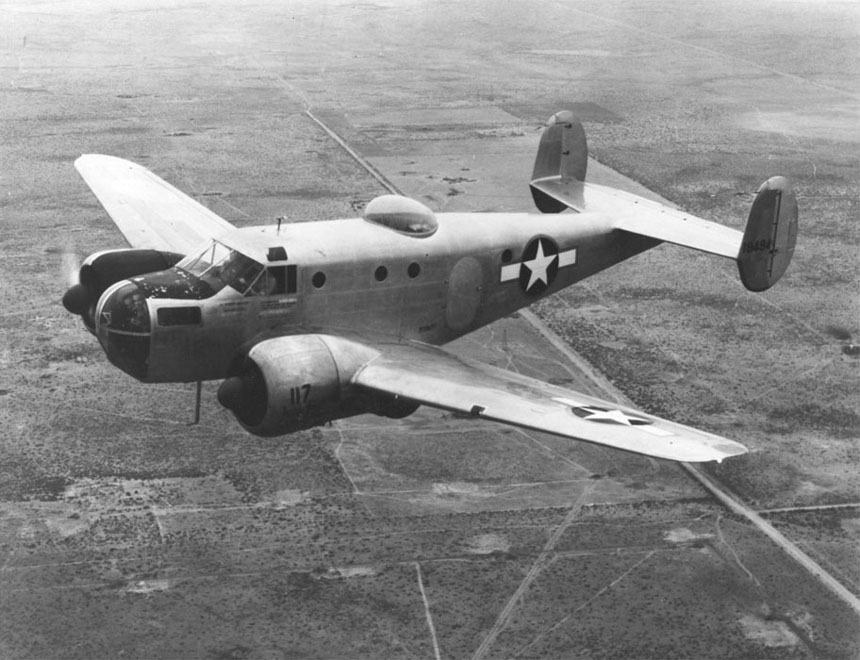
The airline suspended commercial operations after the Pacific War began in December 1941, and its aircraft and crews were pressed into military service as part of the Bamboo Fleet of the U.S. Army Forces in the Far East (USAFFE).
Andres Soriano, then-president of PAL, proposed reviving the airline with assistance from Trans World Airlines (TWA) on August 11, 1945. PAL’s stockholders approved the plan.
PAL also had a domestic rival. According to the Filipinas Heritage Library, Far Eastern Air Transport Inc. (FEATI), the successor to Iloilo-Negros Air Express Company (INAEC), began operations on November 16, 1945. A fare war followed between the two carriers.
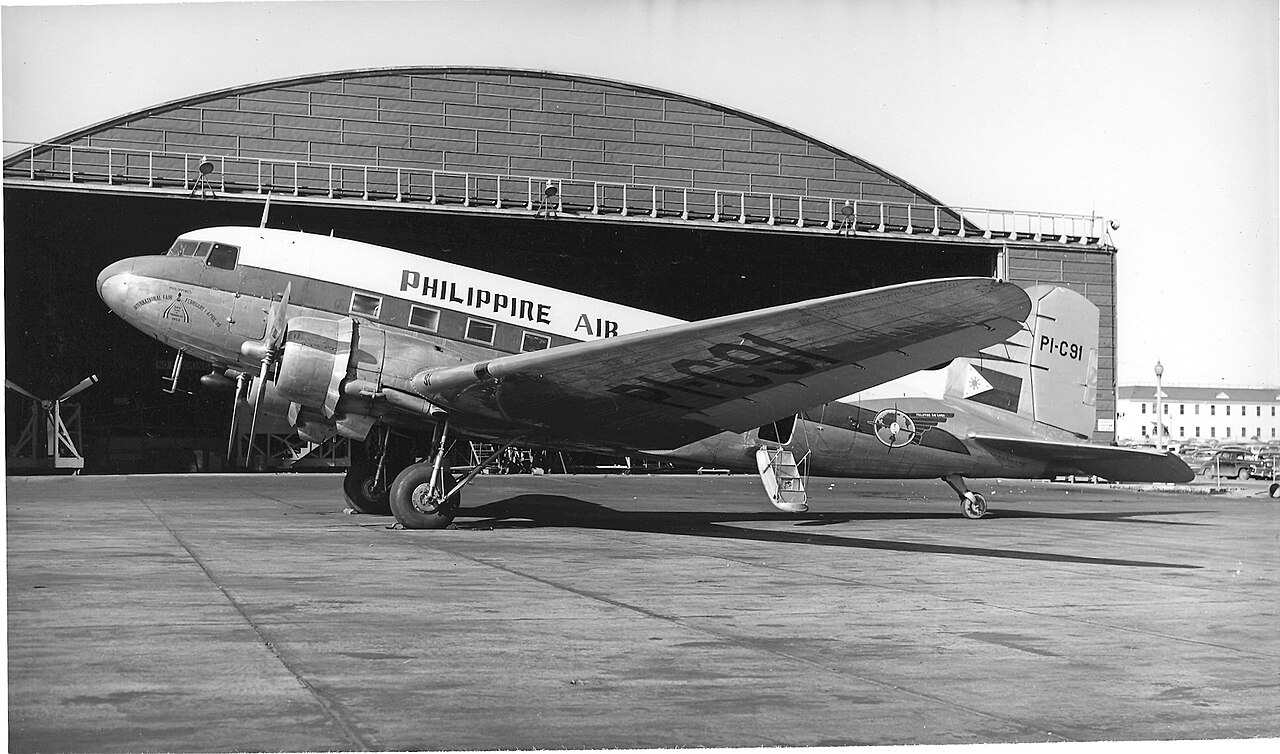
Soriano was elected president on February 10, 1946. PAL resumed commercial operations four days later with 108 personnel and five Douglas DC-3 aircraft serving eight points from Manila. Its first postwar flight went to Cebu in a DC-3 fitted with bucket seats.
According to the Supreme Court of the Philippines, the Philippines gained independence from the U.S. on July 4, 1946, and Manuel Roxas became the first president of the independent Third Republic.
The Transocean Charter
Transocean Air Lines was incorporated in California on May 21, 1946, with its base in Oakland. The airline’s connection with PAL began in July 1946, when Andres Soriano proposed a transpacific charter service to Transocean founder Orvis Nelson. According to Transocean’s alumni history, the two agreed on two trips.
The first flight under the arrangement left Oakland for Manila with 35 passengers. Transocean employees worked through the night of July 22 to prepare the DC-4, padding its bucket seats with foam rubber.
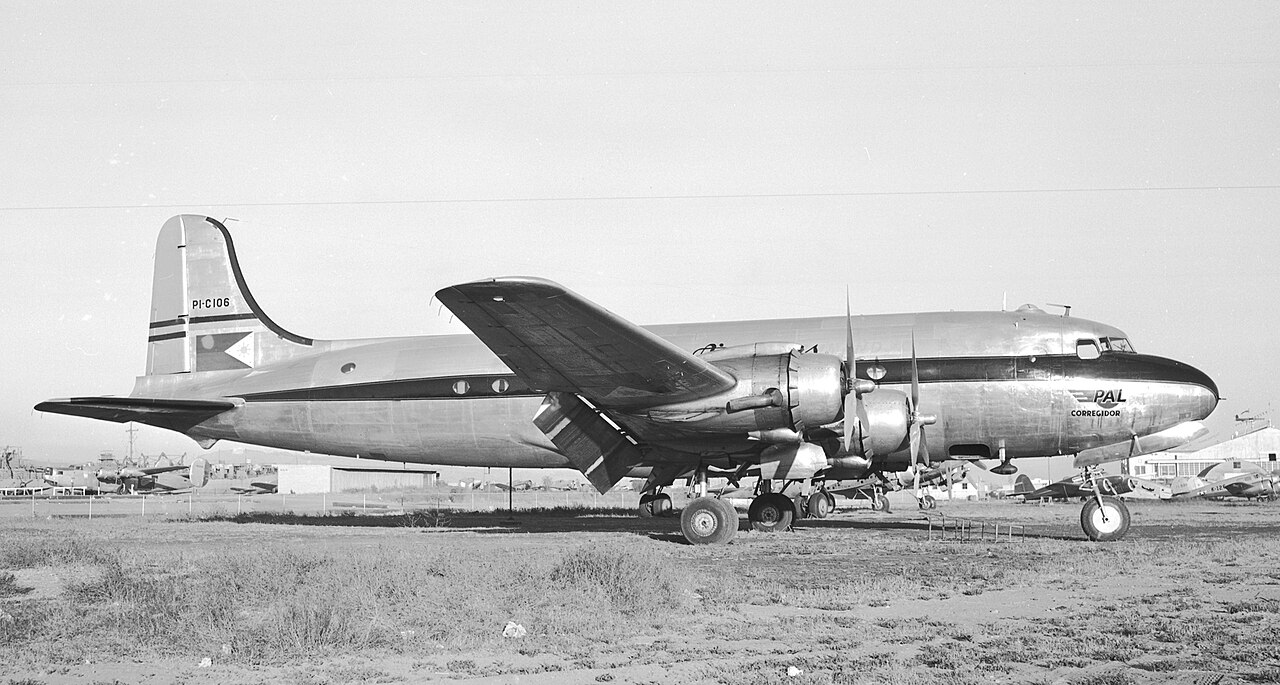
Nelson flew the aircraft himself, accompanied by his wife, Edith, who served as stewardess. The company history credits her as the first stewardess to complete a Pacific crossing for a commercial airline.
The arrangement also led to the July 31 flight from Manila to Oakland, less than four weeks after Philippine independence. The flight carried 40 American servicemen returning home after the war. PAL records the journey as a 41 hour crossing, with stops in Guam, Kwajalein, and Honolulu. SFO Museum describes it as a non-scheduled flight.
San Francisco, Madrid, and Tokyo
The July 31 charter took place about four months before PAL began regular service to the U.S. PAL was designated as the Philippine flag carrier for services to the U.S. on November 14, 1946, under a new air transport agreement between the two countries.
According to PAL’s official timeline, the airline began scheduled service between Manila and San Francisco on December 3, using its own Douglas DC-4 and Oakland Airport as its gateway to the San Francisco area. A history published by the Transocean Airlines alumni association states that Transocean sold PAL two DC-4s in exchange for PAL stock.
PAL began flying to Europe the following year. Its official timeline records a DC-4 departing Nielson Airport for Madrid on May 3, 1947, with stops in Bangkok, Calcutta, Karachi, Dhahran, Cairo, and Rome. PAL describes the journey as the first flight to Europe by a Southeast Asian airline.
The Filipinas Heritage Library gives a different date, May 13, 1947, for PAL’s first flight to Madrid. The library also identifies that date as the day FEATI was acquired by and merged with PAL.
PAL moved its international operations to Manila International Airport on January 12, 1948, and began DC-6 service to San Francisco on May 21. It became the sole scheduled airline operator in the Philippines on September 1. DC-6 service to Tokyo began on January 26, 1949, and PAL flew President Elpidio Quirino to the U.S. for a state visit on August 6 of that year.
PAL now serving more than 30 domestic and 40 international destinations.
The airline took delivery of its first Airbus A350-1000 on December 20, 2025, making it the first operator of the type in Southeast Asia and the 10th in the world, with a range of up to 18,000 km per aircraft. Five more are expected to arrive in 2026, and the airline scheduled an increase to 18 weekly flights between Manila and Los Angeles starting in June 2026.