


A longstanding friendship found a practical business focus at the JW Marriott Jakarta on October 16. Sri Lanka Connect 2026 brought together approximately 120 government officials, business leaders and media representatives to explore how Indonesia and Sri Lanka could expand trade, attract investment and create more opportunities for companies in both countries.
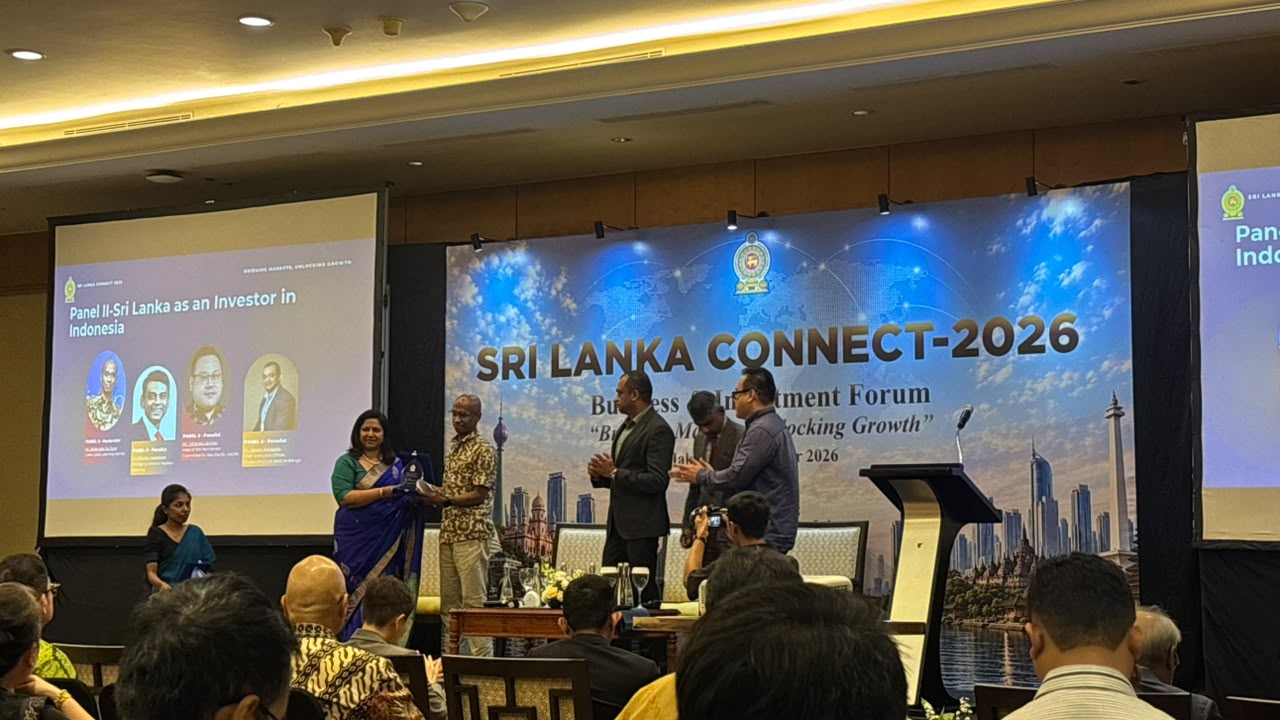
Hosted by the Sri Lankan Embassy under the theme “Bridging Markets, Unlocking Growth,” the forum combined investment discussions with a concrete institutional step: the ceremonial exchange of a signed cooperation agreement between the two countries’ leading chambers of commerce.
Turning Friendship into Business Connections
Indonesia and Sri Lanka established diplomatic relations on August 6, 1952, and shared an important role in the 1955 Bandung Conference. Today, that history provides a foundation for a more commercially active relationship connecting Southeast Asia and the Indian Ocean.
The forum advanced efforts that had gathered momentum earlier this year. During a July meeting with Kadin Indonesia, Sri Lankan Ambassador Sashikala Premawardhane explained the practical objective: “We want to strengthen business-to-business connections.” Those connections can help companies identify partners, understand unfamiliar markets and maintain contact beyond diplomatic events.
At Sri Lanka Connect, the exchange of the signed memorandum between the Ceylon Chamber of Commerce and Kadin gave that ambition an institutional framework. It was a cooperation milestone, rather than an announcement of completed commercial contracts. Its value will depend on the introductions, market information and follow-up support that businesses receive.
Building a More Balanced Trading Relationship
The commercial relationship already has a substantial base. According to Indonesian Trade Ministry figures reported by ANTARA, bilateral trade reached US$530.2 million in 2025. Indonesian exports accounted for US$476.7 million, while imports from Sri Lanka totalled US$53.5 million.
During January–July 2026, trade amounted to US$266 million, comprising US$244 million in Indonesian exports and US$22 million in imports. These figures show the scale of the imbalance, although the partial-year total alone does not establish whether trade accelerated compared with the previous year.
Indonesian shipments include copra, passenger vehicles, semi-finished iron and steel, and tobacco. Sri Lankan products entering Indonesia include knitted fabrics, petroleum oils, tobacco-processing machinery and tyres.
For businesses, these flows suggest opportunities extending beyond finished consumer goods. Fabrics, machinery and industrial materials can connect manufacturers across borders. A more balanced relationship could emerge through additional Sri Lankan sales alongside Indonesian investment and joint production.
Opening the Next Door Through Trade Negotiations
The proposed Indonesia–Sri Lanka Preferential Trade Agreement remains an important part of that agenda. Negotiations began in March 2024, followed by an initial virtual round and a second round in Colombo.
At a September 2026 bilateral meeting, Indonesian Trade Minister Budi Santoso called for a third negotiating round. Sri Lanka said it was conducting an internal review, confirming that the agreement remained under negotiation.
At the Jakarta forum, Indonesian Employers Association chairperson Shinta Kamdani highlighted its potential: “The Preferential Trade Agreement will help us to do more trade together,” she said, as reported by Asia Globe.
For exporters, progress would mean clearer market-access conditions and potentially lower duties on agreed products. The eventual benefits will depend on the negotiated coverage, implementation and businesses’ ability to meet product standards.
Investment Reveals Another Side of the Partnership
While goods trade strongly favours Indonesia, the reported investment picture points in the opposite direction.
At the forum, Ambassador Premawardhane cited figures showing more than US$1.3 billion in Sri Lankan private-sector investment in Indonesia, compared with US$3.5 million in Indonesian investment in Sri Lanka. These were presented as existing investment figures, not new commitments secured during the event. The embassy had also highlighted approximately US$1.3 billion in Sri Lankan investments during its July engagement with Kadin.
The contrast helps explain the forum’s two-way approach. One panel examined Sri Lanka as an investment destination; another explored Sri Lankan companies’ experience in Indonesia. Participants included representatives from Kalbe International, CBL Group, Hayleys Aventura and MAS Silueta, alongside investment authorities and business organisations.
Kalbe’s participation offered an Indonesian pharmaceutical perspective, while Sri Lankan companies contributed experience in manufacturing and international business. Such exchanges can make investment discussions more useful by addressing the practical questions companies face when entering another market.
Carrying Jakarta’s Momentum to Colombo
Sri Lanka Expo 2027 offers a further opportunity to develop the contacts established in Jakarta. The Sri Lankan Embassy had already invited a Kadin delegation to participate, linking bilateral discussions with another platform for meeting potential buyers and investors.
The next steps are straightforward: sustain chamber cooperation, advance trade negotiations and turn business introductions into workable proposals. For smaller enterprises, accessible information and reliable partners will be especially important.
Sri Lanka Connect 2026 strengthened the channels through which that work can happen. Its lasting achievement will emerge as companies on both sides translate new connections into orders, investment and shared growth.


