


In just one month, the cumulative area of land burned in Indonesia surged from around 896,000 hectares at the end of August to 1.92 million hectares by the end of September 2026. The fires affected several parts of the country, including Sumatra and Kalimantan.
According to satellite monitoring by Nusantara Atlas, the burned area by the end of September was 38 percent larger than during the same period in 2019, when Indonesia also experienced major forest and land fires.
However, the scale of this year’s fires is not reflected in the burned land alone. Smoke has crossed national borders, air quality has deteriorated in several Southeast Asian countries, and daily activities have been disrupted, from school lessons to air travel.
What began with fires in Indonesia has become a regional problem affecting communities across Southeast Asia.
A Growing Burned Area and a Widening Haze Crisis
The scale of the fires becomes clearer when compared with previous years. During the same period in 2019, the cumulative burned area stood at around 1.39 million hectares.
This year’s estimate has surpassed that figure, although Nusantara Atlas’s assessment remains conservative. Its monitoring excludes some burned areas smaller than 6.25 hectares, while thick smoke can also obstruct satellite observations.
The impact has extended beyond the areas directly affected by the fires. In August, local authorities in Pontianak, West Kalimantan, temporarily suspended in-person classes and moved lessons online.
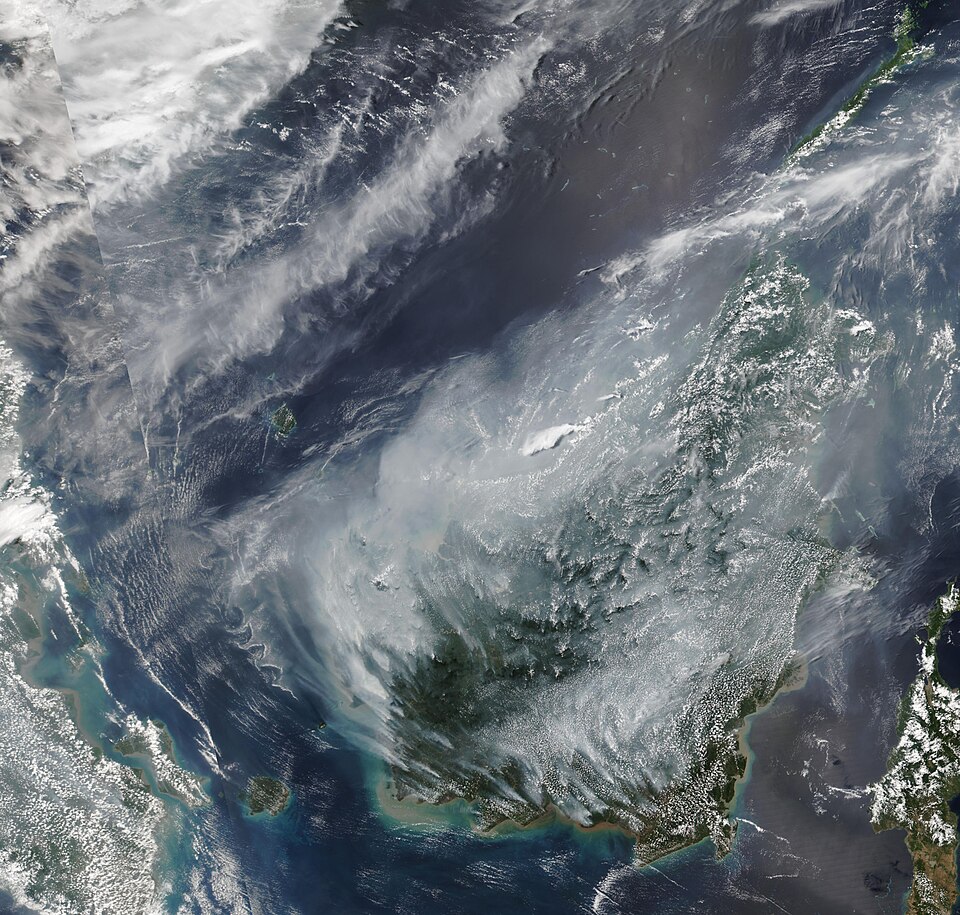
Conditions worsened again in October. In Palangka Raya, Central Kalimantan, PM2.5 concentrations reached 844.6 micrograms per cubic meter on October 15, a level classified as hazardous. By October 14, reports from eight local community health centers had recorded 101 cases of acute respiratory infections.
Beyond Kalimantan, smoke has also prompted local governments to take preventive measures. The Maluku provincial government introduced a work-from-home policy for some civil servants and temporarily suspended in-person classes at senior high schools.
Several areas in Sulawesi have also reported deteriorating air quality, prompting local authorities to consider restrictions on daily activities if conditions worsen.
In Mamuju, West Sulawesi, the regency government considered temporarily suspending school activities if the haze became more severe. Meanwhile, air quality in Makassar and Maros, South Sulawesi, also deteriorated in mid-October.
The disruption has even reached the transport sector. Indonesia’s Ministry of Transportation reported that haze affected 2,458 flights across 26 airports between August 11 and October 17. Of these, 1,080 flights were delayed, while another 1,324 were canceled or had their schedules changed.
Read also: WMO Says Indonesia’s Haze Crisis May Be Southeast Asia’s Worst on Record
When Haze Becomes a Cross-Border Problem
The impact of the fires has also extended beyond Indonesia. In Sarawak, Malaysia, 591 schools across 10 districts closed on August 21, disrupting classes for 197,323 students. In early September, Quezon City in the Philippines also suspended in-person classes at all public schools after air quality deteriorated.
Malaysia also temporarily closed some schools in several areas in October, when Kuala Lumpur’s Air Pollutant Index reached around 170, a level classified as unhealthy. As of October 20, Malaysia’s environmental authorities were still recording unhealthy air quality at 29 locations.
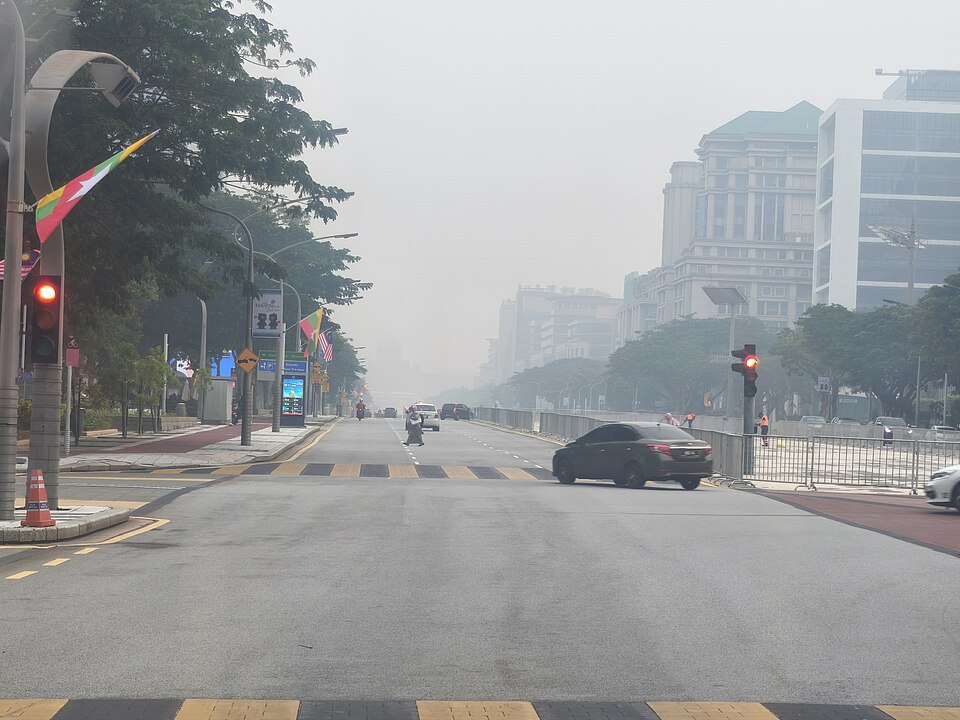
In Singapore, the 24-hour Pollutant Standards Index reached 222 on October 16, falling within the very unhealthy range. The country also reactivated subsidies for medical treatment related to haze exposure, a policy last implemented in 2015.
Meanwhile, Timor-Leste reported unhealthy air quality, including in its capital, Dili, prompting school closures.
The extent of these disruptions shows why the forest and land fire crisis cannot be measured by the number of hectares burned alone. As smoke crosses borders, its effects reach communities far from the fires, disrupting public health, education, and transportation.
When Will the Haze Clear?
The ASEAN Specialised Meteorological Centre forecasts that hotspots and haze could remain elevated from October through December. Rain expected toward the end of October may help ease conditions, although the risk of fires will continue to depend on weather patterns.
Indonesia’s Meteorology, Climatology, and Geophysics Agency (BMKG) expects the rainy season to begin in most parts of the country in November, later than usual. El Niño conditions are also expected to persist into early 2027.
With the fires still burning and the rainy season yet to begin in most parts of the country, it remains uncertain when the haze crisis will fully subside. Hopefully, the situation will improve soon, allowing people in Indonesia and neighboring countries to breathe clean air again.


