Kuching, a city in Sarawak, Malaysia, on the island of Borneo, has a museum with more than 4,000 cat themed artefacts across four galleries, a large white cat statue that changes its look for local festivals, and a widely used nickname, the “City of Cats”.
The city’s name resembles kucing, the Malay word for cat. The origin of the name has never been confirmed, and at least three explanations compete.
Three Theories Behind the Name Kuching
Kuching’s name resembles kucing, but its actual origin is not settled. The Kuching Division administration outlines several theories about the city’s name.
The first points to Sungai Kuching, a small stream near the Chinese History Museum and Tua Pek Kong Temple, which may have been named after wild cats in the area. A nearby hill, Bukit Mata Kucing, was linked to trees bearing mata kucing, or “cat’s eye” fruit, also known as longan.
The second says the name came from Cochin, the former name of Kochi, a port city in the Indian state of Kerala. According to the official historical account, Kuching was already known by its present name when British explorer James Brooke arrived in 1839.
The third is a legend. The Sarawak Tourism Board says Brooke pointed at a place and asked its name, and residents, thinking he meant a passing cat, answered “Kuching”. The story is folklore, not an established historical account.
Cat Statues Across Kuching
A large white cat statue at the Jalan Padungan roundabout is one of Kuching’s best-known landmarks. It was erected on August 1, 1988, to commemorate City Day, marking Kuching’s elevation to city status.
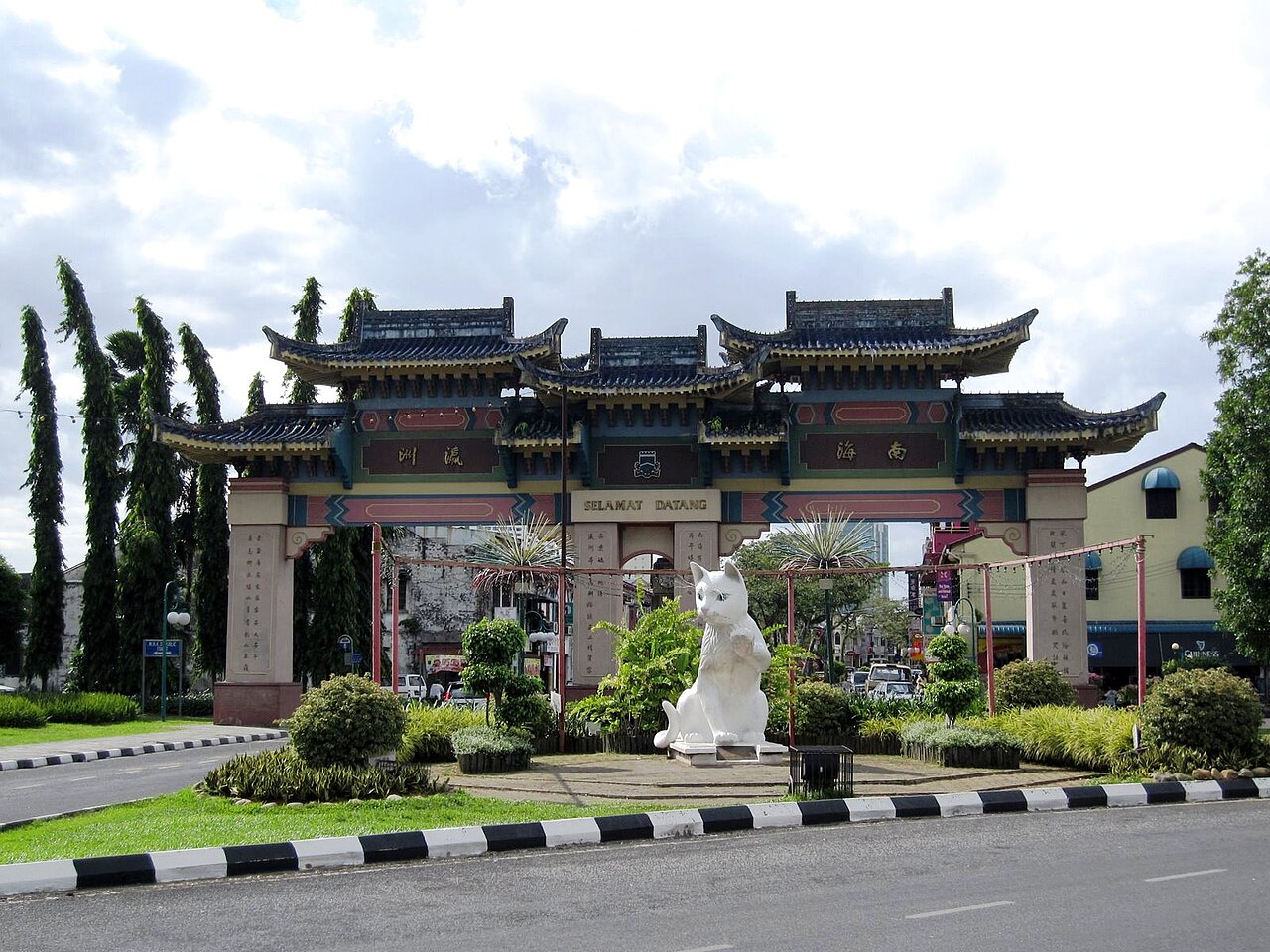
The statue is dressed in different costumes for major festivals, including Lunar New Year, Hari Raya Aidilfitri, Gawai Dayak, Christmas and Deepavali.
Hari Raya Aidilfitri marks the end of Ramadan, the Muslim fasting month, while Gawai Dayak is a harvest festival celebrated by Sarawak’s Dayak communities on June 1. In 2017, Sarawak’s Local Government Minister, Sim Kui Hian, described the changing costumes as a symbol of racial harmony among the state’s communities.
Two other cat sculptures stand elsewhere in the city. One on Jalan Tunku Abdul Rahman depicts a family of cats, with two adults watching over seven kittens. Another installation, at the junction of Jalan Padungan and Jalan Chan Chin Ann, features four white cats surrounding a decorative column topped with floral motifs.
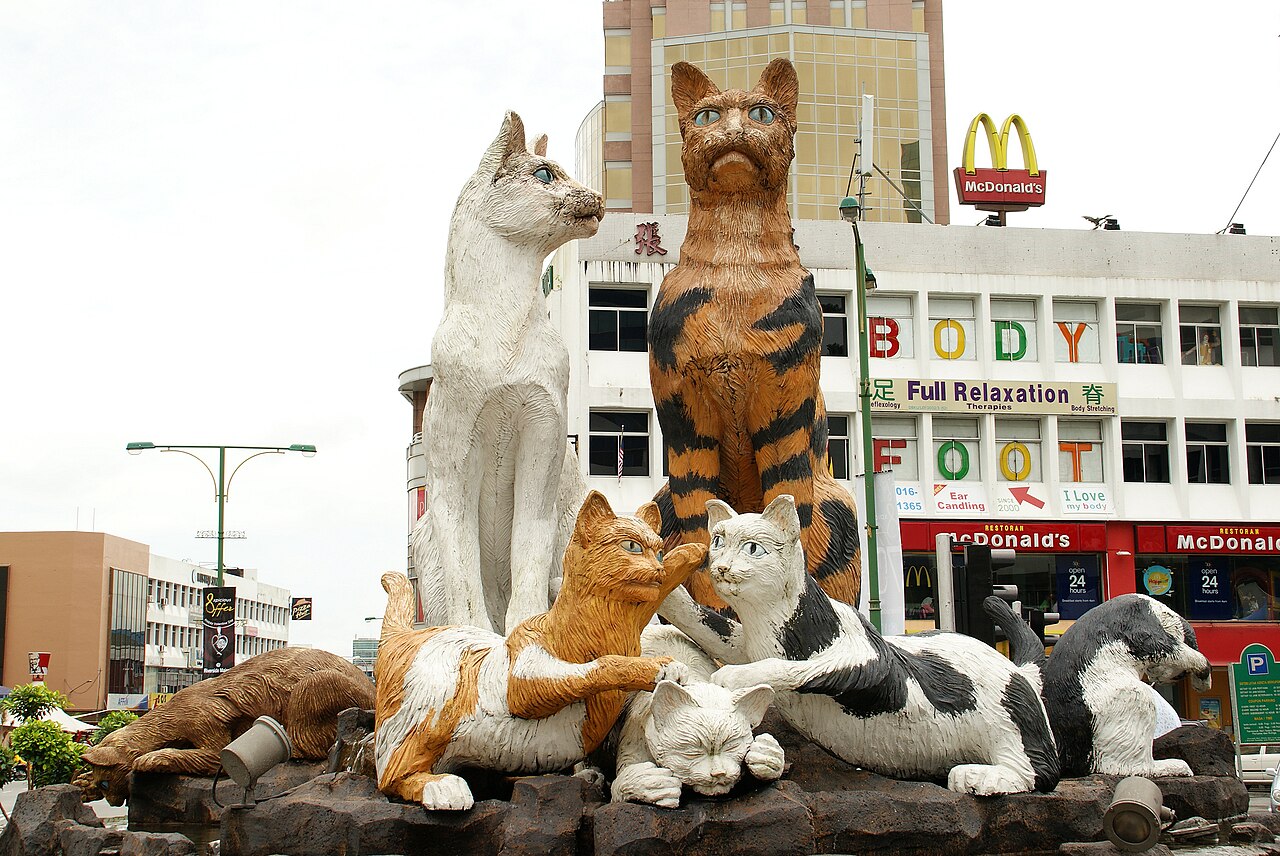
The Sarawak Tourism Board features these sculptures in its guide to Kuching, highlighting the city’s distinctive collection of public cat statues.
A Museum With a Mummified Cat
The Kuching Cat Museum is run by Kuching North City Hall (DBKU). DBKU states that it covers about 1,035 square metres and has four main galleries with more than 4,000 items, among them paintings, photographs, figurines and memorabilia.
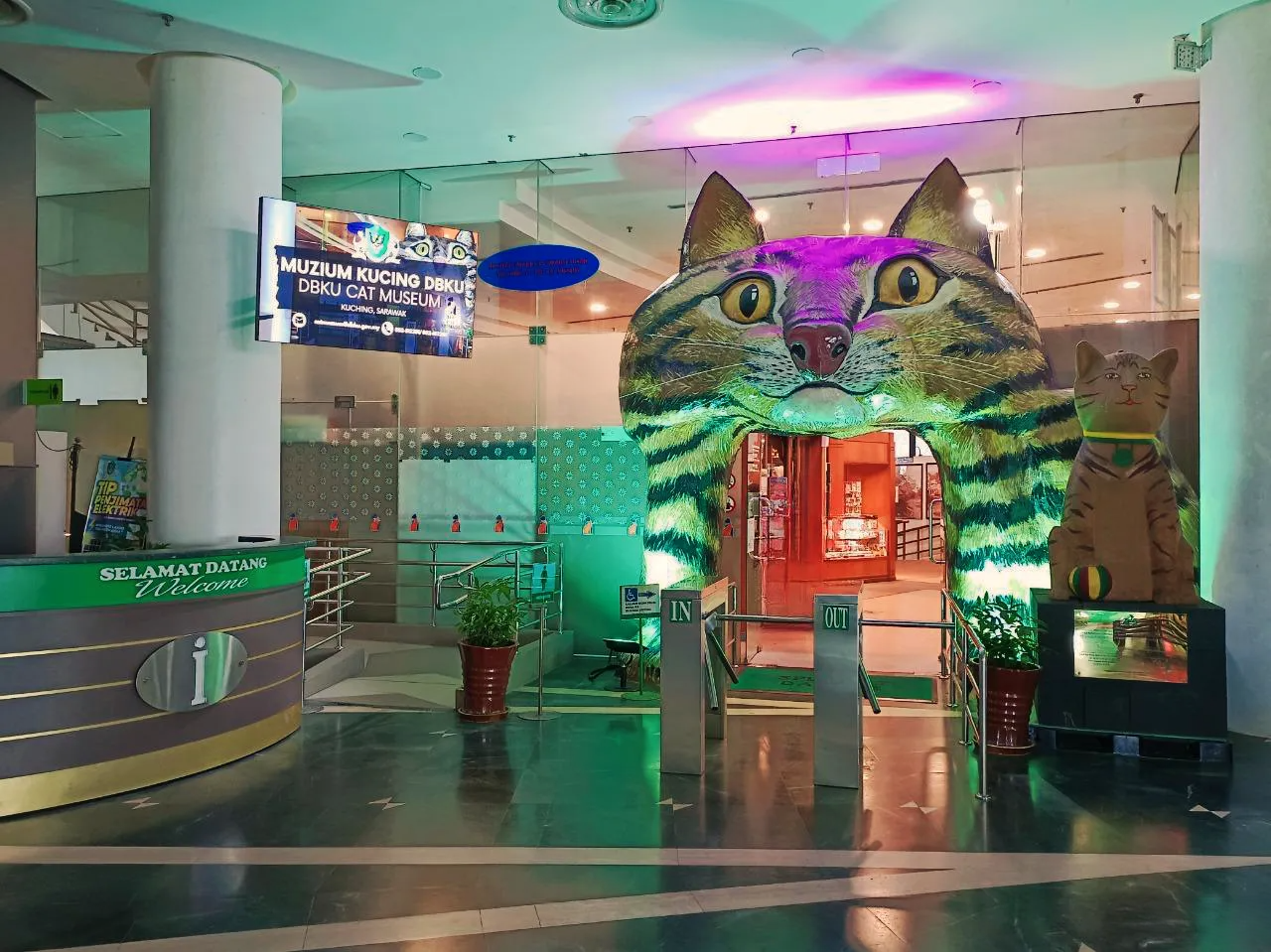
The collection was first shown at Dewan Tun Abdul Razak on August 1, 1988. After the council’s headquarters was completed in 1992, it was transferred to DBKU, and the museum was officially inaugurated on November 6, 1993.
Exhibits cover cats in history, art and different cultures, with references to ancient Egypt, Japanese maneki-neko beckoning-cat figures, and characters such as Garfield and Hello Kitty. DBKU lists a gallery on Sarawak’s cats and the wild cats of Borneo, as well as a mummified cat from ancient Egypt.
Other displays look at cats in Malay, Chinese, Iban and Orang Ulu cultures.
An Unconfirmed Name, an Established Identity
The origin of the name Kuching remains unresolved.
Three explanations, a stream named after wild cats, a historic port in India and a legend of mistaken identity, have been put forward, and none has been confirmed.
Regardless of its source, the name has since been reinforced by public sculptures, a municipal museum and the city’s tourism promotion. Kuching has made it a part of its public image.