People have lived in space without a break since November 2000, aboard the International Space Station.
But it was not the first. Salyut 1, launched by the Soviet Union in 1971, hosted only one crew, and that mission ended in tragedy. Skylab, Mir, and China’s Tiangong each took a different path, and together they taught engineers how people could live and work in orbit long before the ISS existed.
Here are the space stations that made it possible, from the first one to the one China flies today.
1. Salyut 1: The World's First Space Station
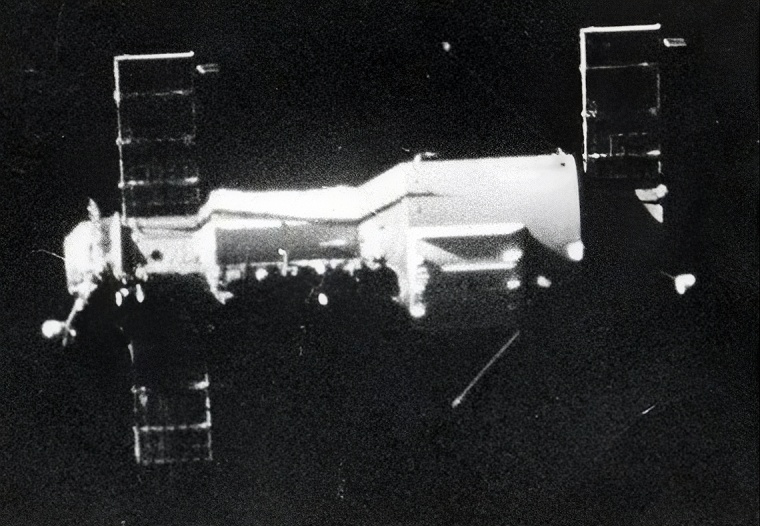
Country: Soviet Union | 1971
Salyut 1 went up on April 19, 1971, and became the first space station ever put into orbit. The Soviet Union built it to test whether crews could live and work in orbit for weeks at a time, with experiments planned in astronomy, biology, Earth observation, and the effects of weightlessness on the body. It was meant to last about six months.
One setback came early, when the cover over its scientific instruments never came off, which cut into some of the planned observations. The first crew to get aboard arrived in June. Soyuz 11 docked on June 7, and its three cosmonauts (the Russian term for astronauts) stayed 23 days, the longest human spaceflight to that point.
The trip home turned fatal. On June 30, the Soyuz 11 cabin lost pressure shortly before reentry. Georgi Dobrovolski, Vladislav Volkov, and Viktor Patsayev were not wearing pressure suits and died within moments. They are still the only people known to have died in space itself, as opposed to during launch or atmospheric reentry.
Salyut 1 was deliberately brought down on October 11, 1971, after 175 days in orbit. The Salyut stations that followed added more docking ports and could be resupplied by uncrewed cargo ships.
NASA says the experience from Salyut 1 shaped later stations, including Mir and the Russian segment of the International Space Station.
2. Skylab: America's First Space Station
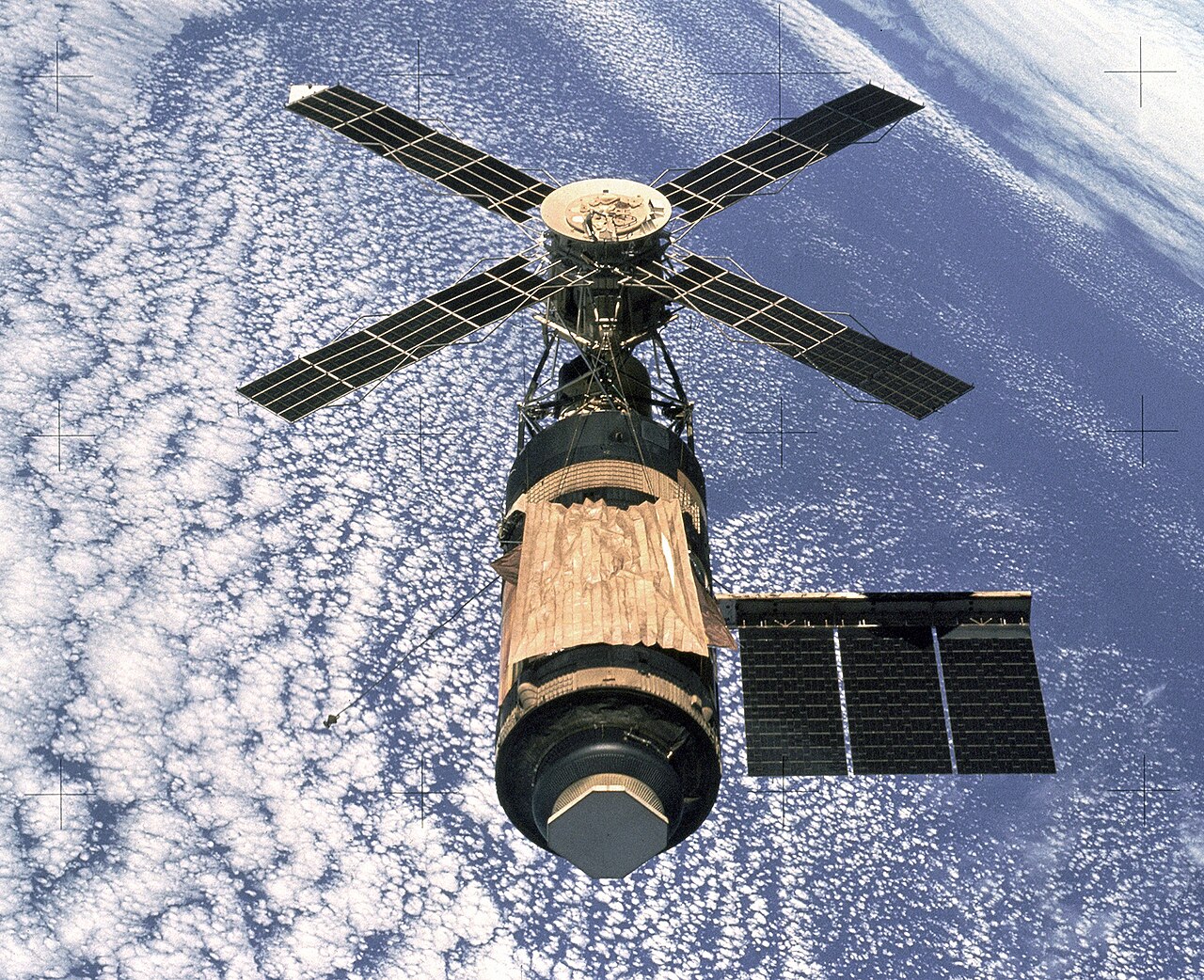
Country: United States | 1973-1979
Skylab, America’s first space station, reached orbit on May 14, 1973. NASA didn’t build it from scratch. It took the S-IVB, the upper stage of a Saturn V rocket, and turned that empty fuel tank into a roomy orbital workshop.
The “dry workshop” approach meant the interior was fully fitted out on the ground before launch. Inside, crews worked on solar astronomy, Earth observation, materials science, and human physiology, including how long stays in microgravity wear on the body.
Three crews visited between 1973 and 1974, and astronauts were aboard for a combined 171 days. The last of them stayed 84 days, an endurance record for the time.
Trouble started at launch. According to NASA, a shield meant to protect the station from micrometeoroids and heat tore away, taking one of its two solar panels with it, and debris jammed the other. The first crew put up a sunshade to cool the station and freed the stuck panel during a spacewalk. That repair saved the mission.
Skylab came back down in an uncontrolled reentry on July 11, 1979, and its debris fell across parts of Western Australia and the Indian Ocean.
3. Mir: The First Modular Space Station
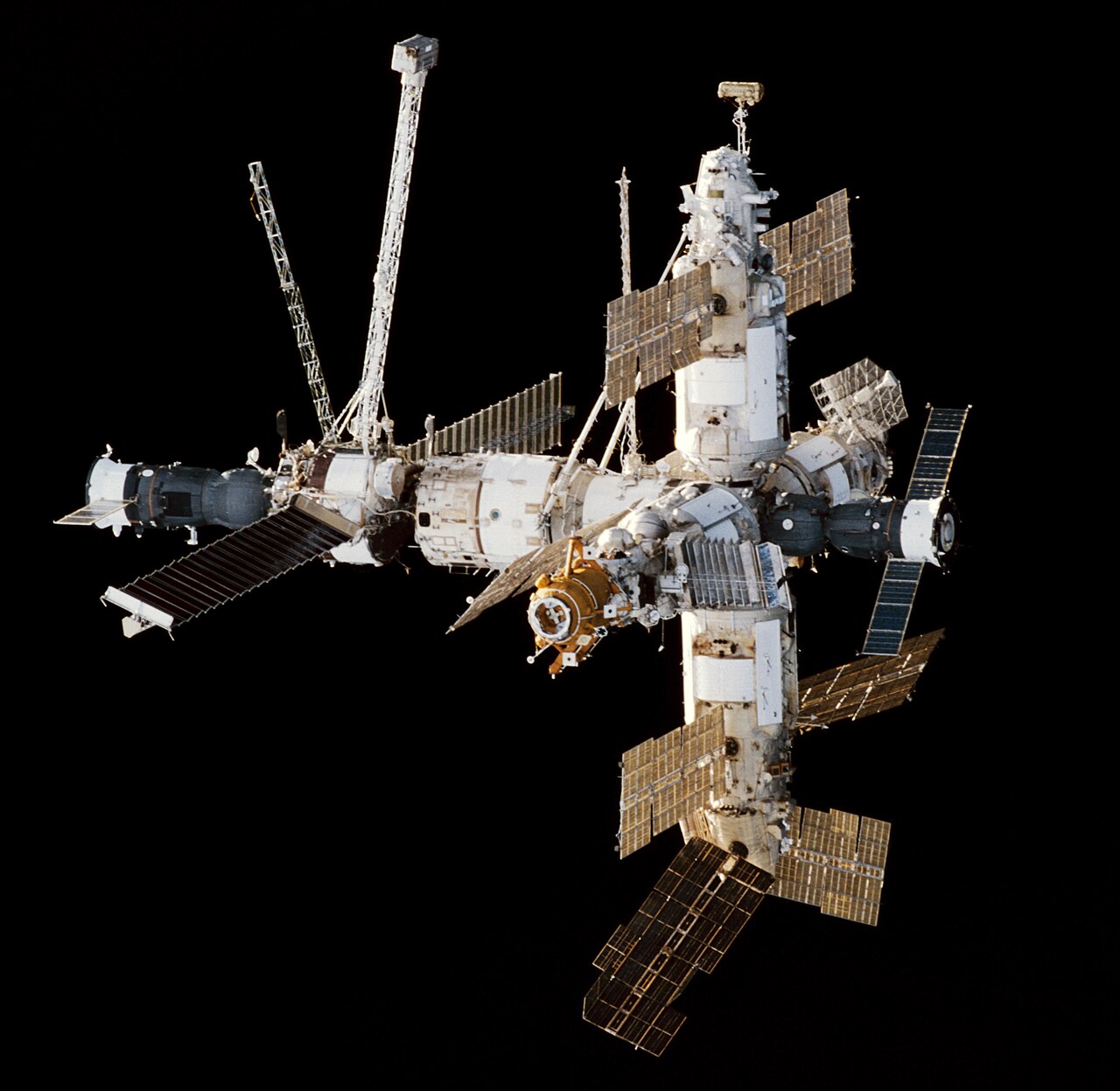
Country: Soviet Union/Russia | 1986-2001
Mir’s core module went up on February 19, 1986, and the Soviet Union had a different plan for it than for the stations before it. Rather than launch one finished structure, engineers built Mir to grow, adding separate modules to the central core over time.
That’s how it became the first modular space station. Through the following decade, research modules were docked to the core one by one, adding living room and lab space each time.
Cosmonauts and visiting astronauts called it home for months at a stretch, running experiments in biology, physics, and medicine while learning what long stays in orbit demand from people and equipment.
In the 1990s, Mir also became a shared workplace. American astronauts lived aboard it during the Shuttle-Mir program, and US space shuttles docked with it. That joint work was a rehearsal for the far larger international project that became the ISS.
The longest single spaceflight ever was also on Mir. Valeri Polyakov spent 437 days aboard in 1994 and 1995, and no one has stayed longer on one trip since, according to NASA.
Mir spent 15 years in orbit and hosted astronauts from 12 countries, according to NASA. It was deliberately brought down on March 23, 2001, with what survived reentry landing in the South Pacific Ocean.
4. Tiangong: China's Independent Space Station
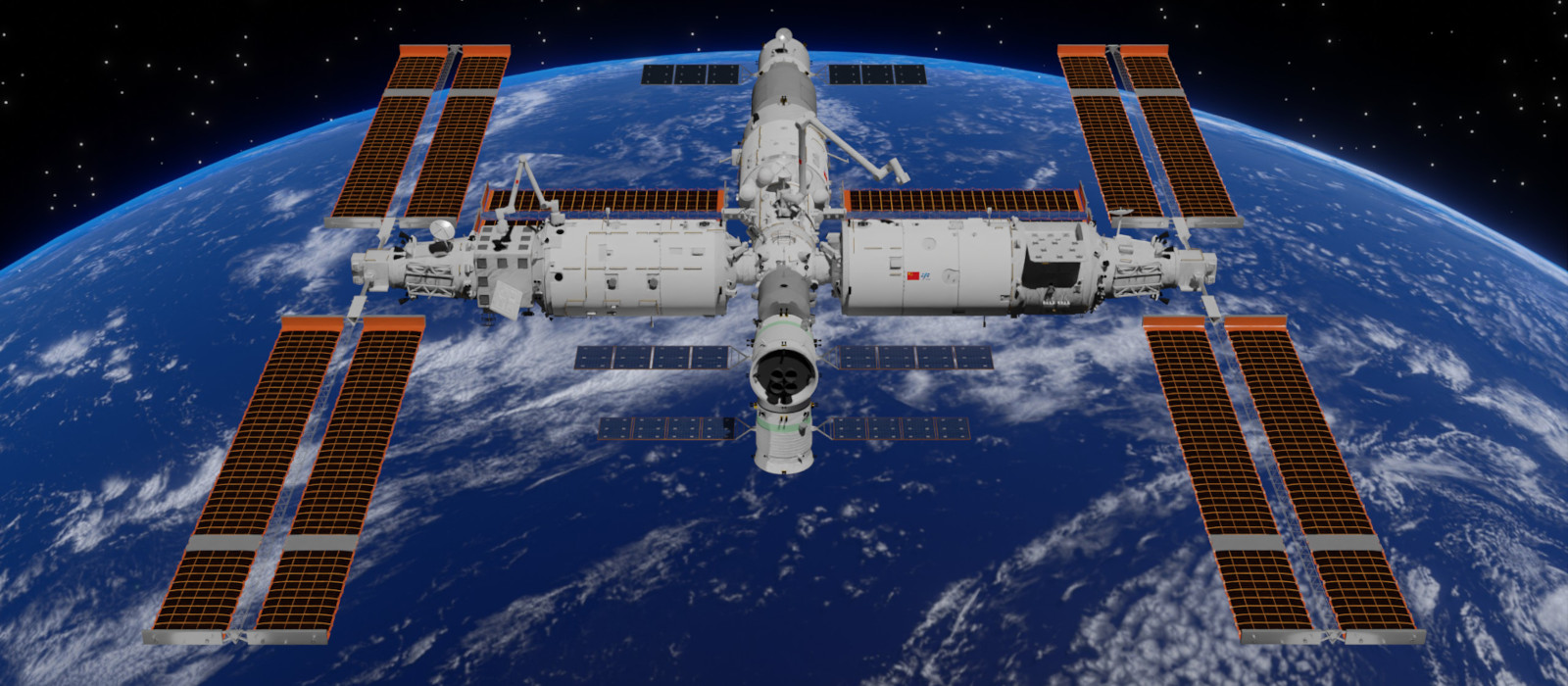
Country: China | 2021-present
The ISS operates through a partnership among several space agencies, but China has never been part of it. Since 2011, US law has restricted NASA’s cooperation with China without congressional approval.
China’s own space station program, however, predates that restriction, and the country has since built its modular station, Tiangong, whose name means "Heavenly Palace".
Construction began on April 29, 2021, when the Tianhe core module reached orbit, and the first crew arrived that June to start crewed operations. Two laboratory modules followed. Wentian launched in July 2022 and Mengtian in October, and with Tianhe they formed the station’s basic three module layout.
Tiangong has living quarters, life-support systems, and space for scientific experiments. Three astronauts normally stay for about six months, and the station can hold up to six while one crew hands over to the next.
China had already flown two smaller experimental labs, Tiangong-1 in 2011 and Tiangong-2 in 2016. Tiangong-1 fell out of orbit uncontrolled in April 2018, while Tiangong-2 was brought down in a controlled deorbit in July 2019. Both were only meant for testing technologies such as spacecraft docking and orbital operations.
The China Manned Space Agency says what it learned from them laid the groundwork for the current Tiangong, which is built to be occupied all the time.