British Lieutenant-General Arthur Percival went to a building in Singapore to negotiate the surrender of British forces to Japan on February 15, 1942.
The building was a car factory.
Known today as the Former Ford Factory, the building in Bukit Timah had begun operations only four months earlier, in October 1941, as an automobile assembly plant. During the Malayan Campaign, the Royal Air Force (RAF) also used it to assemble fighter aircraft.
By February 13, 1942, Japanese forces had seized it and made it the headquarters of their 25th Army. Two days later, the surrender was signed there.
Ford’s Road to Bukit Timah
Ford arrived in Singapore in 1909, when Gadelius & Company began importing its vehicles. In 1926, the company set up Ford Motor Company of Malaya to handle the supply and distribution of Ford vehicles across Malaya, the Dutch East Indies, Siam and Borneo.
Assembly started small. Ford first put cars together in a garage on Enggor Street, then moved to larger premises on nearby Prince Edward Road in 1930. Both sites assembled vehicles from imported components, which let Ford serve regional markets from Singapore.
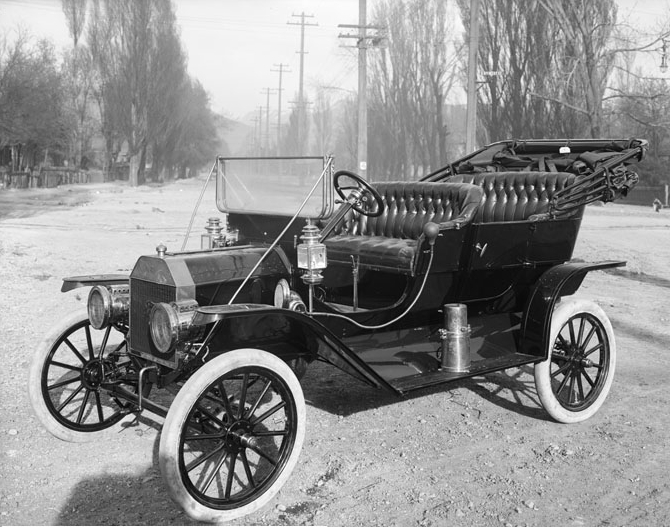
Singapore also served as Ford’s base for coordinating vehicle distribution across several territories in the region. In October 1941, Ford moved into a purpose-built factory on Upper Bukit Timah Road. It was the company’s first purpose-built motorcar assembly plant in Southeast Asia.
The Factory Goes to War
Japan invaded Malaya on December 8, 1941, and pushed south toward Singapore. British and Commonwealth forces struggled to stop the advance down the Malay Peninsula.
The Ford factory was soon pulled into the fighting. The RAF took over the plant to assemble fighter aircraft, but as Singapore became harder to defend, the aircraft were hastily moved off the island toward the end of January 1942.
The Surrender
British forces were in a desperate position by February 1942. Japanese troops had crossed the Johor Strait and landed in Singapore on February 8, and the defenders were being pushed back. Water supplies were running critically low, and food, ammunition and fuel were scarce too.
Japanese forces seized the factory on February 13, 1942, and made it the temporary headquarters of Lieutenant-General Tomoyuki Yamashita, commander of Japan’s 25th Army. In a few months, a plant built to assemble vehicles for commercial markets had become the headquarters of the force invading Singapore.
On the morning of February 15, Percival and 11 senior commanders met at the Battlebox, an underground command centre at Fort Canning, to weigh their options. They discussed a counterattack, then concluded that further resistance was no longer practical and agreed to seek surrender terms.
The Battlebox is where the British agreed to seek terms. The Ford factory is where they signed. Percival then travelled to the Ford factory to meet Yamashita.
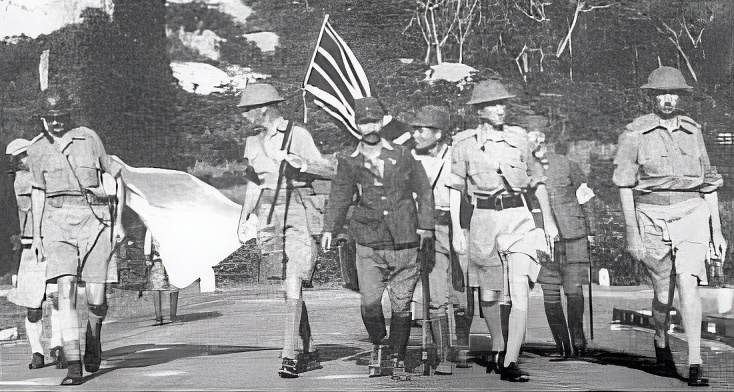
The meeting took place in the factory’s boardroom.
Yamashita demanded an immediate, unconditional surrender and threatened to launch another major attack if the British refused. Percival signed the surrender document that evening.
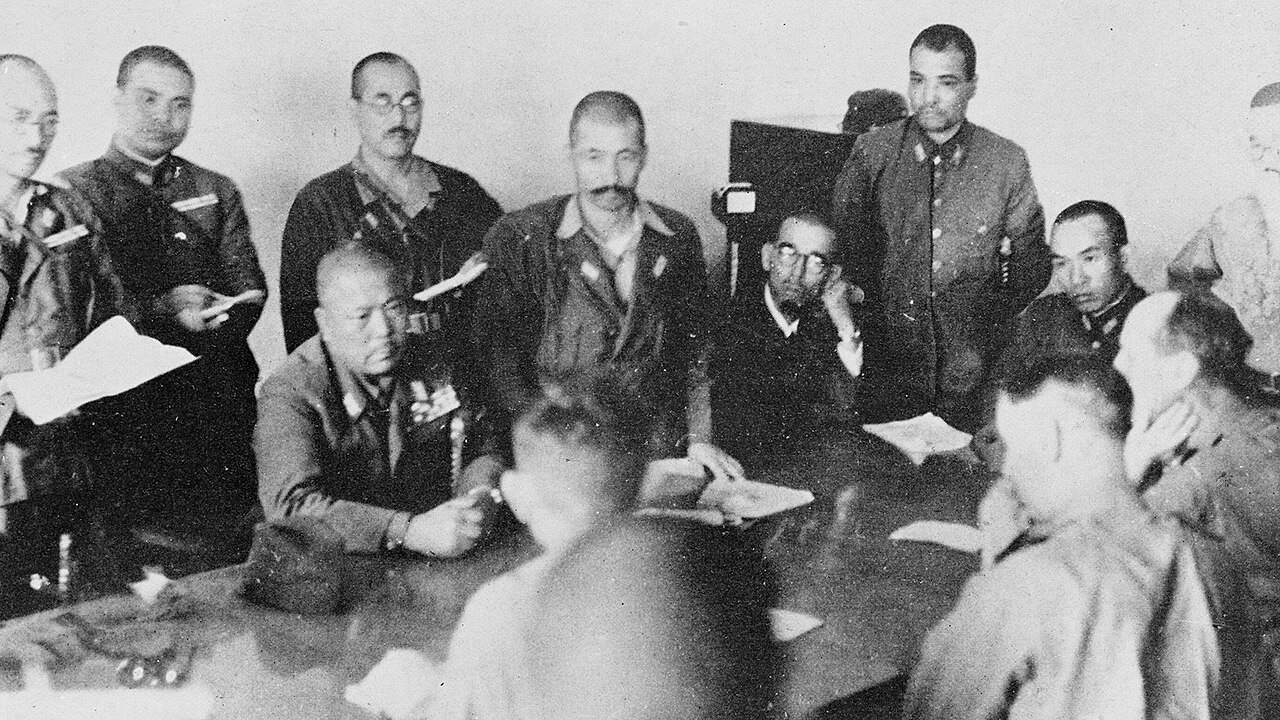
The surrender was a major defeat for the British Empire in Asia. More than 130,000 Allied personnel became prisoners of war, and the civilian population lived under Japanese occupation for three years and seven months, until September 1945.
After the War
After the war, the British Army took over the factory and returned it to Ford in 1947. Ford resumed vehicle assembly.
A November 1949 advertisement reproduced in the National Library Board Singapore’s BiblioAsia said the facility could produce up to 20 vehicle chassis and eight passenger-car bodies per day, across seven models of cars and trucks. That is advertised capacity, not verified daily output.
The plant kept running for more than three decades before closing in June 1980.
Not everything survived. In 1997, much of the original complex was demolished to make way for a condominium development. The historic front section was kept, including the boardroom where the surrender took place.
On February 15, 2006, the surviving structure was gazetted as a national monument. It opened as Memories at Old Ford Factory, a heritage centre on Singapore’s experience during World War II. After a major renovation, it reopened in February 2017 with an updated exhibition, Surviving the Japanese Occupation: War and its Legacies.
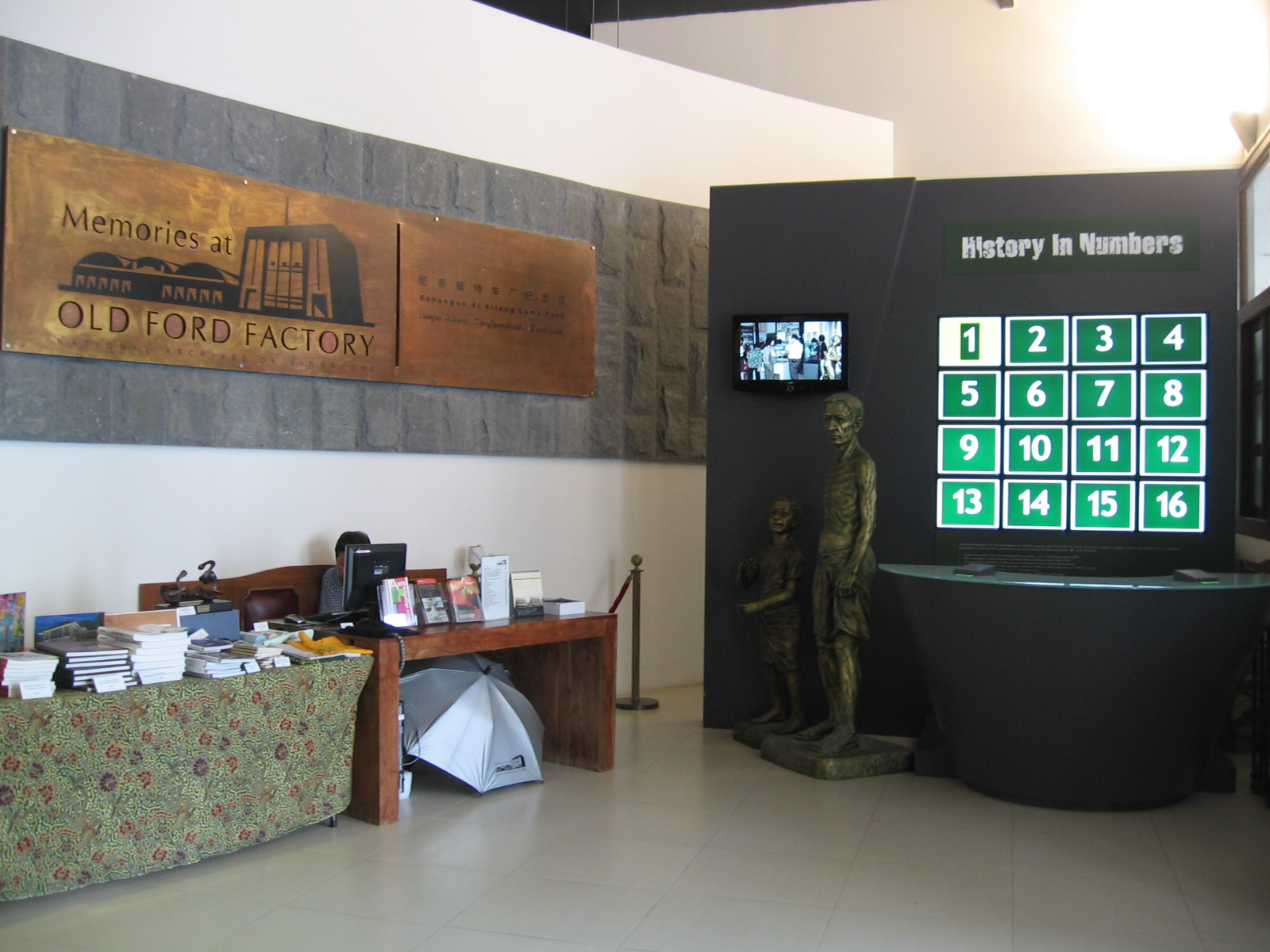
The permanent exhibition now covers the Japanese Occupation and its impact on Singapore. Visitors can also learn about the building’s earlier role in the automobile industry and see the room where the surrender took place.