The city of Sendai in Miyagi Prefecture features a massive religious statue. The statue is known as Sendai Daikannon. It stands on the hilly area of Izumi Ward.
The structure depicts Byakue Kannon, the white-robed form of the Goddess of Mercy in Mahayana Buddhist tradition.
The construction of the statue was completed in the early 1990s. The statue held the record as the tallest statue in the world upon its completion in 1991.
Sendai Daikannon is recorded as the second-tallest statue in Japan after Ushiku Daibutsu. The building serves as a temple of worship under the management of Daikanmitsuji Temple.
When the Sendai Daikannon Statue Was Erected
The construction project of Sendai Daikannon began in the late 1980s. The initiator of the project was a local development company named Futaba Group.
Statue construction was officially completed on September 1, 1991. The project work spanned several years, involving civil engineering experts.
The inauguration timing of the statue aligned with the administrative history of the area. The statue construction marked the 100th anniversary of the designation of Sendai as a municipality since 1889.
Erection of the statue served as a symbol of gratitude from the developer as well as a form of spiritual protection for the people of Sendai.
Following completion, management of the statue was handed over to Daikanmitsuji Temple. The building was subsequently used as a place of worship and a pilgrimage site.
The Architectural Design of the 100 Meter Concrete Statue
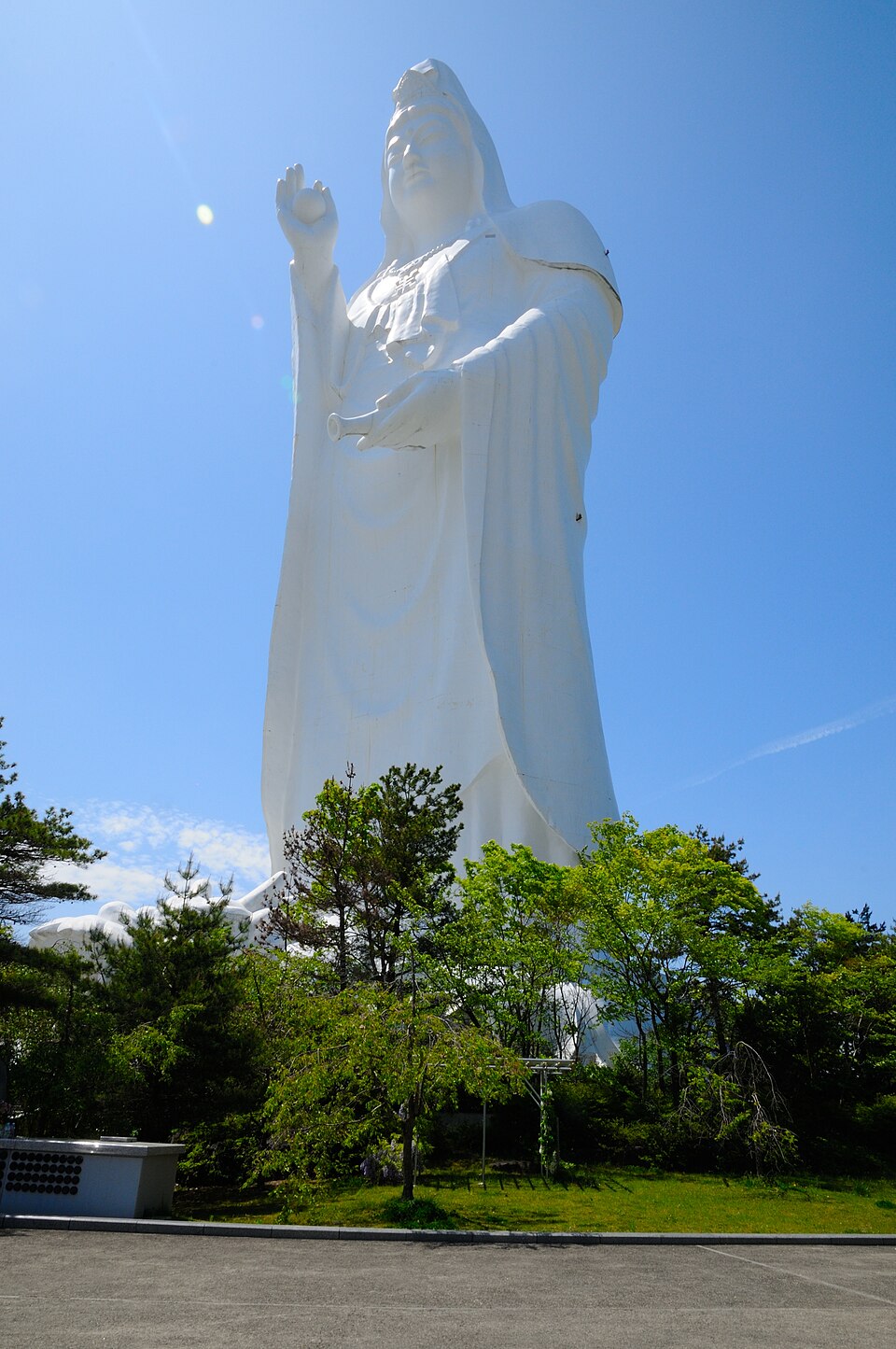
Sendai Daikannon stands at a total height of 100 meters above the ground. The physical structure of the statue measures 92 meters in height, with an additional 8 meter pedestal base.
The outer portion of the statue utilizes reinforced concrete material. The entire exterior layer is painted bright white.
The concrete foundation of the statue extends 21 meters deep into the ground. Foundation depth was engineered to withstand the weight of the structure along with earthquake tremors in the Miyagi region.
The 21-meter depth measurement of the foundation also carries a specific symbolic value. The figure was designed to represent prayers for safety leading into the 21st century.
Maintenance of the outer layer of the statue is carried out periodically. In 2023, the management executed paint cleaning and concrete crack repairs using a rope access team without erecting metal scaffolding.
The face of the statue is set facing south. Building orientation points directly toward the downtown area and Sendai Station.
The direction of the statue allows the gaze of the statue to overlook urban areas spanning commercial districts to residential neighborhoods.
The statue holds two symbolic items in its hands. The right hand holds the Nyoihouju gem, which symbolizes the granting of wishes.
The left hand of the statue holds a Suibe water flask tilted downward. The flask symbolizes the pouring of the water of wisdom.
The Interior Features of the 12 Story Statue
The interior of Sendai Daikannon features a hollow space designed as a 12-story temple structure.
The main entrance at the base is built to resemble the shape of a dragon mouth. The architectural shape of the entrance symbolizes good fortune.
An elevator facility is installed in the central area of the interior. The lift connects the ground floor to the highest level inside the statue.
A manual staircase is constructed around the main central axis of the interior. The staircase serves as an alternative access route between floors.
The ground floor houses 33 statues depicting manifestations of Kannon. The area also holds 12 statues of guardian generals of the zodiac based on traditional calendars.
Levels 3 through 11 house 108 small Buddha statues. The number 108 represents the count of human worldly desires in Buddhist teaching.
Worship altars are installed on several interior floor levels. Offering tables and incense burners are placed in front of the altar areas.
The top floor features several small windows in the chest and back areas of the statue. The windows overlook the landscape of Sendai City out to the Pacific Ocean coastline.