Taiping is a city located in the Larut, Matang, and Selama District in the state of Perak, Malaysia. The city center sits on lowlands directly at the foot of Bukit Larut.
The geographical position causes cloud formations from the Malacca Strait to become trapped against the mountain slopes.
The administrative area of Taiping covers 186 square kilometers. The urban settlement grew out of mid-19th-century tin mining fields. The spatial layout of the region was shaped following the distribution of mining sites and surrounding natural waterways.
Klian Pauh Tin Mining Settlement
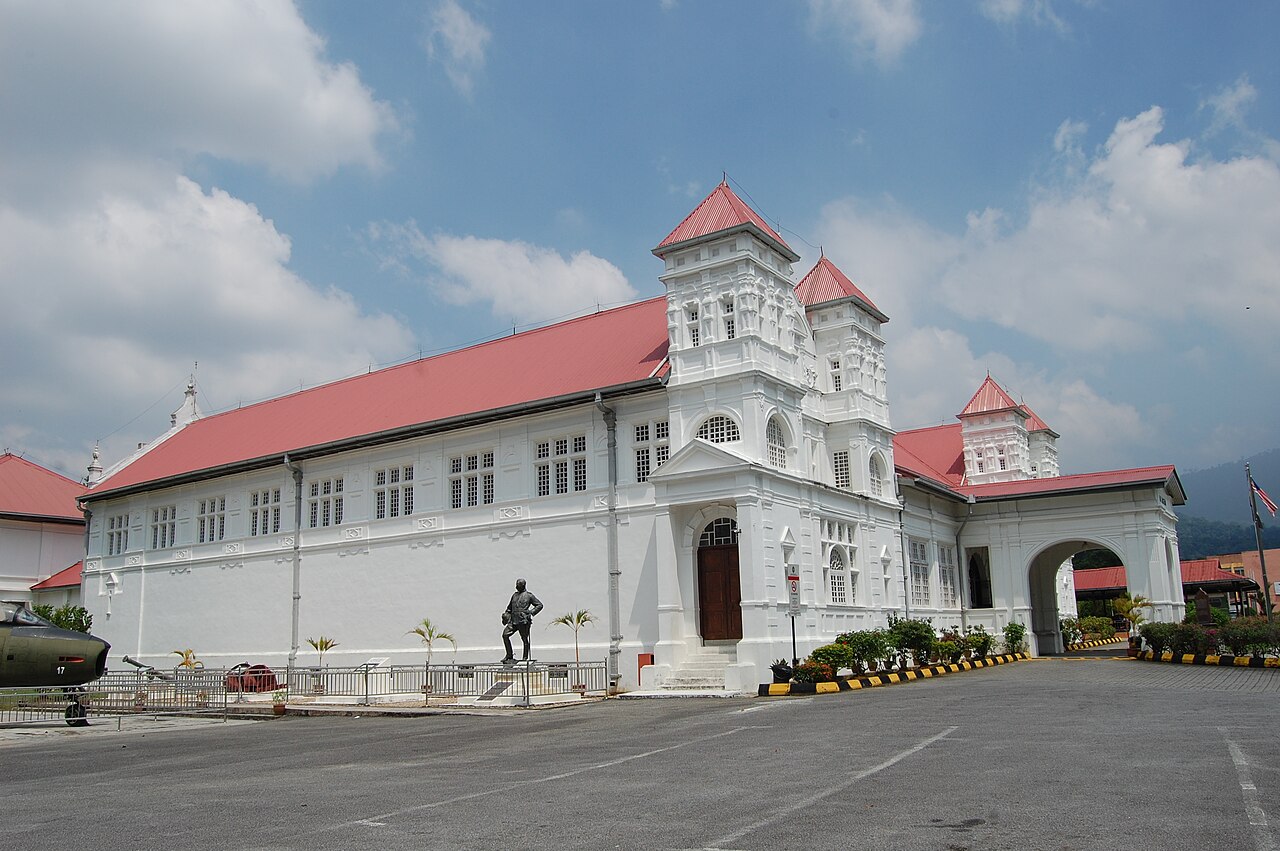
The development of the city originated from a small settlement named Klian Pauh. Regional history shifted when a Malay chieftain named Long Jaafar discovered tin reserves in 1848. The discovery occurred after a pet elephant named Larut returned with legs covered in tin ore mud.
The discovery triggered a wave of thousands of Chinese workers arriving in the Larut region. Tin extraction activities transformed Klian Pauh into the primary tin production hub in the state of Perak.
Competition over mining land and water channels triggered an armed conflict known as the Larut Wars. The conflict involved the Ghee Hin faction, dominated by Cantonese miners, and the Hai San faction from the Hakka community. The fighting spanned four waves from 1861 to 1873.
Governor of the Straits Settlements Sir Andrew Clarke resolved the conflict through the signing of the Pangkor Treaty in 1874. The agreement marked the introduction of the British Residential System in Perak. The colonial administration subsequently renamed Klian Pauh to Taiping, a Mandarin phrase meaning everlasting peace.
British Colonial Administrative Center of Perak
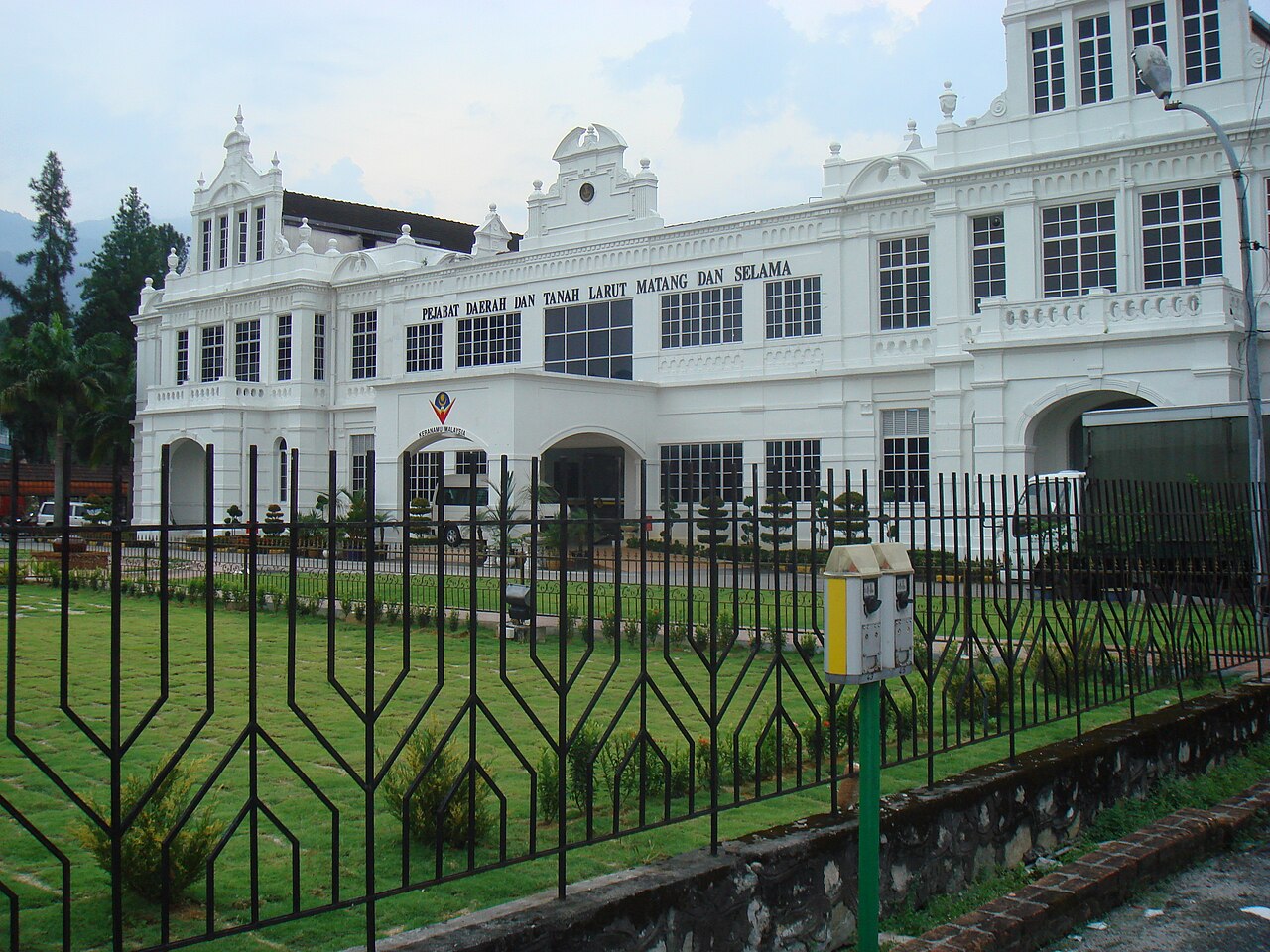
The signing of the Pangkor Treaty in 1874 was followed by the designation of a new administrative status. In 1876, the British government established Taiping as the capital of the state of Perak. The new status displaced the previous seat of government located in Kuala Kangsar.
The planning of the city center was led by Assistant Resident Captain Tristram Speedy alongside Resident Sir Hugh Low. Bureaucratic building construction was carried out to streamline regional administration and the oversight of the tin trade system.
Government support facilities were built incrementally across the urban area. The colonial administration established Taiping Gaol in 1879 as the oldest prison complex in Malaysia. The colonial government also constructed the Perak Museum in 1883 to document local cultural artifacts.
Mining commodity transport infrastructure was built to replace muddy overland routes. In 1885, the first railway line in Malaya officially operated under the management of the Perak Government Railway. The 13.5-kilometer rail route connected Taiping Station to Port Weld for tin shipments to Penang.
Relocation of the Administrative Center to Ipoh
Taiping remained the administrative capital of Perak for 61 years. In the late 1880s, the discovery of massive tin deposits in the Kinta Valley shifted the focus of economic investment. The colonial government officially relocated the capital of Perak from Taiping to Ipoh in 1937.
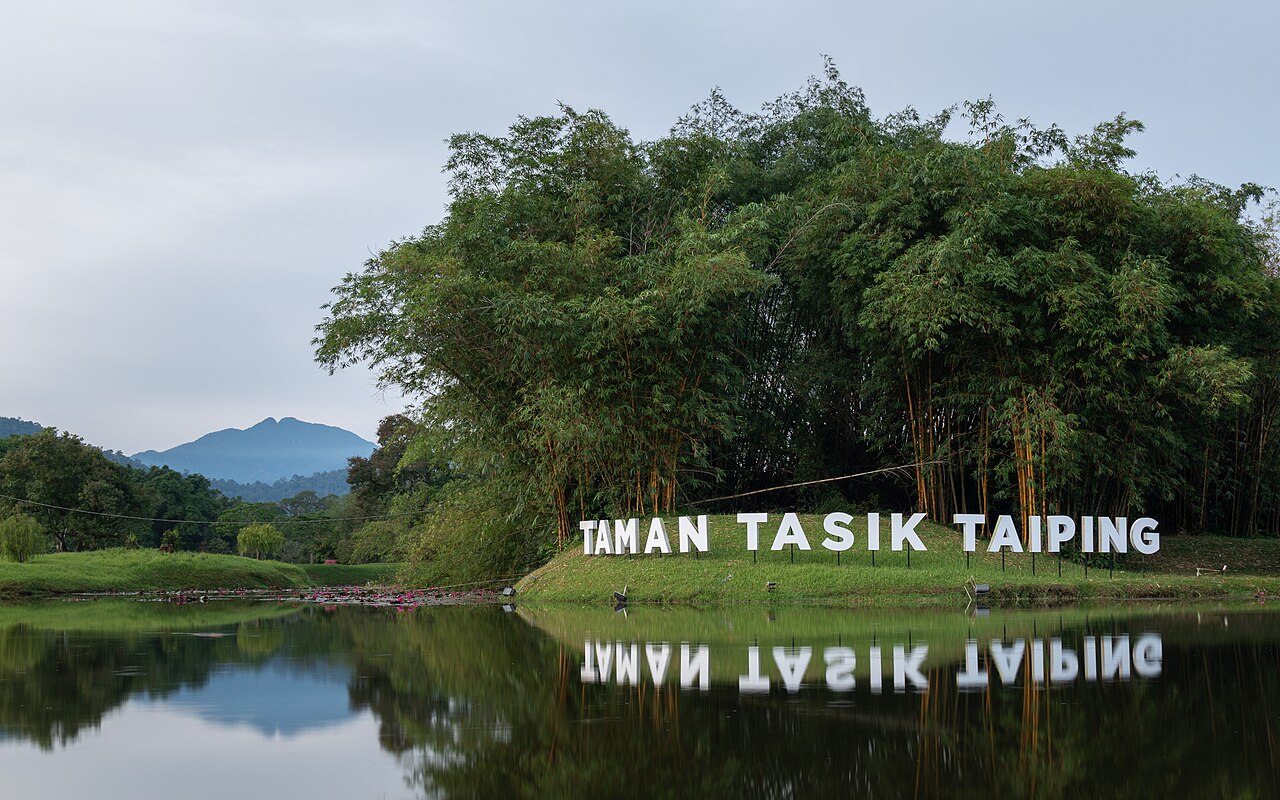
Following the decline of mining activity in Taiping, former excavation grounds were converted into public facilities. A colonial officer named Colonel Robert Sandilands Frowd Walker initiated the establishment of Taiping Lake Gardens in 1880. The 64-hectare area encompasses ten artificial lakes formed from former mining pits.
The colonial government planted Samanea saman trees along the lake shores starting in the late 19th century. The branches of the old trees grew outward until bending down toward the water surface. The green area was developed as a public conservation zone directly connected to the foot of Bukit Larut.