A large traditional boat sits on the lagoon around the Sultan Omar Ali Saifuddien Mosque in Brunei, looking ready to sail across the water.
The boat is called Bahtera Mahligai, and it is a concrete replica of a 16th-century royal vessel. Its shape follows that of an old royal barge, and it reflects the maritime and royal heritage of the country.
Bahtera Mahligai was built to commemorate the 1,400th anniversary of Nuzul Al-Quran, the revelation of the Quran. The structure was officially inaugurated on December 18, 1967.
A Replica Inspired by Brunei's Royal Past
Bahtera Mahligai is linked to the reign of Sultan Bolkiah, the fifth Sultan of Brunei, who ruled from 1485 to 1524. His reign is commonly regarded as a high point in the history of the Bruneian Sultanate.
According to Brunei's Department of Information, the sultanate became a dominant regional power during the 15th and 16th centuries, particularly under Sultan Bolkiah and Sultan Hassan, with its influence extending across Borneo and as far as the Philippines.
Waterways were part of Brunei’s historical identity, and the royal barge reflects this. Kampong Ayer, a settlement built along the Brunei River, has a history stretching back more than a thousand years. Its houses are connected by wooden walkways and waterways, and daily life in the community was closely tied to the river.
The river was also used for transportation and commerce, connecting the settlement with other parts of Brunei and the wider trading world.
According to a 2011 study titled “The Brunei Shipwreck: A Witness to the International Trade in the China Sea around 1500” published in The Silk Road, the wreck of a merchant junk found about 41 kilometers off Brunei dates to around 1500, between the late 15th and early 16th centuries, based on ceramics recovered from the site.
Its cargo included ceramics from China, Thailand and Vietnam, providing evidence of the maritime trade networks that connected different parts of Asia during that period.
The Nuzul Al-Quran Celebrations in 1967
The inauguration was held in the evening and led by Sultan Hassanal Bolkiah at the lagoon of Omar Ali Saifuddien Mosque, as part of the celebrations for the 1,400th anniversary of Nuzul Al-Quran.
The structure was planned for the occasion. A report published in Pelita Brunei on July 5, 1967, announced that construction had begun on a structure in the mosque's lagoon, designed to resemble an ancient Malay royal barge.
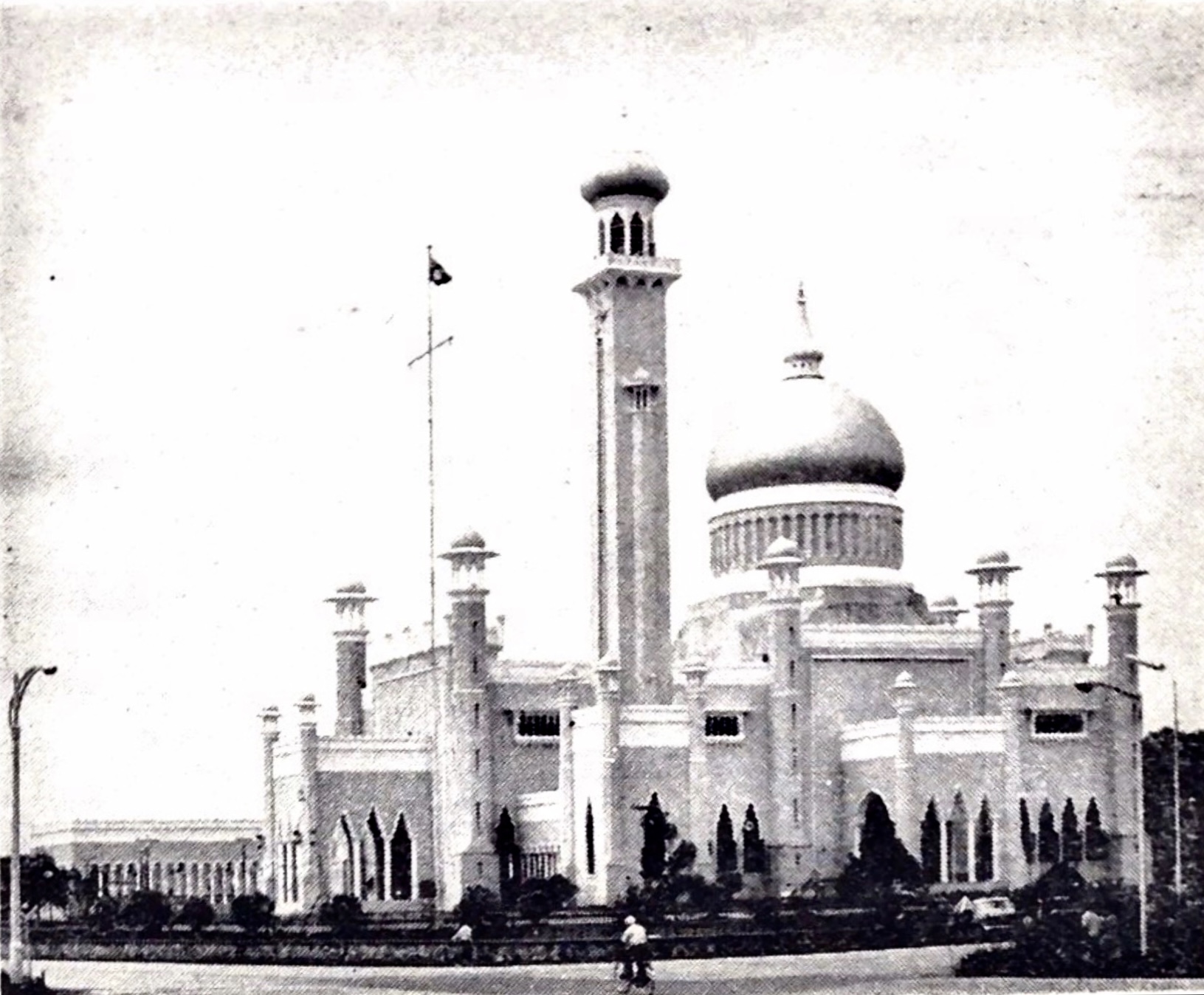
The celebrations were planned as a seven-day programme involving schoolchildren, youth associations, and adults from different districts. The proposed activities also included religious lectures by Islamic scholars from Egypt, Indonesia, Malaysia, and other Muslim countries.
According to Pelita Brunei, the construction was estimated to cost approximately BND500,000 (roughly US$390,000). The structure was also intended to serve as a venue for religious gatherings and Quran recitation competitions.
After its inauguration, Bahtera Mahligai was used as a stage for Quran recitation competitions during the late 1960s and 1970s. These competitions formed part of Brunei's religious celebrations in those years.
The Mosque Beside the Lagoon
Bahtera Mahligai stands in the lagoon beside the Sultan Omar Ali Saifuddien Mosque in Bandar Seri Begawan.
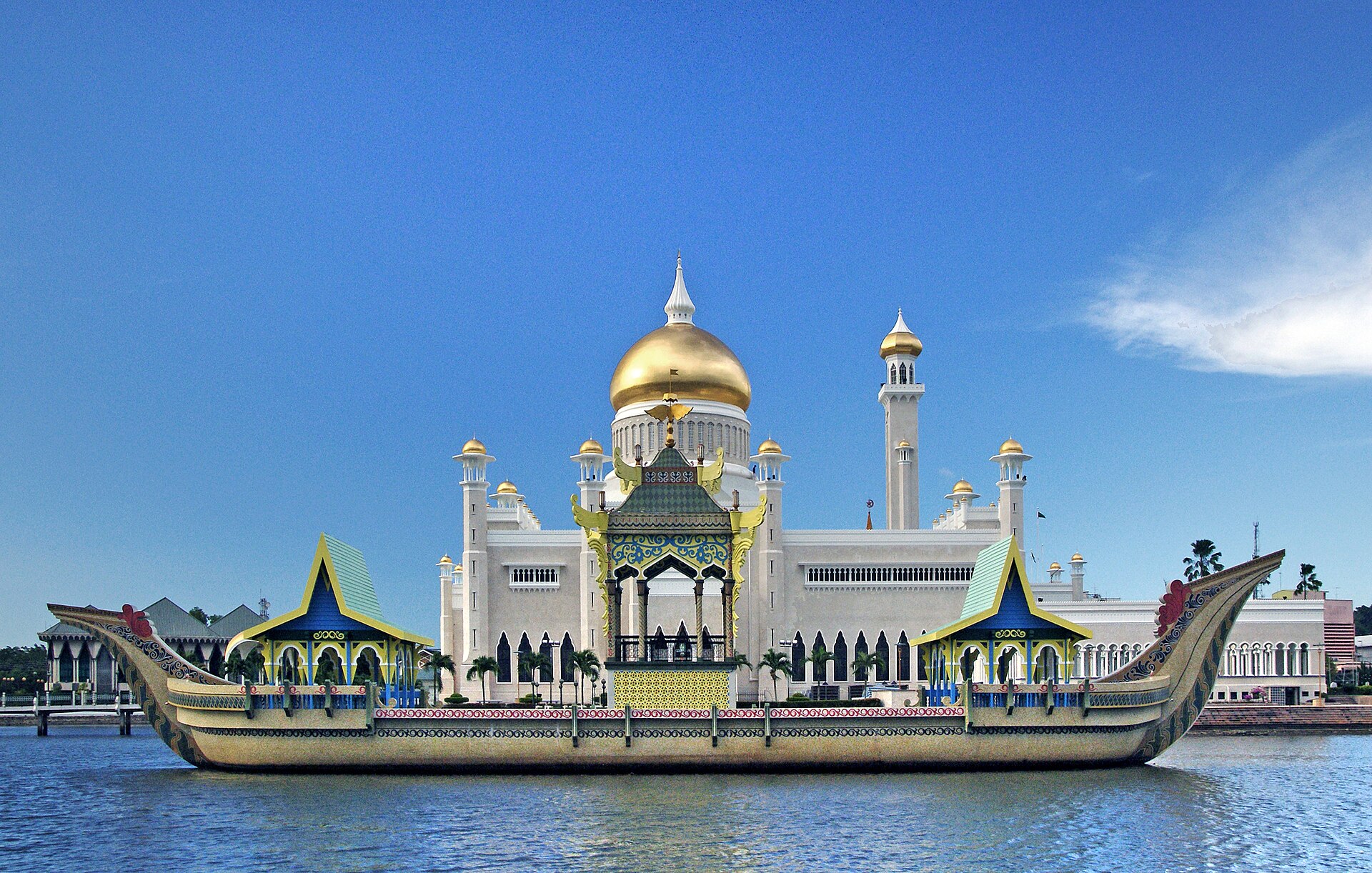
The mosque was officially opened on September 26, 1958, by Sultan Omar Ali Saifuddien III, the country’s 28th Sultan and the father of the current monarch, Sultan Hassanal Bolkiah.
Its architecture combines classical Islamic design with Mughal influences from India. The building has a golden dome, Italian marble columns, and stained-glass windows. It also includes local Bruneian elements, such as exterior pillars inspired by the traditional kalat, a thick rope used in the country.
The mosque is surrounded by a lagoon, landscaped gardens, and ornamental structures. The artificial lagoon makes the mosque appear to rise above the water.
The mosque reflects Brunei's Islamic architectural heritage, and the replica in the lagoon represents the country’s royal and maritime past. Bahtera Mahligai does not operate as a vessel and remains in the lagoon beside the mosque.