The minaret leans about six degrees. It looks more like a European church steeple than a mosque tower, and green Chinese porcelain tiles line its parapets.
This is Hajjah Fatimah Mosque in Singapore’s Kampong Glam, completed in 1846. Its founder was a wealthy businesswoman and philanthropist who gave the land and the funds to build it after her home was burned down.
A Mosque Founded by a Businesswoman
Hajjah Fatimah binti Sulaiman came from Melaka and settled in Singapore. She married a Bugis prince and merchant from Sulawesi whose business operated in the city, according to Singapore’s National Library Board.
When he died, she took over the trading business and grew it with her own vessels and her late husband’s commercial connections. In time, she became a wealthy trader with a fleet of steamers and sailing ships.
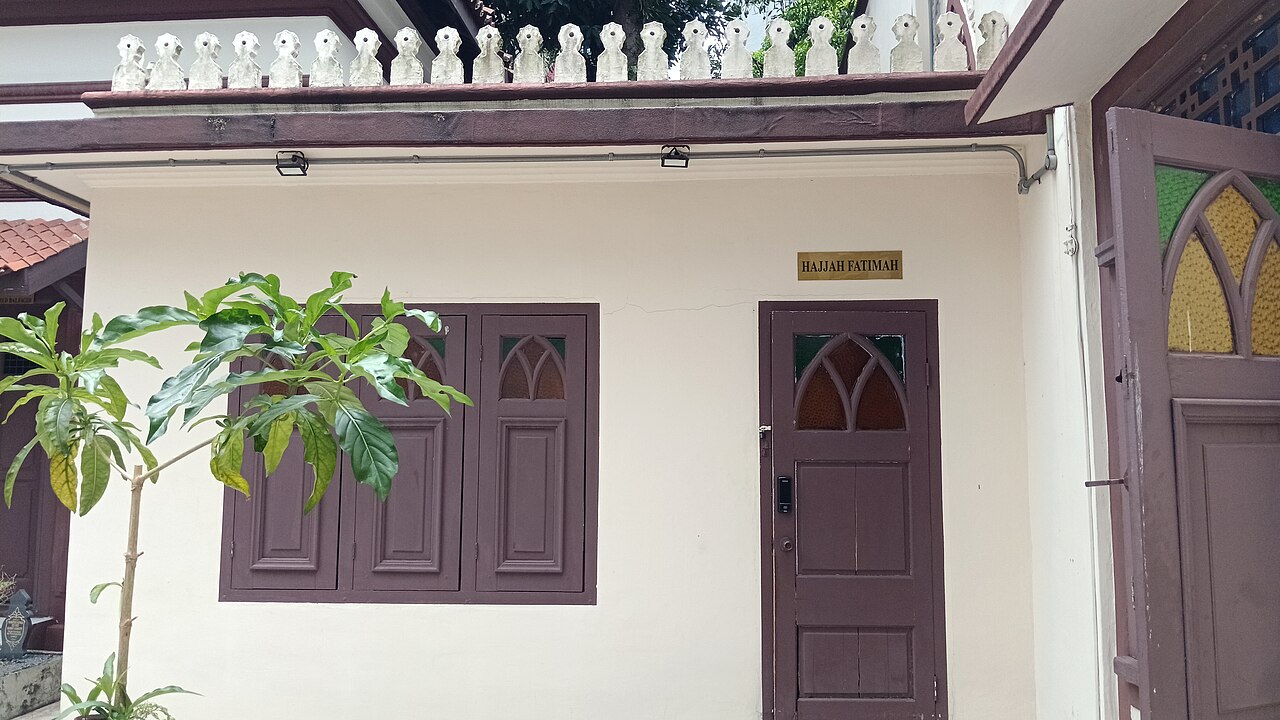
In the late 1830s, her house in Kampong Glam was ransacked twice. The second time, it was set on fire. She was away and came out unharmed.
She gave the land where the house had stood, along with the funds to build a mosque. Construction ran from 1845 to 1846, and she later rebuilt her home nearby. She also paid for houses on the surrounding land for her family and for people living in poverty.
The mosque became a place of worship for the neighbourhood’s Muslim community, and it still carries her name.
The Minaret That Looks Like a Church Steeple
Most minarets are slender towers used for the call to prayer. The minaret at Hajjah Fatimah Mosque rises from a square base into two octagonal levels, topped by an eight-sided spire. It resembles a European Neoclassical church steeple.
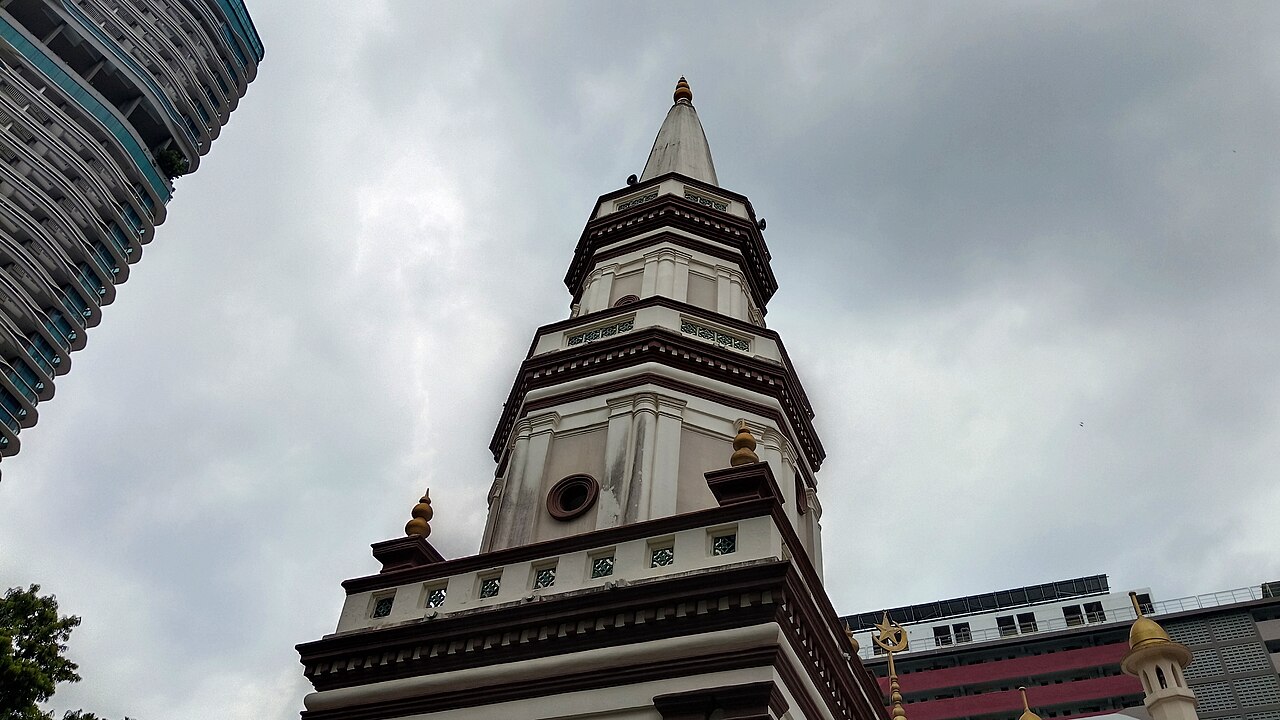
Singapore’s National Heritage Board compares it to the steeple of the first St Andrew’s Church, which preceded today’s St Andrew’s Cathedral. Green glazed porcelain tiles, a Chinese touch, line sections of its parapets.
Who designed it is unclear. John T. Thomson, a colonial surveyor, is believed to have overseen the construction of the earliest sections, but no surviving source establishes his role conclusively.
The tower also leans by about six degrees, which has earned comparisons with the Leaning Tower of Pisa. The tilt has been blamed on the sandy ground beneath the structure and on the slow shifting of its handmade bricks, which moisture seeped into over time.
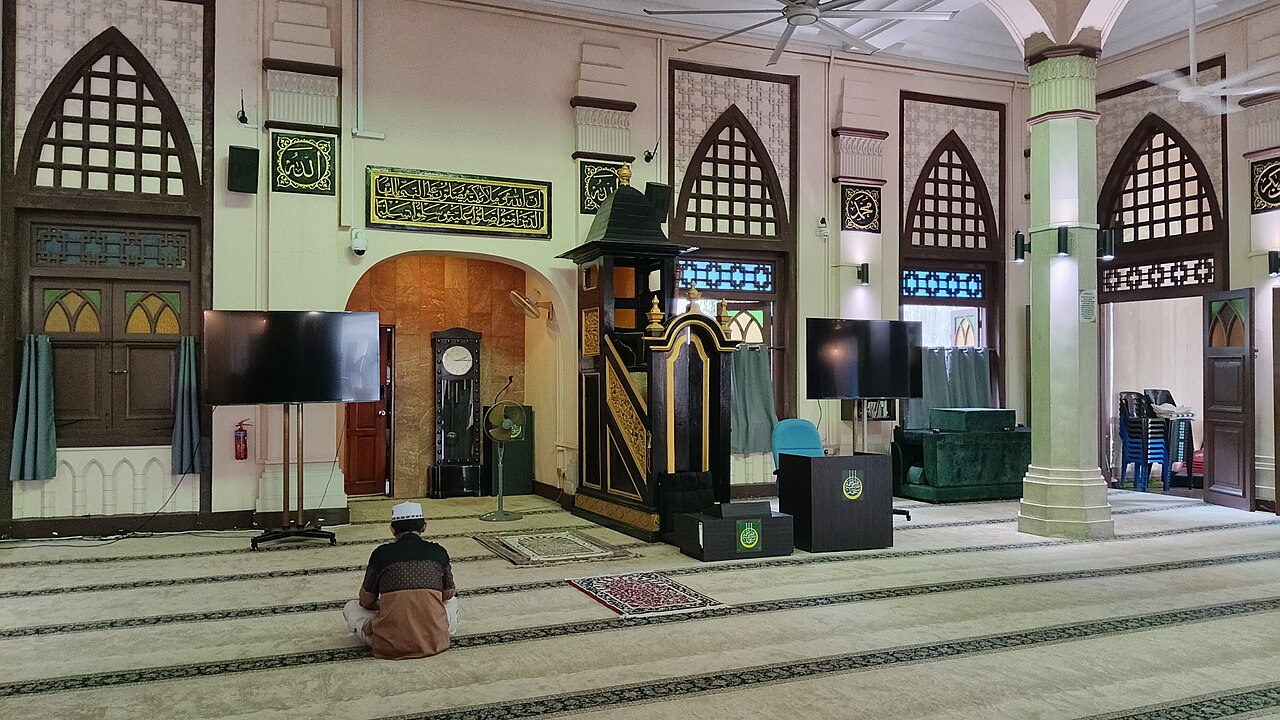
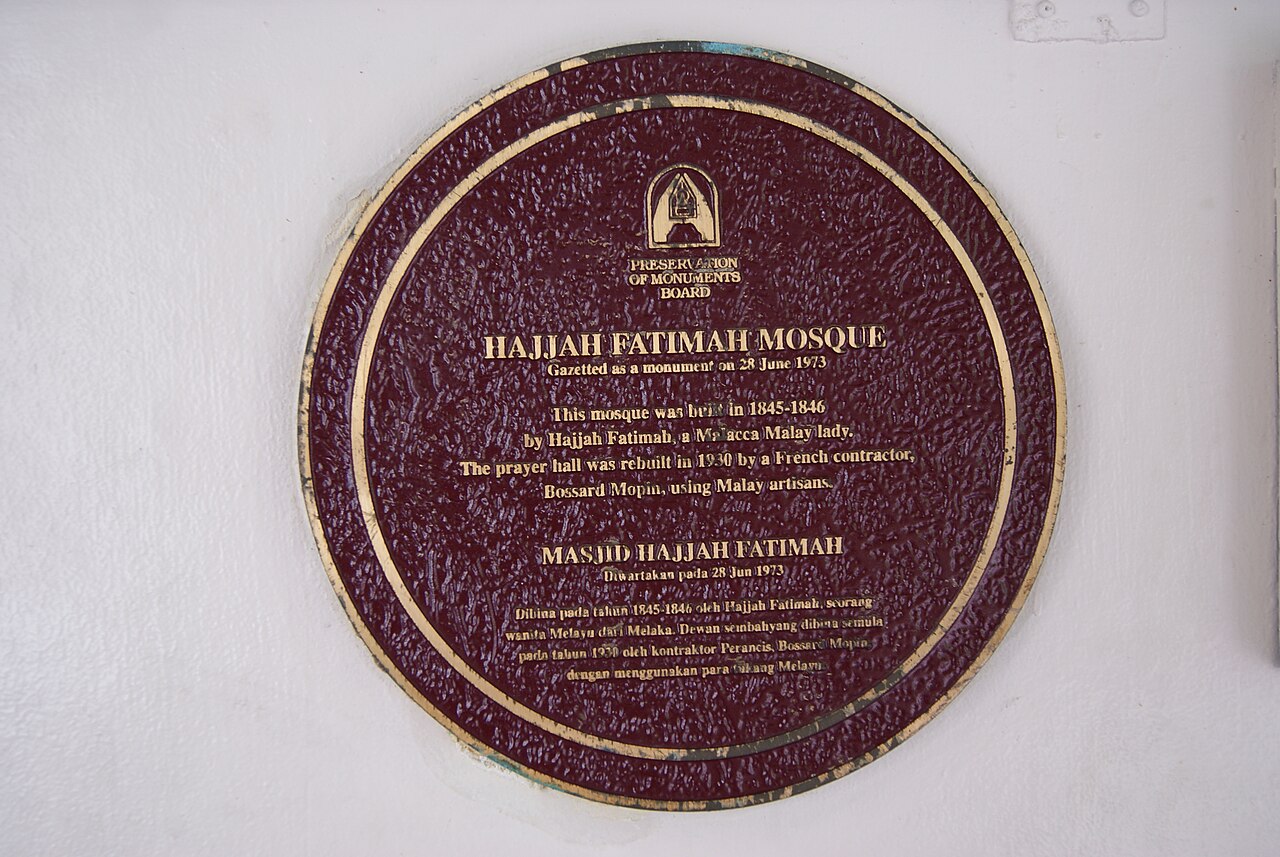
Restoration work has reinforced parts of the tower and helped monitor its condition, without removing the lean. On 28 June 1973, the mosque was designated a National Monument of Singapore.
Many Hands, One Mosque
The mosque did not stay as it was in the 1840s. Around 1930, part of the prayer hall was rebuilt to designs by Chung & Wong, a local architectural firm, with Malay artisans and craftsmen contributing to the work, according to Singapore’s National Heritage Board.
The minaret, with its church-like profile, dates to the early period. The rebuilt hall is Indo-Saracenic, a style that blends Indian and Islamic elements with European influences, and the mosque also has an onion-shaped dome. Different builders, working decades apart, left their marks on the same building.
Through all of it, the mosque has remained a place of Muslim worship, the purpose for which Hajjah Fatimah founded it in the nineteenth century.