Indonesia had 38 provinces, 416 regencies, and 98 cities in 2025, according to Statistics Indonesia (BPS). Most of them have their own elected leaders, their own legislature, and their own budget.
Together, they account for around half of government expenditure, not counting subsidies, interest payments, and transfers.
This is regional autonomy, or otonomi daerah. So who actually decides what? Jakartal, the province, or the regency?
Who Decides What
Indonesia has three tiers of government, which are the central government, the provinces, and the regencies and cities. The legal footing is Article 18 of the 1945 Constitution, which gives regional governments the broadest possible autonomy except for what national law reserves for the center.
Law No. 23 of 2014 on Regional Government splits the work between those tiers based on accountability, efficiency, externalities, and national strategic interests. Some affairs belong to Jakarta alone, and the rest are shared. That shared part is the core of regional autonomy, and in each area the three tiers get different roles.
| Type of affair | Who handles it | Examples |
|---|---|---|
| Absolute | Central government only | Foreign affairs, defence, security, judicial affairs, national monetary and fiscal policy, religion |
| Concurrent (mandatory) | Shared: central, provincial, regency/city | Education, healthcare, public works, transportation, environmental management |
| Concurrent (optional) | Shared: central, provincial, regency/city | Tourism, agriculture |
Jakarta sets national standards and runs higher education, while madrasahs, Islamic schools that combine religious and general subjects, fall under the Ministry of Religious Affairs.
Provinces handle senior high schools, vocational schools, and special education. Regencies and cities take primary and junior secondary schools, plus early childhood and non-formal education.
What Regional Governments Can Actually Do
Every province has a governor and a regional legislature called the DPRD. Regencies and cities have the same setup, with residents electing both the regional head and the legislators.
Governors, regents, and mayors run the administration. DPRD members have three jobs. They draft regional regulations together with the regional head, approve the budget the head proposes, and oversee how policies are carried out.
These regulations are called Peraturan Daerah, or Perda, and regions use them to handle local needs. A Perda is adopted jointly by the DPRD and the regional head, and it can’t contradict national law.
The money flows through the annual regional budget, the Anggaran Pendapatan dan Belanja Daerah (APBD). It pays for public services, infrastructure, and other regional duties. The funds come from locally generated revenue, transfers from the central government, and other lawful regional income.
Regions get room to set their own priorities, but their authority and their money still sit inside national rules and Indonesia’s fiscal system.
Indonesia’s Big Bang
Today’s system took shape after Suharto fell in 1998. Under his New Order government, which ran from 1966 to 1998, almost all political and economic power sat in Jakarta, and regional administrations had little say over most decisions.
Once he was was step down, the regions pushed for more control over their own development, spending, and natural resources. Many of them had spent decades watching their revenues get managed from the capital.
The government answered with two laws in 1999. Law No. 22 set up the new framework for regional autonomy, and Law No. 25 covered the money relationship between Jakarta and the regions.
They took effect on 1 January 2001, in what became known as Indonesia’s “Big Bang” decentralisation. Large chunks of administrative duties and funding moved to regional governments, mostly at the regency and city level.
The rules have been rewritten since then. Law No. 32 of 2004 replaced Law No. 22 of 1999, and Law No. 33 of 2004 replaced Law No. 25 of 1999. Then Law No. 23 of 2014 replaced Law No. 32 of 2004 and became the main law on regional government today.
The 2014 law also reshuffled power in sectors like forestry, mining, and marine affairs. Some authority that used to sit with regencies and cities went up to the provinces and the central government.
The Regions That Get Extra Powers
Aceh has special autonomy under Law No. 11 of 2006. It can enforce Islamic law through regional regulations called qanun, and local political parties can run in its regional elections.
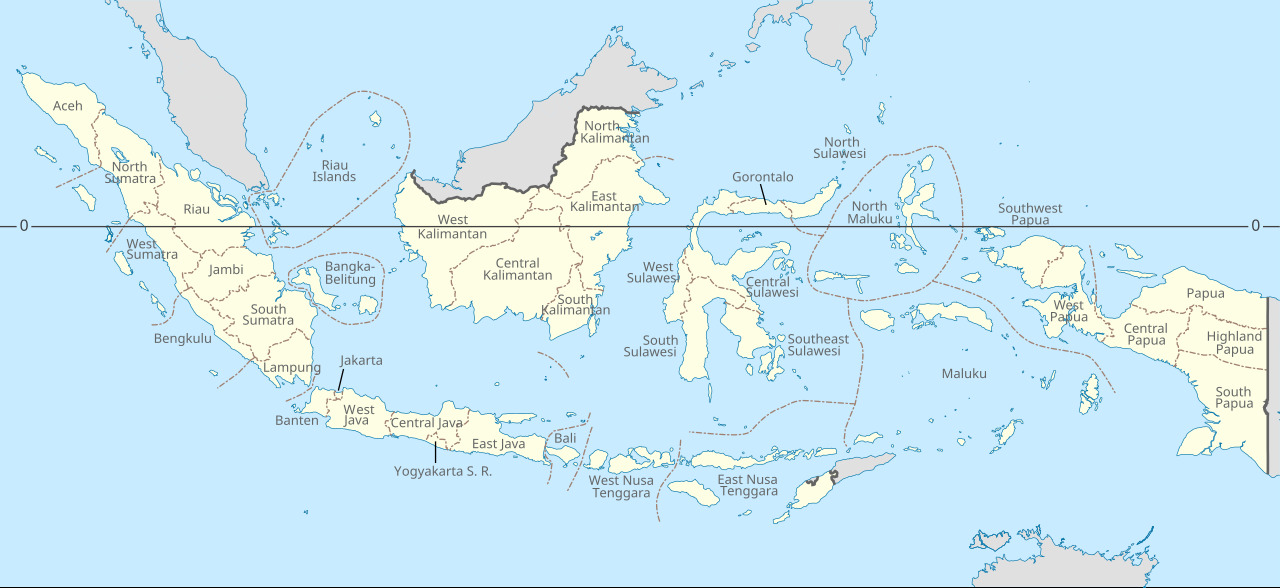
Papua also has special autonomy, and its framework was amended in 2021 through Law No. 2 of that year. The changes brought extra funding and institutions like the Papua People’s Assembly (Majelis Rakyat Papua), which represents Indigenous Papuans and helps protect their cultural and political rights.
Yogyakarta has special status under Law No. 13 of 2012, and its governor is not elected. The reigning Sultan of Yogyakarta serves as governor and the reigning Duke of Pakualaman serves as deputy governor. Both get the job through a statutory appointment process, not a direct regional election.
The capital region has its own special framework too, under Law No. 2 of 2024 on the Special Region of Jakarta. The law was written with the planned move of the capital to Nusantara in mind, but most of its provisions can’t take effect yet. Under Article 73, that waits for a presidential decree formally transferring the capital. As of November 2026 no such decree has been issued, so Jakarta is still Indonesia’s capital.
All of this fits the Constitution, which recognises regions with special or distinctive characteristics inside a unitary state.
Autonomy With Limits
Within a year of the 2001 reforms, the regional share of government spending went from 17 percent to over 30 percent. Most of that authority went straight to regencies and cities, skipping the provinces.
The provinces got their say later. Under the 2014 law they took on a bigger role in supervising regencies and cities, and some scholars call the result recentralisation. Governors also wear two hats. They head the provincial administration, and they represent the central government in their province too.
Even so, the regions remain responsible for roughly half of government expenditure.