Five minutes. That is how long BYD says its Flash Charging system needs to take a compatible electric vehicle (EV) from 10% to 70% battery. Filling a conventional gasoline car usually takes only a few minutes, while charging an EV has long taken considerably longer.
Southeast Asia is now seeing its first megawatt-level charging infrastructure, with operators in Indonesia among those that have begun introducing it.
Charging a Car in Minutes
Megawatt charging refers to high-power charging systems that deliver around 1,000 kW or more. Many conventional public fast chargers operate between 50 kW and 150 kW.
China’s BYD introduced its second-generation Blade Battery and Flash Charging technology in March 2026. The company claims the system can charge a compatible vehicle from 10% to 70% in five minutes and reach 97% in approximately nine minutes, using a charger that delivers up to 1,500 kW through a single connector.
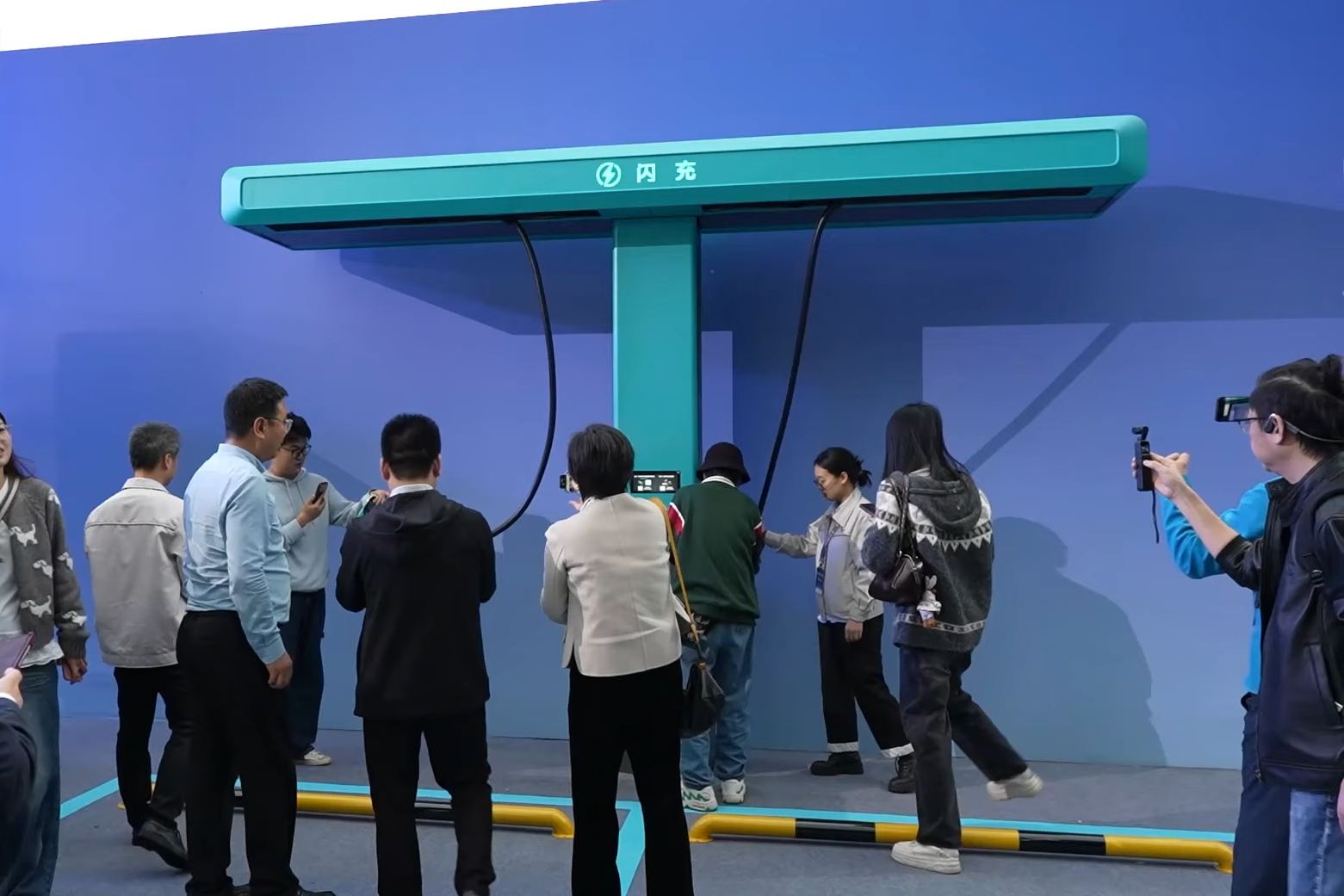
The system pairs a high-power charger with a battery designed to handle rapid energy transfer. Because of this, the advertised charging speed applies only to vehicles built for it and cannot be expected from every EV.
Megawatt Charging Across Southeast Asia
Indonesia became one of the first markets in Southeast Asia to introduce BYD’s Flash Charging technology. On October 14, 2026, Charge+ launched the technology in collaboration with Bipo and BYD Haka Auto, installing five charging units that are each capable of delivering up to 1.5 MW.
Separately, BYD Indonesia announced plans to expand its Flash Charging infrastructure to 100 facilities nationwide by the end of 2026.
View this post on Instagram
In Thailand, ZEEKR, TPM Automotive, and SINEXCEL opened a charging station in Bangkok in July 2026 equipped with a 960 kW charging system. In a demonstration, two ZEEKR 7X vehicles were charged simultaneously from 20% to 80% in approximately 10 minutes. The facility has eight charging points, although its initial installed capacity remains below 1 MW.
In Malaysia, BYD Malaysia and Gentari, a clean energy solutions company wholly owned by PETRONAS, signed a memorandum of understanding on October 21, 2026 to explore Flash Charging infrastructure alongside battery energy storage systems. The agreement also covers potential installations along major intercity corridors.
The partnership remains at the assessment stage, and no operational Flash Charging network has been announced.
How Many EVs Can Actually Use Ultra-Fast Charging?
The International Energy Agency (IEA), in its Global EV Outlook 2026, reported that only about 30% of battery electric cars today can benefit from ultra-fast charging, which the agency defines as chargers rated at 150 kW and above.
In 2025, roughly 160 of the 670 battery electric car models tracked could charge above 150 kW, and only 50 could charge above 250 kW. Cars able to use chargers above 250 kW made up less than 5% of the vehicle stock, well below the 1,000 kW that defines megawatt charging.
Installing a 1,500 kW charger therefore does not mean every connected vehicle can receive that much power. Battery chemistry, vehicle architecture, temperature, and charging conditions all influence the actual speed. The IEA also notes that temperatures below 0°C reduce charging performance, including at ultra-fast chargers.
Electricity supply is another factor. High-power charging stations require substantial electricity capacity, particularly when several vehicles charge simultaneously.
Battery energy storage systems can store electricity and release it during periods of high charging demand, helping reduce sudden pressure on the local grid. The agreement between BYD Malaysia and Gentari covers Flash Charging alongside such systems.
Station availability is a third factor. The IEA reported that Indonesia had deployed more than 4,500 public charging points by the end of 2025, while Thailand had nearly 12,000. In Thailand, the number of electric vehicles per public charging point rose from 19 to 30 between 2024 and 2025.
Beyond Faster Charging
The IEA identifies high-power charging as an important development for heavy-duty electrification, particularly for vehicles traveling long distances. Dedicated depot charging is still expected to account for most charging infrastructure for electric heavy-duty vehicles.
For passenger cars, BYD claims a compatible vehicle can charge from 10% to 70% in five minutes. The IEA also found that cars able to use chargers above 250 kW made up less than 5% of the vehicle stock.
Charging speed, vehicle compatibility, electricity supply, and station availability each affect how practical fast charging is in daily use.