

Singapore: Southeast Asia’s Premier Student City
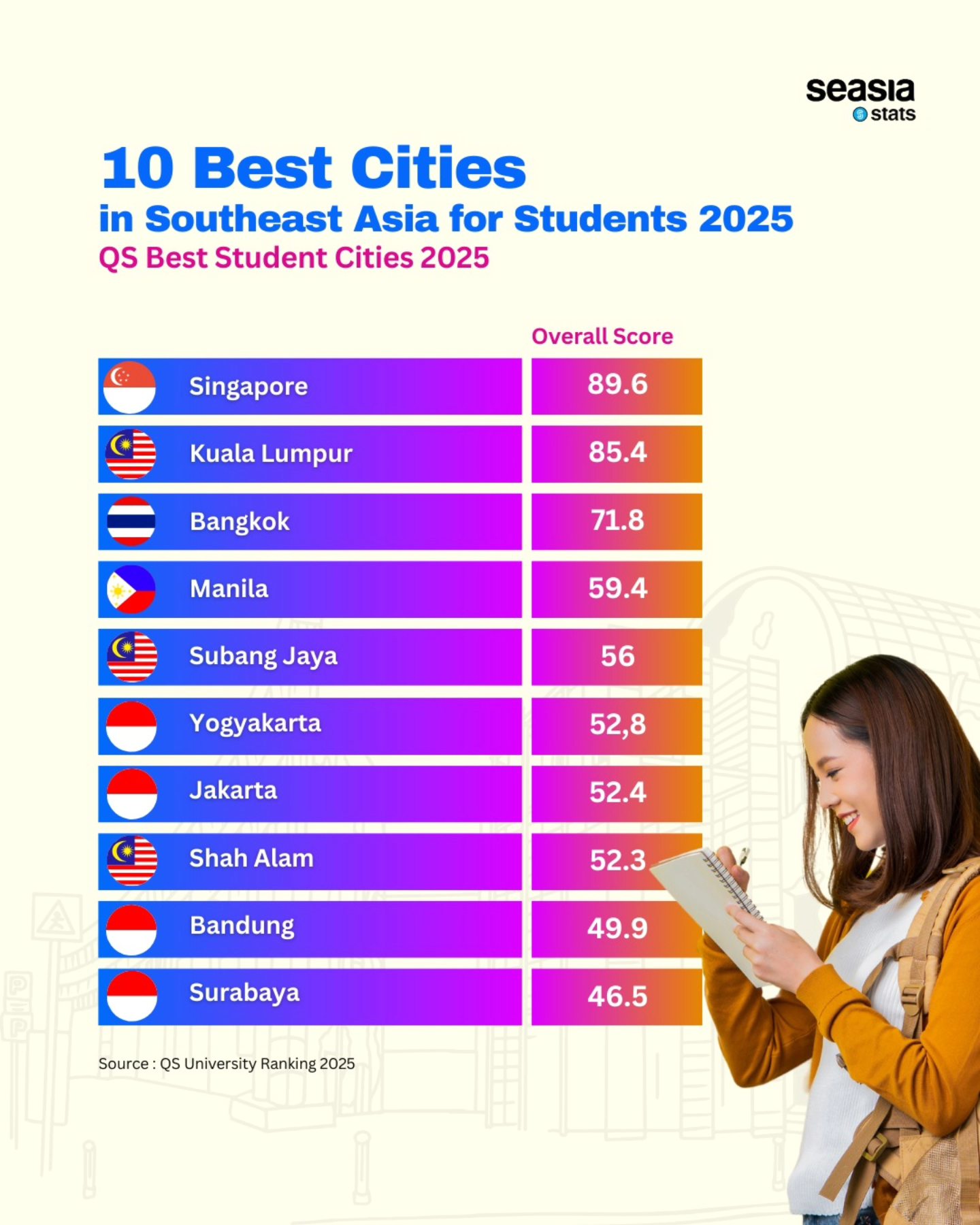
With an impressive score of 89.6, Singapore has been named the top student city in Southeast Asia by the QS World University Rankings. Known for its world-class education system, Singapore provides a dynamic learning environment supported by leading universities like the National University of Singapore (NUS) and Nanyang Technological University (NTU).
Beyond academics, the city-state offers a safe and inclusive atmosphere, making it an attractive choice for international students. Singapore’s advanced infrastructure, multicultural society, and abundant career opportunities further enhance its appeal as a premier destination for higher education.
Malaysia: Kuala Lumpur and Subang Jaya
Kuala Lumpur secures the second spot in the regional rankings with a score of 71.8, reflecting its growing stature as a student-friendly city. Known for its affordability, cultural diversity, and institutions like Universiti Malaya, Kuala Lumpur is a vibrant hub for higher education in Malaysia.
Subang Jaya, another Malaysian city, also ranks highly, thanks to its modern facilities and access to renowned universities. Both cities continue to attract students seeking quality education at a relatively lower cost compared to other global destinations.
Thailand and the Philippines: Bangkok and Manila
Bangkok and Manila also feature prominently in the rankings, showcasing their emerging roles as educational centers. Bangkok is home to some of Thailand’s top institutions, such as Chulalongkorn University, and offers a lively student experience.
Manila, the capital of the Philippines, boasts a rich academic history with universities like the University of the Philippines and Ateneo de Manila University. Both cities combine academic excellence with affordability and a vibrant cultural scene.
Indonesia: Yogyakarta Leading the Way
Yogyakarta, with a score of 52.8, stands out as Indonesia’s top student city, celebrated for its rich cultural heritage and academic environment. Often referred to as a “student city,” Yogyakarta is home to prestigious institutions like Universitas Gadjah Mada and Universitas Negeri Yogyakarta.
Trailing behind are Jakarta, Bandung, and Surabaya, which also host reputable universities but face challenges such as higher living costs and congestion. Yogyakarta’s relatively low cost of living and student-friendly atmosphere make it a preferred choice for both local and international students.
Criteria for Ranking: A Holistic Approach
The QS Best Student Cities ranking evaluates destinations based on six key categories: university rankings, student mix, desirability, employer activity, affordability, and student views. These metrics provide a comprehensive understanding of the factors that contribute to a city’s appeal as a study destination.
Eligibility for inclusion requires a city to have a population exceeding 250,000 and host at least two universities featured in the latest QS World University Rankings®. This ensures a balanced representation of urban centers offering both academic and lifestyle advantages.
The Global Context: Urban Environments Shaping Education
The recognition of these cities underscores the critical role urban environments play in fostering quality education and community support. As competition among cities intensifies, innovation in education, infrastructure, and student services will remain crucial in determining future rankings.
This evolving landscape highlights the dynamic relationship between education and urban development, with cities striving to create opportunities for the next generation of learners.


