


Human beings have walked the Earth for a relatively short time in the context of the planet's 4.5-billion-year history. Modern industrial civilization has existed for just about 300 years. Compared to the hundreds of millions of years life has thrived on Earth, this is barely a blink.
This realization is what drives the Silurian Hypothesis, a thought experiment proposed in 2018 by NASA climatologist Gavin Schmidt and astrophysicist Adam Frank. Named after fictional ancient reptilian humanoids from the British sci-fi show Doctor Who, the hypothesis asks a profound question: If an industrial civilization had existed on Earth long before humans, would we even know it?
This question is not about ancient aliens or conspiracy theories. It is a rigorous scientific attempt to explore whether geological records are robust enough to preserve the traces of a short-lived but industrially advanced civilization that may have existed millions of years ago.
Looking for Ghosts in the Rocks: Can We Find Their Footprints?
Our own industrial civilization leaves telltale markers: carbon spikes from burning fossil fuels, synthetic pollutants, plastic micro-particles, and even potential nuclear fallout residues like Plutonium-244 and Curium-247. These are all part of what geologists call the "Anthropocene" — an epoch marked by abrupt and distinct changes in Earth’s chemistry, biology, and climate due to human activity.
But would similar traces from a hypothetical ancient civilization survive the ravages of time? Likely not, argue Schmidt and Frank. Due to plate tectonics, erosion, and ocean recycling, most of Earth’s surface gets completely renewed every few million years. That makes any record of a short-lived civilization — like ours — extremely difficult to preserve.
Earth Has Been Here Before: Ancient Climate Spikes Raise Eyebrows
To explore further, the authors examined ancient global events with suspiciously similar markers to the Anthropocene. One standout is the Paleocene-Eocene Thermal Maximum (PETM), 56 million years ago, when global temperatures spiked dramatically and carbon levels soared — resembling modern climate change. Could that be the fingerprint of a previous civilization?
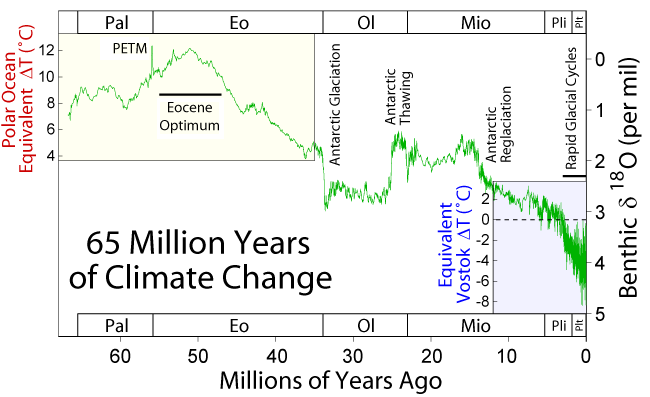
Not likely. The PETM carbon release occurred over hundreds of thousands of years, unlike the rapid 300-year rise seen today. Other periods like the Cretaceous Ocean Anoxic Events (OAEs) and Late Devonian extinctions also show abrupt warming, carbon isotope shifts, and mass extinctions — but they are typically linked to massive volcanic activity or asteroid impacts, not intelligent life.
Still, these events raise an eerie parallel: our civilization’s signature may one day resemble natural catastrophes of the past.
The Cleaner You Are, the Less You’re Remembered: A Civilization’s Paradox
There is a compelling paradox at the heart of the Silurian Hypothesis. The more advanced and sustainable a civilization becomes, the less likely it is to leave behind detectable evidence. A society powered by clean energy, one that recycles its waste and limits environmental destruction, would leave only the faintest trace in the geological record.
Ironically, it is the destructive and wasteful aspects of human civilization that ensure its detectability in the far future. Plastics, nuclear isotopes, industrial metals, and greenhouse gas concentrations are all signs of our presence that might linger for millions of years—assuming they survive geochemical cycling.
As Prof. Adam Frank notes, this hypothesis also serves as a cautionary tale. If earlier civilizations destroyed themselves through climate change, are we doomed to repeat their fate?
Aliens, Octopuses, and Lost Cities: Who Else Could’ve Ruled the World?
The Silurian Hypothesis also has implications for the search for extraterrestrial life. Traditional searches focus on active civilizations—radio signals, megastructures, or direct communication. But what if civilizations tend to self-destruct quickly? What if the vast majority leave only a geological echo?
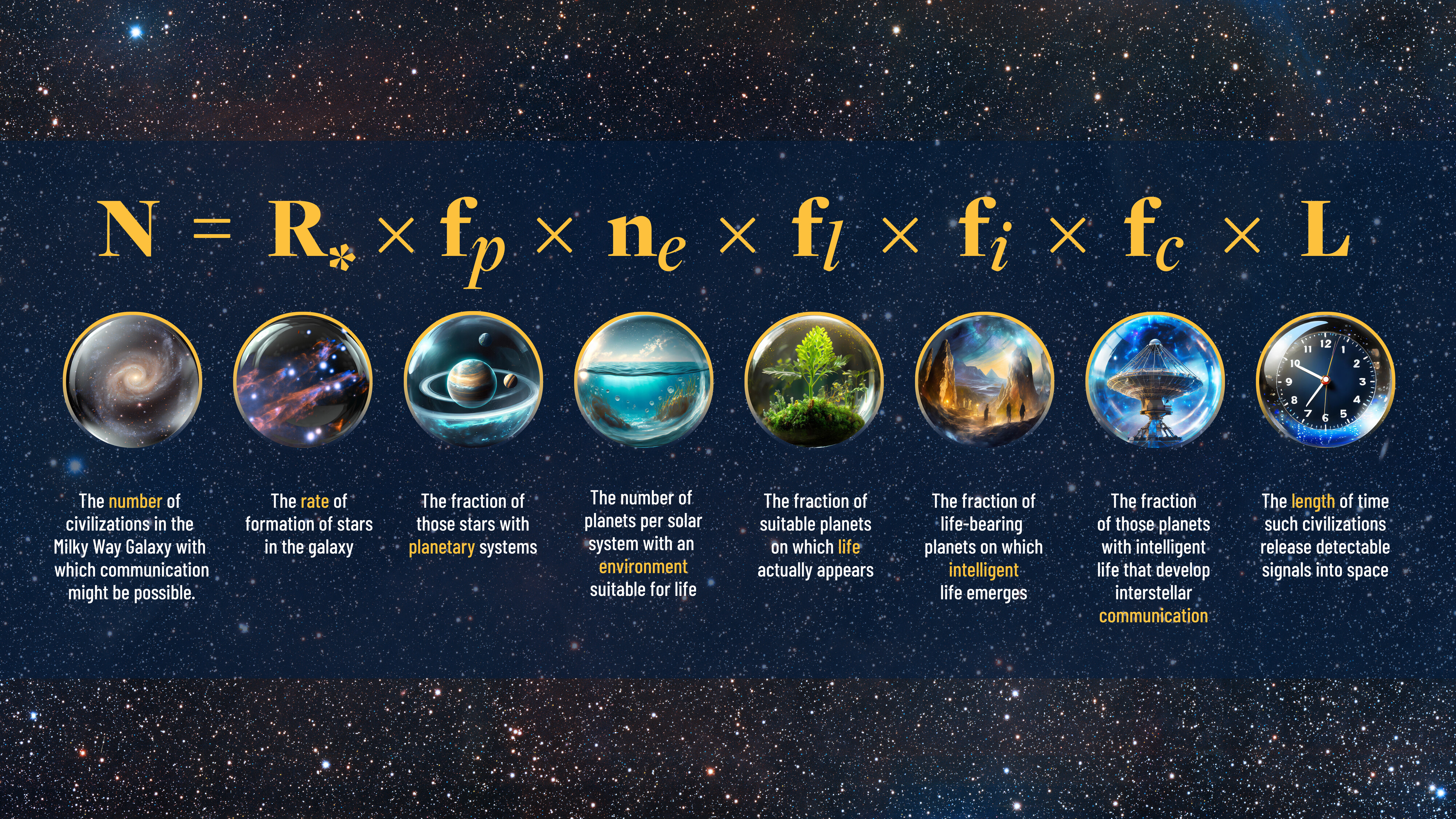
This thought aligns with the Drake Equation, which attempts to estimate the number of communicative civilizations in the galaxy. If the average lifespan (L) of a technological civilization is short, the number of detectable ones (N) could be near zero at any given time. Instead, we might search for past civilizations through chemical anomalies in exoplanet atmospheres or traces of planetary-scale climate disruptions.
Could Cephalopods Have Made History We Can’t See?
Beyond its implications for planetary science, the hypothesis invites speculation about intelligent life that may have emerged on Earth long before humans. Dr. Klaus Stiefel, a biologist and science communicator, has suggested that cephalopods—such as octopuses and cuttlefish—are plausible candidates. With their complex nervous systems, problem-solving abilities, and sophisticated camouflage communication, cephalopods demonstrate surprising cognitive depth.
Could an ancient cephalopod species have reached a Neolithic or even industrial stage millions of years ago? The chances are slim, but not zero. The fossil record of soft-bodied animals is notoriously poor, and any underwater civilization would face immense challenges in preserving its legacy through stone or metal.
Most scientists remain skeptical, and rightly so. No direct evidence exists for a pre-human civilization, but the very question reshapes our assumptions about intelligence, longevity, and legacy.
What If We’re Just the Latest Chapter in Earth’s Forgotten Story?
Schmidt and Frank make clear they don’t believe in an ancient industrial civilization. Rather, they argue that asking the question helps define what to look for — both on Earth and elsewhere. As Frank put it, “If you're not explicitly looking for something, you might not even see it.”
And therein lies the value of the Silurian Hypothesis. It forces us to confront the limits of our knowledge, the fragility of evidence, and the sobering thought that even a species as advanced as ours might leave behind only a whisper in the rocks.
Reference(s):
- Schmidt, G. A., & Frank, A. (2018). The Silurian hypothesis: would it be possible to detect an industrial civilization in the geological record? International Journal of Astrobiology, 18(2), 142–150. https://doi.org/10.1017/s1473550418000095
- Westmaas, R. (2022, July 13). An advanced civilization could have ruled Earth millions of years ago, says the Silurian hypothesis. Discovery. https://www.discovery.com/exploration/Advanced-Civilization-Silurian-Hypothesis
- Cohen, R. (2020, January 23). The Silurian Hypothesis. The Paris Review. https://www.theparisreview.org/blog/2020/01/23/the-silurian-hypothesis/
- Dimitropoulos, S. (2023, November 29). The ‘Silurian hypothesis’ debate: Could Earth have once harbored a Pre-Human industrial civilization? Popular Mechanics. https://www.popularmechanics.com/science/environment/a41021149/silurian-hypothesis-ancient-industrial-civilization/
- Stiefel, K. M. (2024, November 10). The Silurian Hypothesis: It was the Cephalopods. Pacificklaus. https://pacificklaus.com/the-silurian-hypothesis-it-was-the-cephalopods/


