


The idea of one country being entirely located within the territory of another may seem unlikely, but there are a few real-world examples. These countries, known as enclaved nations, are sovereign states that are almost or entirely surrounded by one other country.
They are distinct in their governance, history, and identity, despite their geographical limitations. Let’s explore each of them and understand how they came to exist in such unique positions.
1. Vatican City
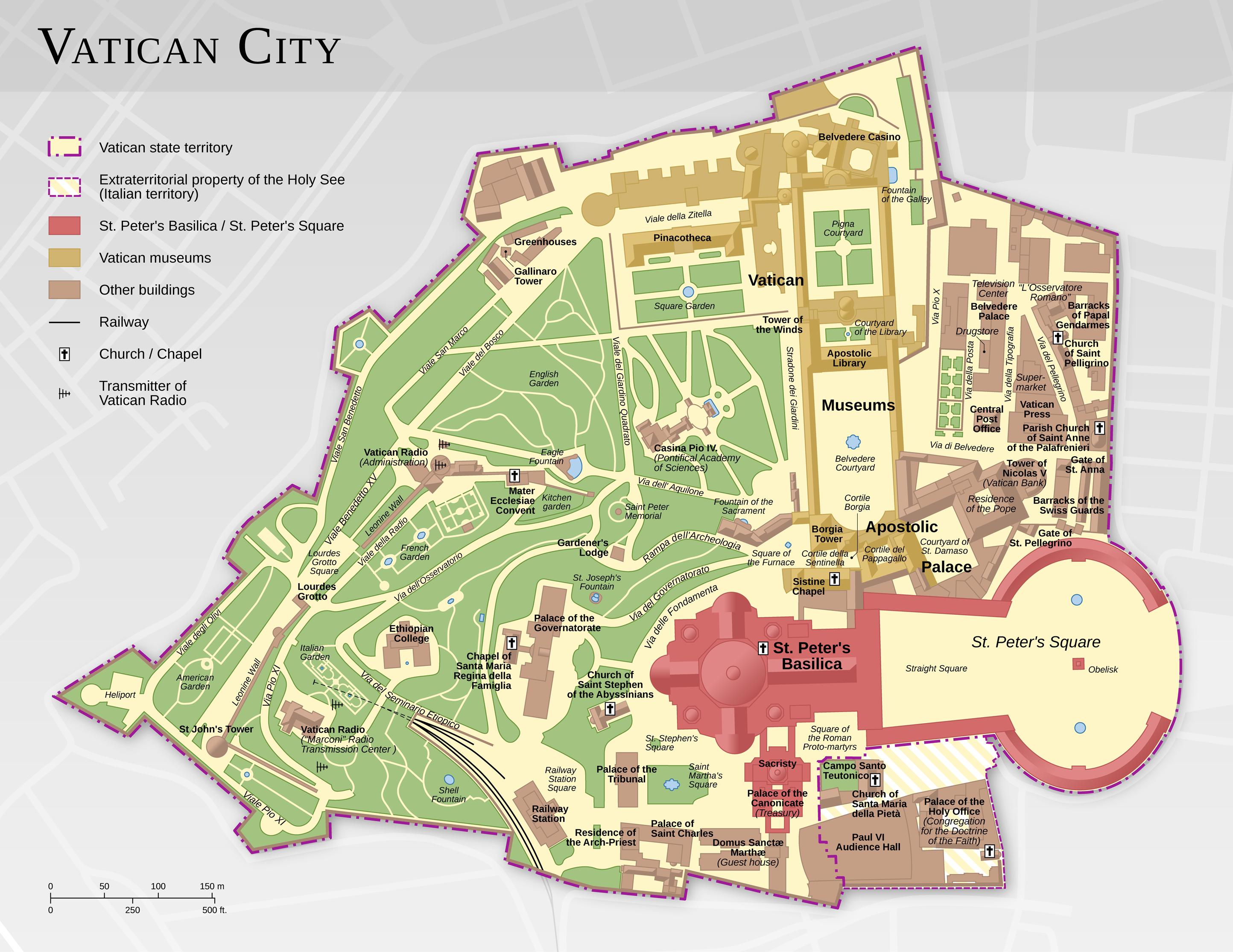
Vatican City is the most famous and smallest country in the world, both in terms of area and population. It lies entirely within the city of Rome, Italy.
Despite its size which is only about 44 hectares (110 acres), Vatican City holds immense cultural, religious, and political importance. It is the spiritual and administrative headquarters of the Roman Catholic Church and serves as the residence of the Pope.
Vatican City's independence was established in 1929 through the Lateran Treaty signed between the Holy See and Italy. The country operates its own postal service, radio station, and even has its own currency (although it uses the euro in practice).
Despite being surrounded by Italy, Vatican City maintains its sovereignty through centuries-old traditions and diplomatic arrangements. It is also a UNESCO World Heritage site in its entirety.
2. San Marino
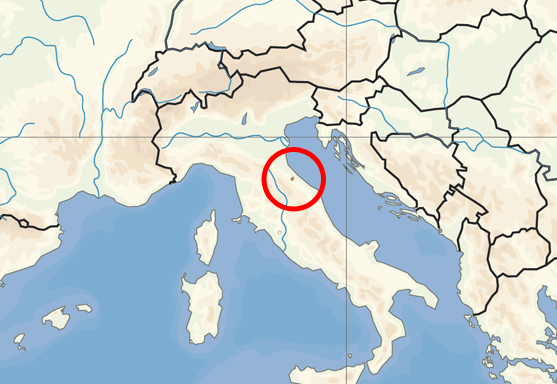
San Marino is another country entirely enclosed by Italy. It is often considered the oldest existing republic in the world, with its origins dating back to 301 AD.
Located on the northeastern side of the Apennine Mountains, San Marino covers an area of about 61 square kilometers and has a population of around 34,000.
San Marino has managed to maintain its independence through centuries of European conflict, thanks largely to its mountainous terrain and strategic diplomacy.
It was recognized as an independent state by the Holy See and later reaffirmed by Napoleon. Today, San Marino has a strong tourism sector and is known for its medieval architecture, small towns, and scenic views.
Although surrounded by Italy, it retains full political autonomy, its own constitution, and two elected heads of state known as Captains Regent. Its foreign policy and defense, however, are closely aligned with Italy.
3. Lesotho

Unlike the European microstates, Lesotho is a full-fledged country in southern Africa that is completely landlocked by another nation, South Africa. It covers an area of about 30,000 square kilometers and has a population of over 2 million.
What makes Lesotho especially unique is its elevation; it is the only country in the world entirely above 1,000 meters in elevation.
Lesotho was formerly a British protectorate known as Basutoland. It gained independence in 1966 and became the Kingdom of Lesotho. Despite being surrounded by South Africa, Lesotho has maintained its distinct cultural identity and governance, ruled by a constitutional monarchy.
Geographic isolation, mountainous terrain, and economic dependence on South Africa create both challenges and opportunities for the country.
Many of its citizens work in South Africa, and the two nations are deeply interconnected through trade, water agreements, and infrastructure. Still, Lesotho remains sovereign and controls its own political destiny.
4. Gambia

The Gambia's geography is one of the most unusual in the world. It is a narrow strip of land stretching about 480 kilometers (300 miles) along the Gambia River, but only around 50 kilometers (30 miles) wide at its widest point.
Nearly completely surrounded by Senegal, The Gambia is bordered on three sides, north, south, and east, by Senegal, with its only coastline being a short stretch along the Atlantic Ocean to the west. This geographic oddity is a direct result of colonial rivalries in West Africa.
In the 19th century, as European powers scrambled for African territory, Britain claimed control of the Gambia River for trade and strategic purposes, while France colonized the surrounding region, which became Senegal.
The two colonial powers drew borders based on their spheres of influence rather than cultural or geographic unity.
Britain established The Gambia as a colony focused on controlling the river, which was a vital trade route inland. As a result, The Gambia became a sliver of British territory within a larger French-dominated area.
When both countries gained independence, Senegal in 1960 and The Gambia in 1965, the colonial borders remained, creating the modern-day geopolitical situation of a nearly landlocked nation inside another.


