Below is an amusing tale from the Danajon Reef, a double barrier reef in Bohol, the tenth largest island in the Philippines. For years, the province has faced countless complaints of dynamite and cyanide fishing.
Though the practice is traditional and thus culturally significant, it is also extremely destructive to coral reefs. It kills many fish, as fishermen only take the fish they want and leave the rest to die. The practice is especially detrimental since the double barrier reef of Danajon is a very rare type of reef, the only one of its kind in the Philippines and one out of the only six in the world.
As a solution for the rampant illegal fishing in the area, the government of Bien Unido, a municipality in Bohol, built a 4-meter-tall statue of the Virgin Mary, dubbed “Our Lady of Danajon”, in the coral waters. Close to the statue of the Mother is a statue of Santo Niño (“Holy Child”), which features infant Jesus.
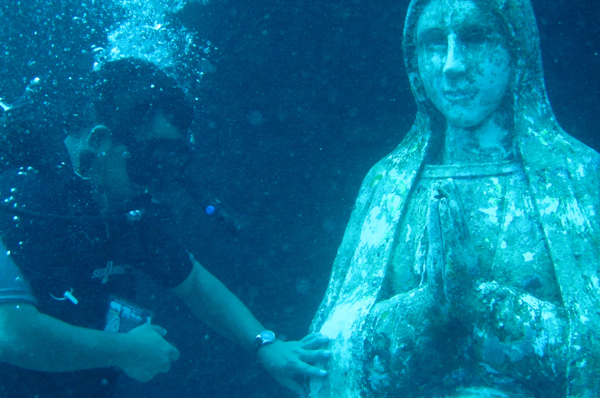
The statues of Mary and Jesus were installed on September 8, 2010 and October 18, 2010 respectively, 60 feet below the surface of the sea after being blessed by priests.
Our Lady of Danajon has caused illegal fishing rates to decrease significantly as local fishermen did not want to hurt the image of the Virgin Mary. The statue also provides sanctuary for fishes and has become a popular spot for Catholic divers.
On September 8, 2012 – the nativity of the Virgin Mary in the Catholic liturgical calendar – over 100 divers even joined in the first underwater pilgrimage held by the municipality of Bien Unido to pay respects to the Virgin and pray together under the sea.
Catholicism and the Earth
What can we learn from the story of Our Lady of Danajon? It's simple: Catholicism is a great force in environmental protection.
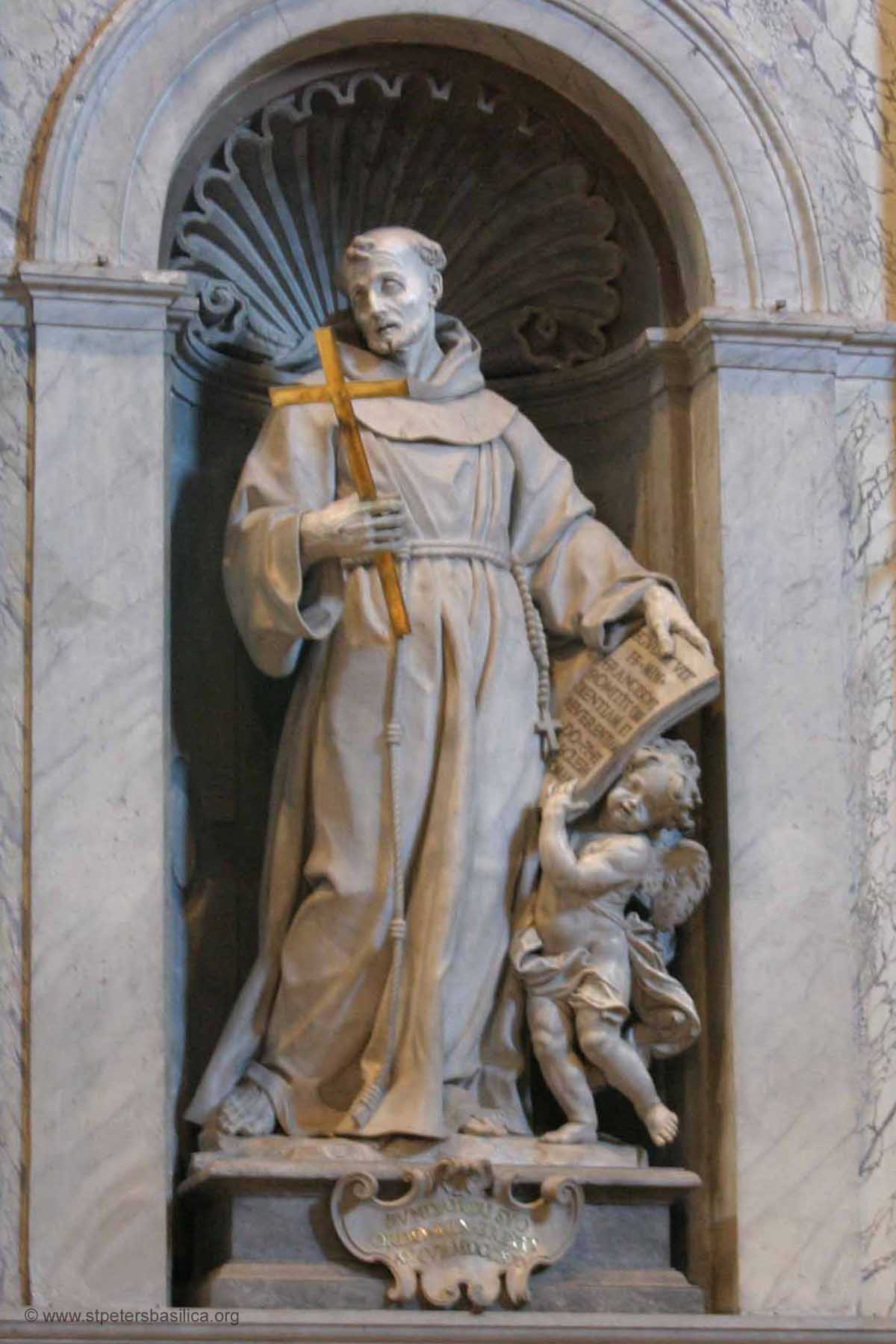
A pioneering moment for Catholics in environmental protection was the 1986 international conference held by the WWF (World Wildlife Fund) to commemorate its 25th anniversary. Held in Assisi, Italy, the birthplace of St. Francis – the patron saint of ecology, who is known for his deep love for animals and nature – the event spread the awareness that religion and conservation efforts could, in fact, go together.
Catholicism places a great emphasis on loving all creatures. It teaches that the world is a common home for all living things and that protecting the environment is a noble Christian duty in becoming “stewards of the earth”.
This teaching was further emphasized by the late Pope Francis in his encyclical, Laudato Si’, dated May 24, 2015. Published in Latin, the encyclical laments environmental degradation and calls for everyone to take better care of nature. The encyclical proposed “ecological repentance”, paving the way for a “green” Catholic theology in the midst of environmental crises.
Filipino Bishops: The Major Advocators
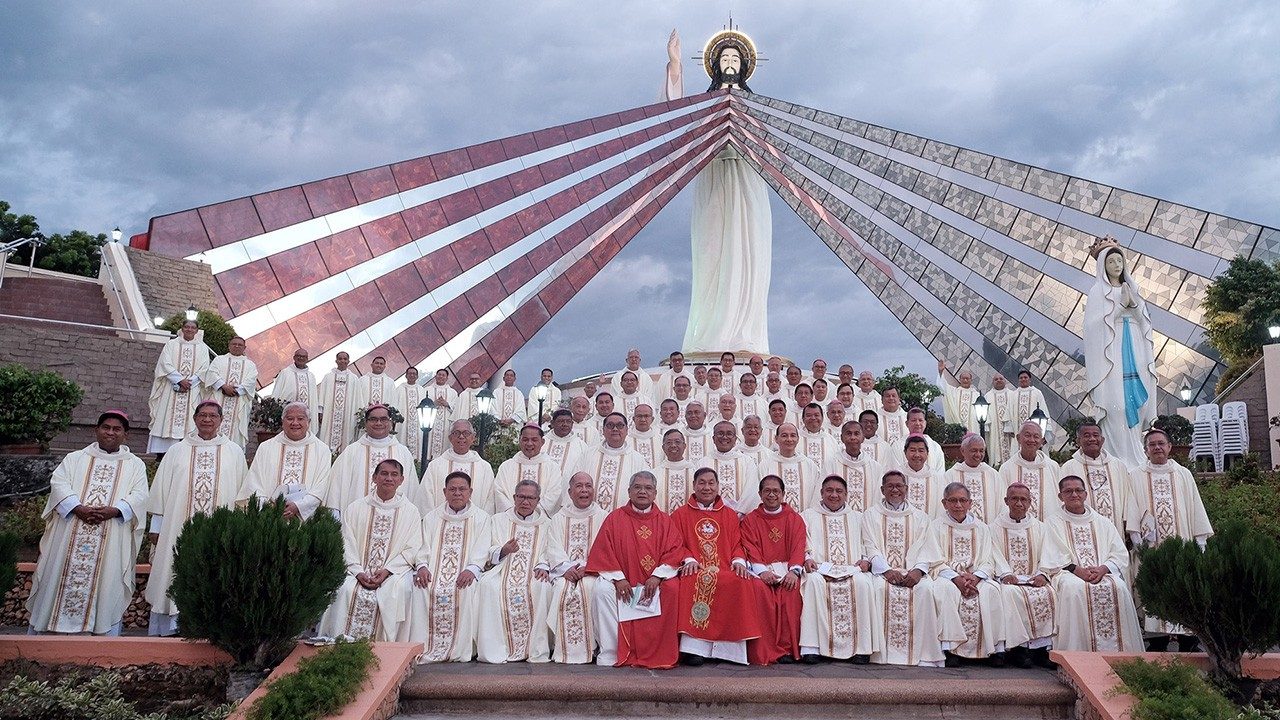
In the Philippines, where more than 80% of the population identifies as Roman Catholic, the Vatican, religious officials, and NGOs (non-governmental organizations) are essential forces in preserving the environment. Religious officials, in this case, typically refer to bishops, who actively advocate for stricter environmental regulations.
In 1988, Filipino bishops questioned, through a pastoral letter, “what is happening to our beautiful land?”. The letter stated that humans had the task of the “stewardship of creation” based on a reading of the Book of Genesis in the Old Testament, in which humans were “created in God's image” and commanded to “fill the earth and subdue it”.
This pastoral letter became the basis of environmental advocacy for Filipino bishops, especially towards problems such as mining and deforestation. In 1998, for example, Filipino bishops repealed the Mining Act of 1995, stating that mining efforts in the country went against Christian values as they not only damaged the environment, but also threatened the lives of humans who lived near mining sites.
A more contemporary example occurred in 2020, when Filipino bishops opposed the construction of Kilawa Dam, which was to be built in the Sierra Madre mountain range. The alliance of bishops reportedly stated that the dam would only cater to big businesses and foreign investors, and urged corporations to pay more attention to eco-friendly CSR (corporate social responsibility) policies.
Through pastoral letters, bishops can also communicate with local municipalities and groups to create environmental campaigns. Coordination is mainly done through the CBCP (Catholic Bishops’ Conference on the Philippines), which typically convenes as a plenary assembly twice a year.
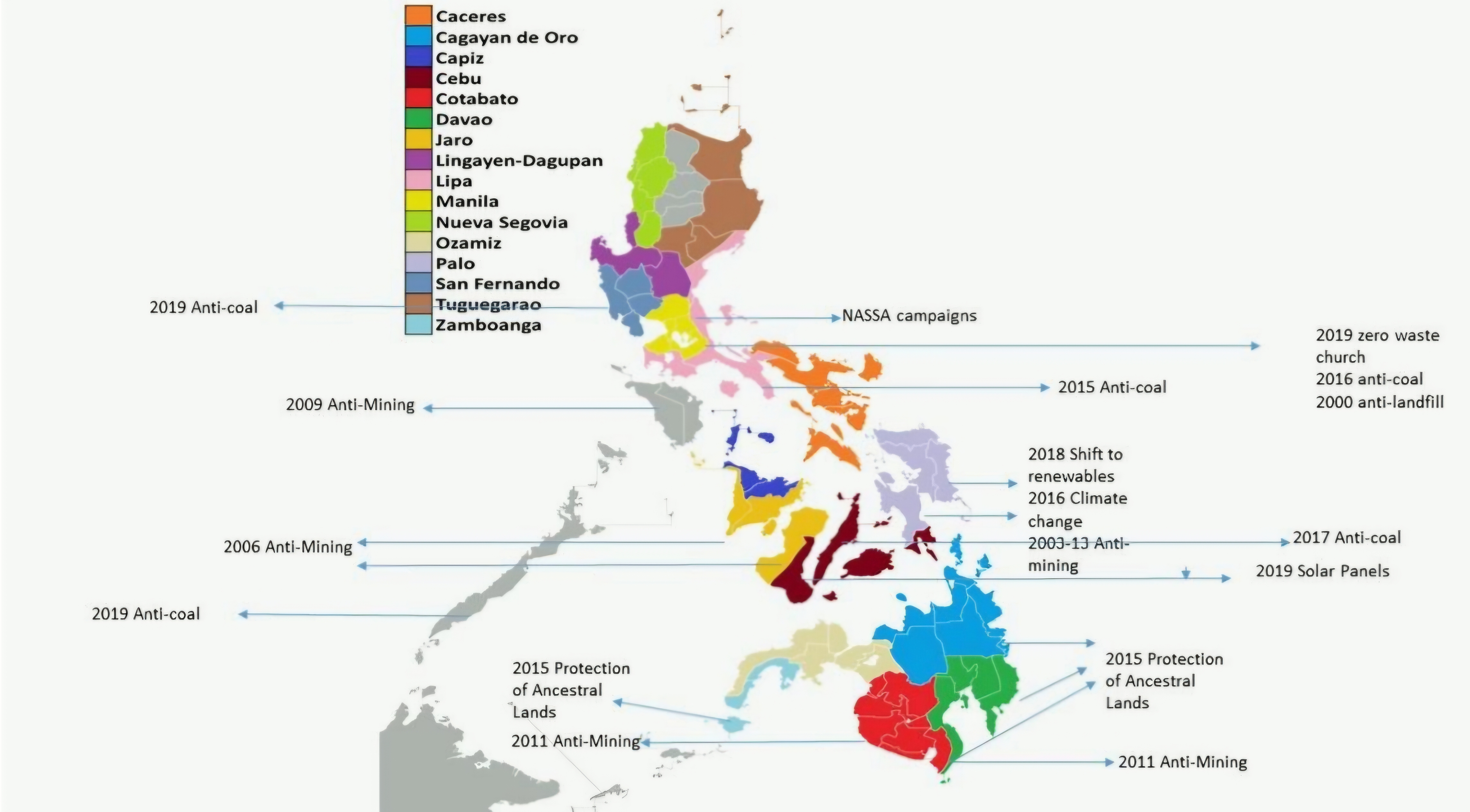
Aside from advocacy, many churches or parishes have also taken part in more concrete efforts, such as harnessing solar power. The Diocese of Maasin in Leyte has installed solar panels in more than 40 parishes, making it the first diocese in the Church to adopt renewable energy. These efforts have earned the diocese an appreciative paragraph from Vatican officials in a document released to commemorate the 5th anniversary of the Laudato Si’.
Faith-Based Organizations: Collaborating for a Shared Future
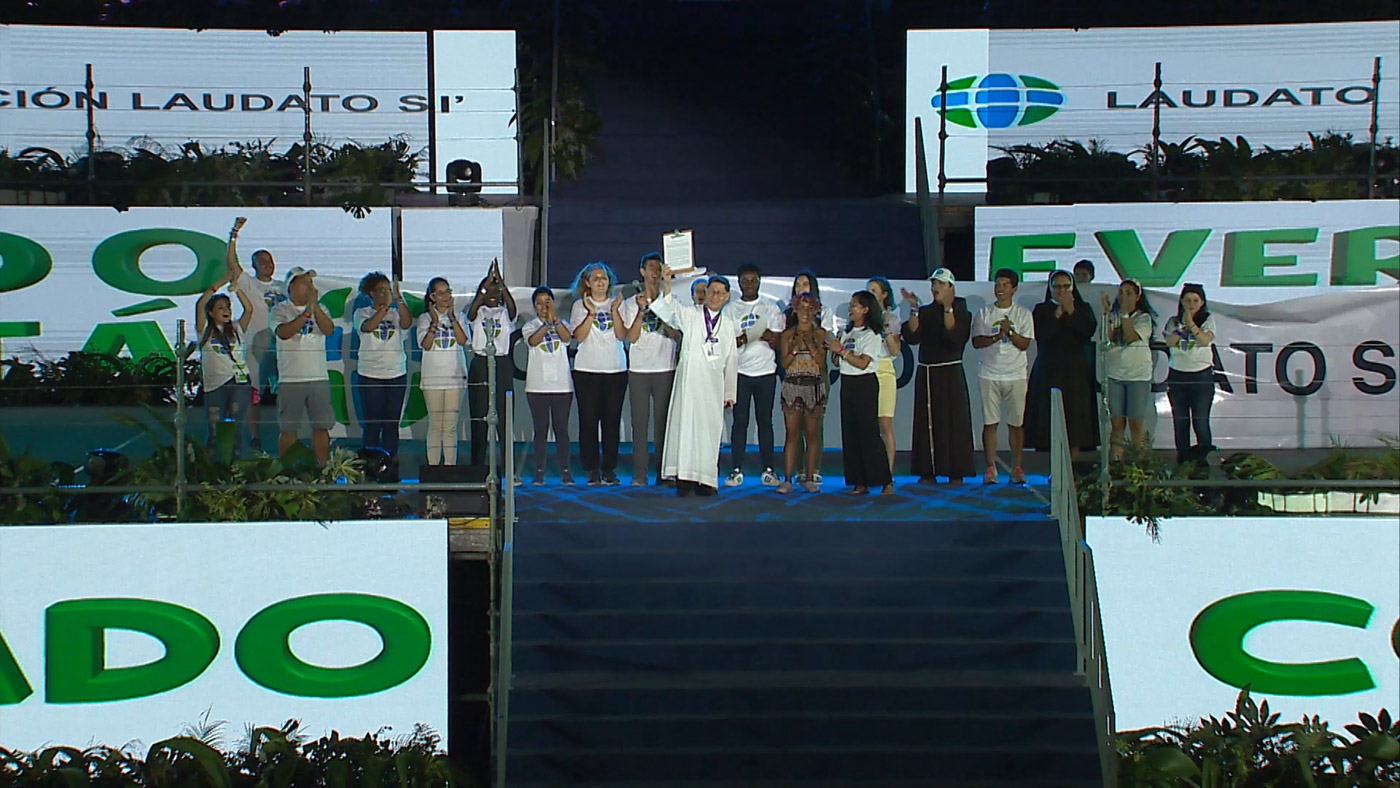
As shown in the Danajon tale, NGOs, FBOs (faith-based organizations), and members of the civil society (students, academicians, etc.) also put in a great deal of effort in protecting the environment. These communities are mainly inspired by Pope Francis’ Laudato Si’ in tackling problems caused by climate change and environmental degradation.
A prevalent example of this is the Laudato Si’ Movement. Founded in the Philippines when Pope Francis arrived in Manila in 2015, the movement is sponsored by Luis Antonio Tagle, the Filipino cardinal who made headlines during the 2025 papal conclave. The movement is now internationally known, connecting over 900 Catholic FBOs and over 10,000 environmental experts.
At the domestic level, Catholic groups often call for illegal logging, deforestation, mining, and the conversion of forests to agricultural lands to be stopped. In the aforementioned Sierra Madre mountain range case, for example, numerous Catholic groups highlighted the urgency of preserving the 540-kilometer-long mountain range which serves as a natural shield against typhoons.
Working together with the assembly of bishops that criticized the construction of Kilawa Dam, these Catholic groups also opposed the plan, as it would affect over 1,500 households including indigenous people.
Another example is the MaCEC (Marinduque Council for Environmental Concerns), established by the Diocese of Boac under cooperation with the CBCP. Based in Marinduque, an island on the south of Metro Manila, the community focuses on pressing charges against mining firms and supporting fishermen, whose livelihoods are threatened by increasing dumps of mine tailings at rivers by mining corporations.
A unique aspect of these communities is that they also focus on evangelical missions. The MaCEC, for example, also works in spreading the Gospel to village chapters, all the while advocating for environmental protection.
A study by Jeane C. Peracullo and Rosa Bella M. Quindoza, both Manila-based researchers, concludes that FBOs work in harmony with Filipino cultural values, mainly pagtutulungan (service), pananampalataya (faith), and pakikiisa (solidarity). Through human-centric approaches and efforts, Catholic FBOs not only protect the environment, but also create a positive impact on society based on Filipino local wisdom and Christian teachings.
Lessons Learned
The Philippines has shown us a valuable lesson: that religion and conservation can, in fact, go hand in hand. By integrating religious values, communities can protect the environment, open opportunities for eco-tourism, and appeal to locals.
In the end, environmental issues are not just responsibilities of the government and large corporations. A human-centric approach is necessary so solutions can be catered to based on what people want and need.
References
- Peracullo, Jeane C. and Rosa Bella M. Quindoza. “The Environmental Activism of a Filipino Catholic Faith Community: Re-Imagining Ecological Care for the Flourishing of All.” Religions 13, no. 56 (2022). https://doi.org/10.3390/rel13010056.
- The Catholic Diocese of Hong Kong. “Filipino Catholic groups call for preserving Sierra Madre.” Sunday Examiner. Published on October 7, 2022. Accessed on July 21, 2025. https://www.examiner.org.hk/2022/10/07/filipino-catholic-groups-call-for-preserving-sierra-madre/news/.
- Bohol Philippines Travel Guide. “The Bien Unido Double Reef Barrier Dive Site- the Underwater Grotto Shrine.” Bohol Philippines. Accessed on July 21, 2025. https://www.bohol-philippines.com/underwater-grotto-shrine.html.