


Unraveling historical mysteries is never easy. But what if the history of Indonesia we have long believed in is not entirely accurate?
For decades, many sources have recorded Palembang as the center of the Sriwijaya Kingdom. However, there is another surprising theory: this great maritime kingdom may have actually been based in Muara Takus, an ancient temple complex in Riau.
With its unique architecture and unresolved mysteries, Muara Takus continues to challenge historians.
Confusing Architecture
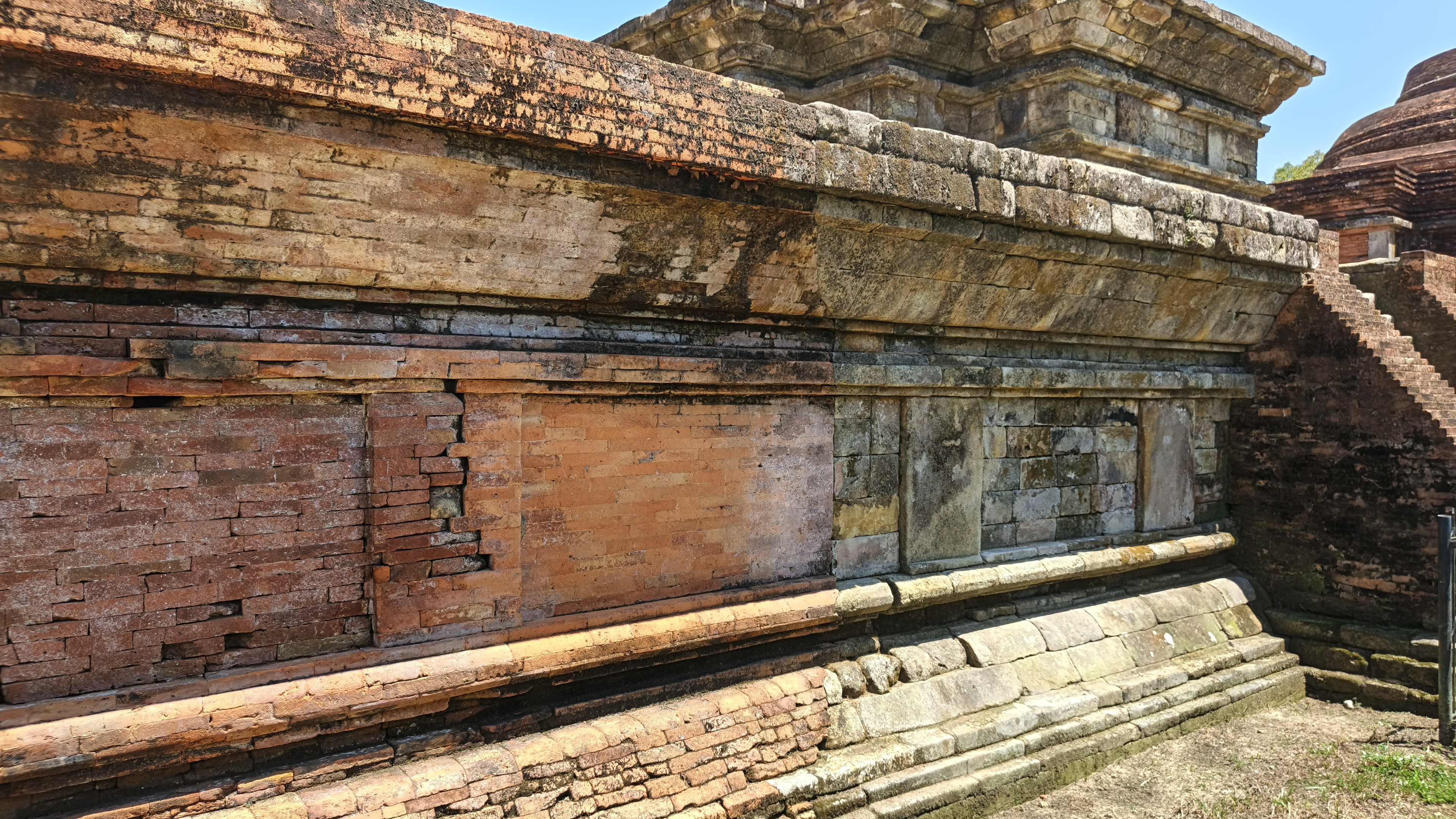
Unlike temples in Java, which were typically built from andesite stone in the distinct Hindu-Buddhist style of the archipelago, Muara Takus stands out with its construction. The complex was made of red bricks, sandstone, and river stones—materials rarely used for large temples in Indonesia.
Interestingly, the red bricks are believed to have originated from Pongkai Village, about six kilometers away.
Its architectural style also puzzles experts. The stupas, towers, and lion ornaments at Muara Takus are said to resemble temples in Myanmar, Vietnam, Sri Lanka, and even India during the era of King Ashoka, rather than those in the Indonesian archipelago.
For instance, Mahligai Temple, with its tower shaped like a lingga-yoni, bears a stronger resemblance to South Asian architecture than to local styles.
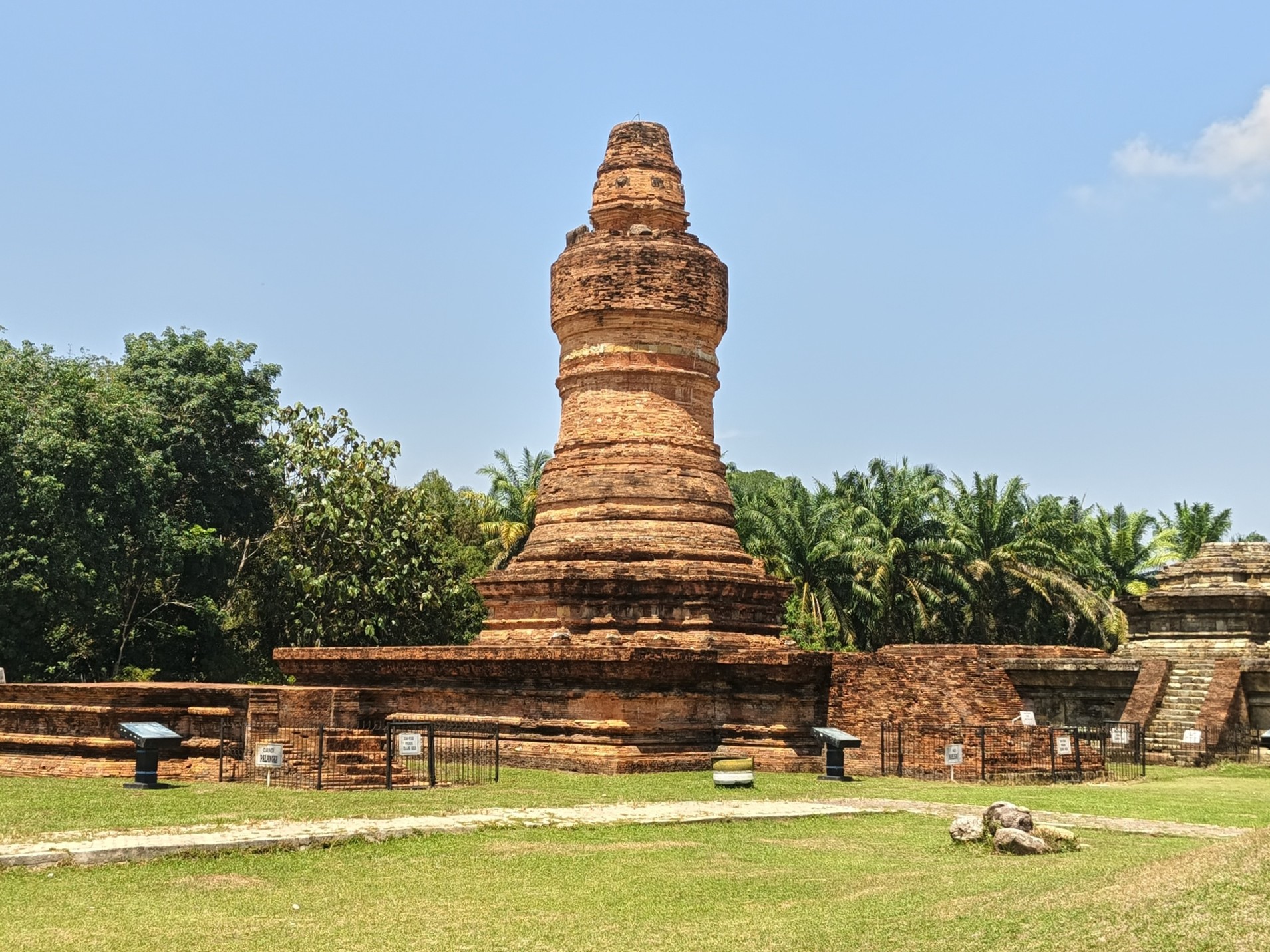
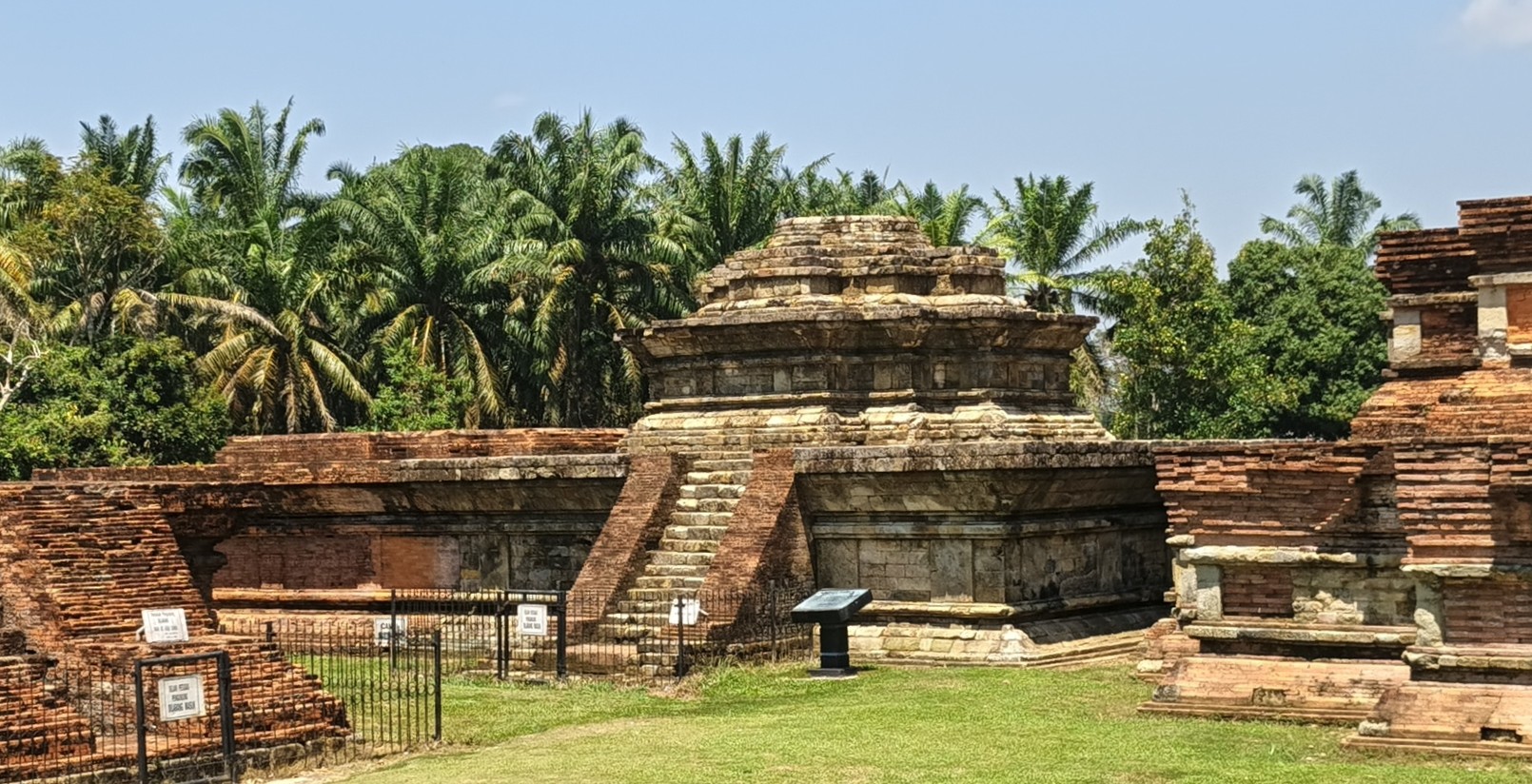
Uniquely, the complex consists of several main structures, each with distinct characteristics:
- Mahligai Temple, with a 14-meter-high tower.
- Candi Tua, the largest structure, featuring a circular design and stone steps.
- Candi Bungsu, a mix of sandstone and red brick, surrounded by small stupas.
- Candi Palangka, a modest red-brick structure believed to have served as an altar.
The entire complex is enclosed by an 80-centimeter-high wall, while outside lies a massive earthwork measuring 1.5 km by 1.5 km, stretching all the way to the Kampar Kanan River. All of these features reinforce the idea that Muara Takus once served as a significant center in its era.
Palembang or Muara Takus: Where Was the Center of Sriwijaya?
Muara Takus Temple is often linked to the Sriwijaya Kingdom, the great maritime empire that flourished between the 7th and 12th centuries. But here lies the mystery: was the center of Sriwijaya really in Palembang, as widely believed, or could it have been in Muara Takus?
Some historians, such as J.L. Moens and Buya Hamka, suggested that Sriwijaya once moved its capital to Muara Takus. Its strategic location on the banks of the Kampar River supports this theory, as the river served as an important transportation and trade route in Sumatra.
Yet, the debate remains unresolved. Some believe the temple complex was built in the 7th century, while others date it to the 11th. There are even claims that Muara Takus existed before the rise of Sriwijaya. This uncertainty only deepens the mystery and fuels curiosity about the site.
The Story of Pilgrimage Elephants
Beyond being a witness to a great history, Muara Takus also holds a unique story. In The Forgotten Kingdoms in Sumatra (1939), Dr. F.M. Schnitger recorded that in 1935 a group of elephants was seen making a pilgrimage to the temple.
Imagine this: animals that usually roam in the forests instead gathered at an ancient site, as if recognizing its sacredness. For the local community, this tale adds to the mystical aura of Muara Takus—suggesting the temple is not merely a lifeless monument, but a place respected even by nature itself.
From Sacred Site to Tourist Destination
Today, Muara Takus has become one of Riau’s leading historical tourism sites. It is located in Muara Takus Village, XIII Koto Kampar District, about 125 km—or roughly a three-hour drive—from Pekanbaru.
During Vesak Day, Buddhists still use the temple as a place of devotion. Outside of that, visitors can admire its ancient architecture while also supporting the local economy through small businesses that thrive around the site.


