


If you ever wander through a Lao village or temple at sunset, you might notice a soft, sweet fragrance floating in the air. That’s Dok Champa, Laos’ national flower, a bloom that is more than just beautiful. It’s deeply woven into Lao culture, spirituality, and everyday life. In this article, you’ll learn lovely facts about Dok Champa. From where it grows, how it lives, and the many ways it touches hearts across Laos.
What Is Dok Champa?
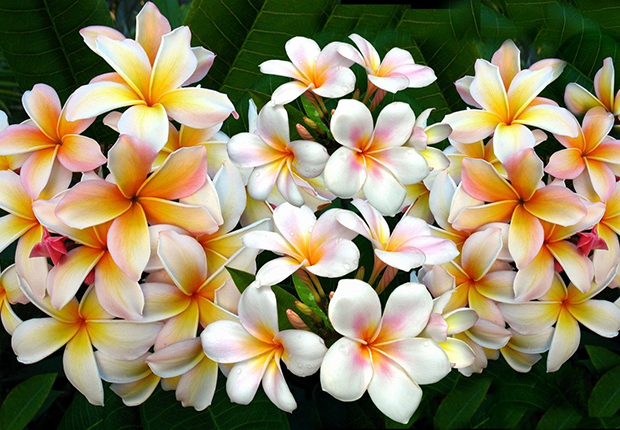
“Dok” means flower in Lao, and “Champa” refers to the frangipani (genus Plumeria). Dok Champa names the flower that is known in science as Plumeria rubra (or simply frangipani). The petals are waxy and often colored white, pink, red, or yellow. It grows in clusters and has become a timeless symbol of grace and serenity throughout Laos.
Blooms in the Rainy Season
Dok Champa reaches its peak flowering between June and July, during the rainy season, when humidity and warmth combine. The flowers last for several days, giving people time to enjoy their presence, and they bloom in cycles rather than all at once.
Famous for Its Heavenly Fragrance
One of the most compelling features of Dok Champa is its sweet, romantic fragrance. In Laos, the scent is said to represent the “smell of home.” The fragrance is especially strong as evening falls and that’s not by accident. Many of its nighttime pollinators, like moths, are drawn to the aroma.
Not Originally Native, but Now Deeply Laotian
Interestingly, Dok Champa was not originally native to Laos, yet over centuries it has become so intertwined with Lao identity that many think of it as native. Today, you’ll find it planted in temple courtyards, city parks, and home gardens across the country.
A Flower of Temples and Rituals
In Laos, Dok Champa is considered sacred. Buddhist temples and wats often plant this flower in their grounds or use its blossoms in offerings. It also plays a role in the Baci ceremony, a traditional Lao ritual of blessing. During these ceremonies, guests may receive necklaces or garlands made of Dok Champa blossoms.
The symbol of serenity
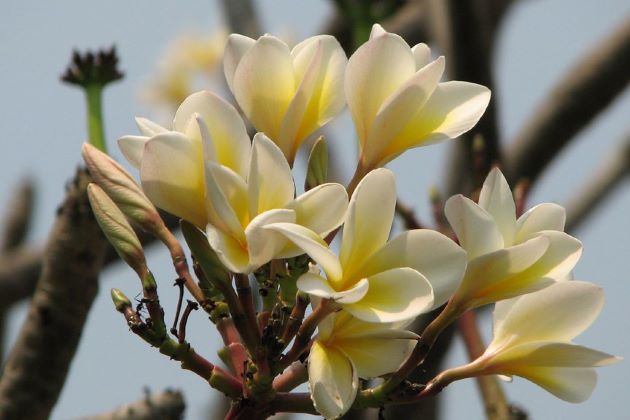
Dok Champa carries deep symbolic weight in Lao culture. It represents sincerity, joy in life, and purity. Some also see it as a symbol of immortality in a Buddhist context, reflecting the spiritual cycles of life and rebirth. Because of these values, you’ll often see “Dok Champa” used as a name for hotels, spas, or cultural centers to invite luck.
Easy to grow
Despite its delicate look, Dok Champa is surprisingly easy to grow in tropical climates. It tolerates heat and humidity well, and can thrive with moderate care. Its waxy petals and sturdy structure help it withstand tropical rain and sun. Today, as climate change brings heavier rains and shifting seasons, Dok Champa continues to adapt and survive.
Dok Champa is more than a flower. It’s a living story of culture, ceremony, and identity. From its sweet fragrance wafting over temple courtyards to its petals flicked in blessing ceremonies, Dok Champa weaves together the spiritual and the everyday in Lao life. Next time you breathe in the soft perfume of a frangipani at dusk, imagine you’re catching a breath of Laos itself.
Sources: Go Laos Tours | World Sensorium Laos
This article was created by Seasians in accordance with the writing rules on Seasia. The content of this article is entirely the responsibility of the author.


