


There is a piece of Indonesian history from 19th century that you have most likely never heard of. And even if you have, it is almost certain that finding detailed records about it would be extremely difficult.
This story is scarcely written in history books, let alone widely known among the public. It survives only as faint traces in old archives, uncovered today thanks to reports in European newspapers of the time.
As confirmed in an interview with Budi Rahmad Ramadhan, a Cultural Heritage Expert from Riau, historical notes about this tribute are extremely rare. He explained that he could only trace the story through Dutch newspapers from 1898.
A Magnificent Gift
The story centers on the 11th Sultan of Siak Sri Indrapura, Syarif Hasyim Abdul Jalil Syaifuddin. In the late 19th century, he presented an extraordinary gift to Queen Wilhelmina of the Netherlands. This tribute was not only visually magnificent but also symbolically rich, seemingly representing the luxury and beauty of the Indies in the eyes of the world.
The event took place on June 25, 1898, when the Sultan was invited to an official audience with the Queen at Soestdijk Palace. At this pivotal moment, he offered an extraordinary gift—one that remains among the most mysterious historical artifacts of the relationship between the Nusantara kingdoms and the Dutch crown.
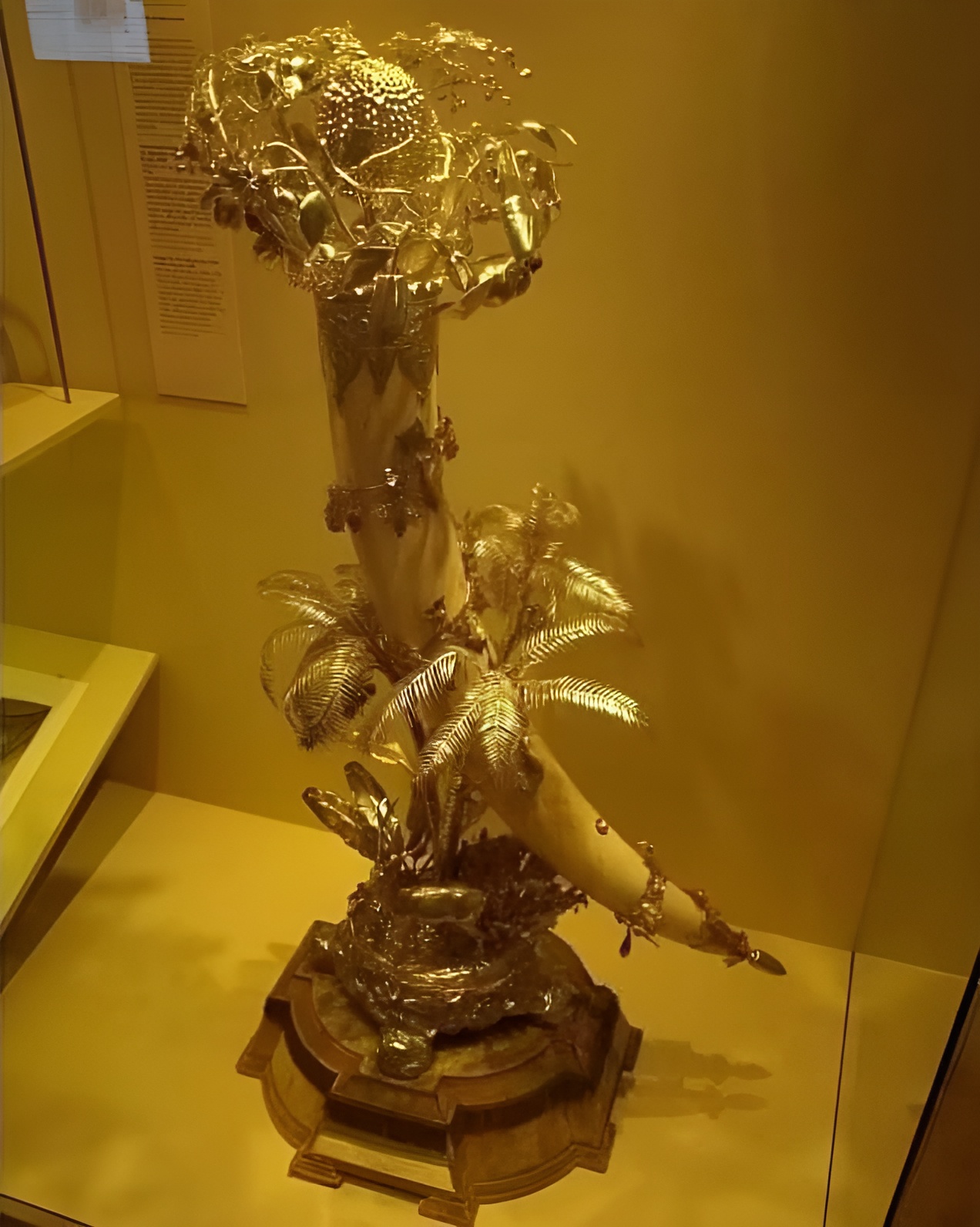
The gift brought by the Sultan of Siak was no ordinary object. He presented a colossal elephant tusk that had been transformed into a stunning work of art.
The tusk was adorned with carvings of tropical flowers and fruits native to the Indies, evoking the image of a towering “horn of plenty” rising from a rocky base. Surrounding it, delicate engravings of local deer added an exotic touch. The base and other decorative elements were exquisitely crafted from heavy silver, plated with vermeil (gilded silver), creating a shimmering play of colors.
The entire masterpiece was mounted on a golden-yellow velvet pedestal, radiating elegance and grandeur.
At the front, a silver shield bore a significant inscription:
“To Her Majesty Queen Wilhelmina, a Token of Respect from His Highness Sharif Hasyim Abdul Jalil Syaifuddin, Sultan of Siak Sri Indrapura, June 25, 1898.”
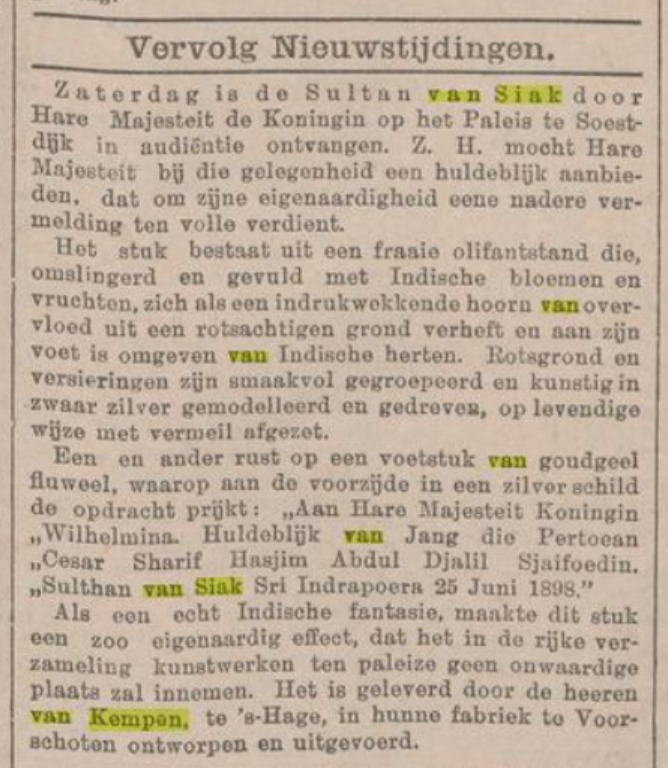
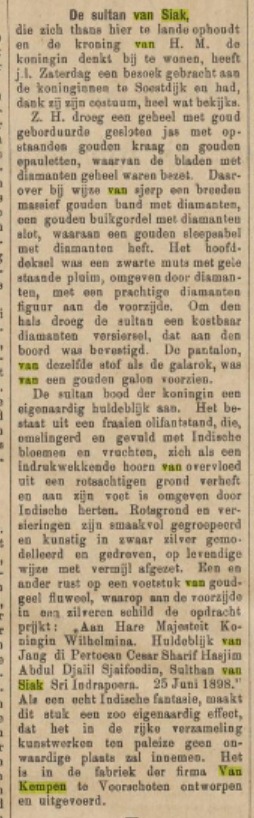
Dutch newspapers covering the event at the time even described it as a “true fantasy of the Indies,” blending the richness of the tropics with the opulence of European decorative art.
Crafted by Van Kempen
This magnificent tribute was crafted by the renowned Dutch jewelry company Van Kempen, based in Voorschoten. It was they who executed the intricate design and transformed the elephant tusk into a true masterpiece of art.
With its elaborate detailing, meticulous craftsmanship, and combination of precious materials, it is no surprise that the work was considered worthy of a special place among the art collections of the Dutch royal palace.
The Sultan’s Striking Appearance
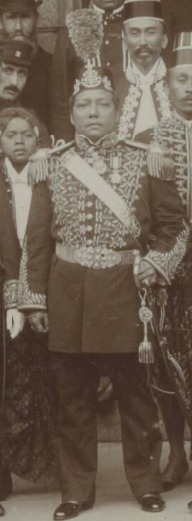
It wasn’t only the gift that astonished the Dutch public. The presence of the Sultan of Siak himself at the audience drew immense attention.
He appeared in full royal regalia: a long coat embroidered with gold, a raised collar, diamond-studded epaulettes, a broad golden sash set with gemstones, and a golden sword also encrusted with diamonds.
On his head, the Sultan wore a black cap adorned with a yellow plume and a cluster of diamonds at the front. Around his neck hung a dazzling, precious necklace.
Even his trousers were made of fine fabric with golden embroidery. In short, his appearance embodied the grandeur of an Eastern monarch who carried both the dignity and the rich cultural heritage of his people.
The Tusk's Present
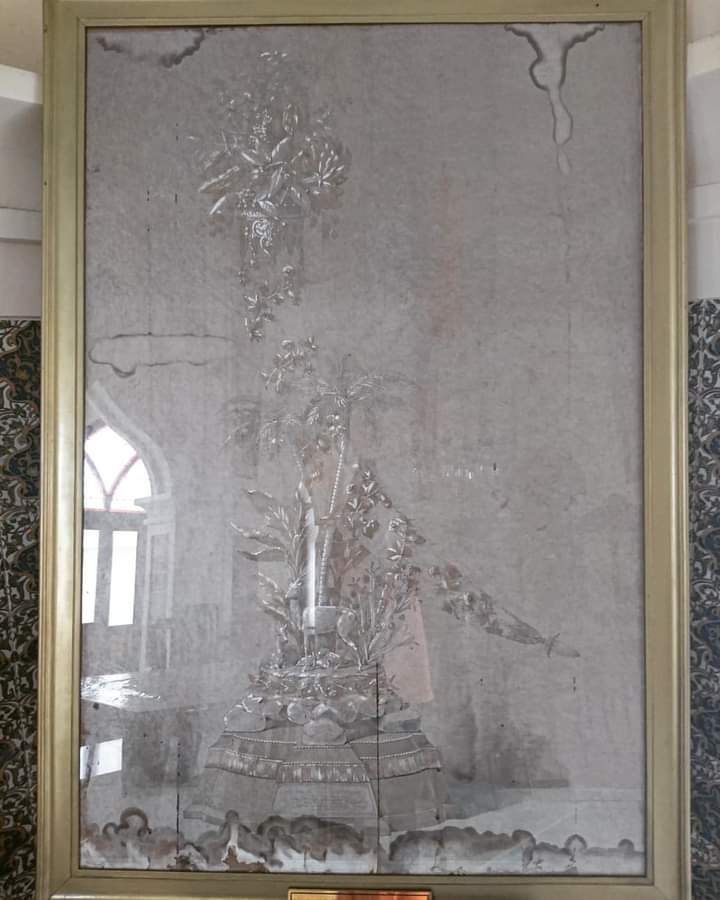
Today, the fate of this artifact remains elusive. The original elephant tusk tribute still resides in the Netherlands. In Riau, visitors to the Siak Sri Indrapura Palace will only find a painting of it.
As emphasized again by Budi Rahmad Ramadhan in the same interview, this makes the legacy of the Sultan’s gift even more mysterious. Without those old newspaper reports and the surviving painting, the story might have disappeared entirely from memory.
The story of the Sultan of Siak presenting a magnificent elephant tusk to Queen Wilhelmina is a small yet telling portrait of the broader history of relations between the Nusantara and the Netherlands. It represents a moment of cultural encounter that produced an extraordinary work of art, one that now lives on only through old records and a single painting.
Source:
- https://www.delpher.nl/nl/kranten/view?query=siak+van+kempen&coll=ddd&page=1&maxperpage=50&identifier=ddd:010299476:mpeg21:a0040&resultsidentifier=ddd:010299476:mpeg21:a0040&rowid=13
- https://www.delpher.nl/nl/kranten/view?query=siak+van+kempen&coll=ddd&page=1&maxperpage=50&identifier=ddd:010125952:mpeg21:a0118&resultsidentifier=ddd:010125952:mpeg21:a0118&rowid=34
- https://www.delpher.nl/nl/kranten/view?query=siak+van+kempen&coll=ddd&page=1&maxperpage=50&identifier=MMTRES04:211421052:mpeg21:p00001&resultsidentifier=MMTRES04:211421052:mpeg21:a00014&rowid=35&pres%5Bmaxperpage%5D=36
- https://www.nationaalarchief.nl/onderzoeken/fotocollectie/85bea898-1bf1-bffd-7cec-32d47d3524a7?searchKey=4da538b184e8126f0514aeec089fb2ea
- https://www.nationaalarchief.nl/onderzoeken/fotocollectie/85bea898-1bf1-bffd-7cec-32d47d3524a7?searchKey=4da538b184e8126f0514aeec089fb2ea


