


Language is one of the most defining characteristics of a culture. It shapes thought, communication, and identity. While many countries operate with one or two official languages, some are home to hundreds, sometimes even over a thousand, distinct tongues.
Linguistic diversity often reflects deep cultural roots, colonial history, migration patterns, and geographical isolation. Below are the countries with the highest number of spoken languages, showcasing humanity’s astonishing linguistic richness.
Papua New Guinea

Papua New Guinea stands in a category of its own when it comes to linguistic diversity. It is the most linguistically diverse country on Earth, with over 800 living languages spoken among its population of roughly nine million people.
This means that nearly 12% of the languages in the world are spoken within the borders of this single country.
The high number of languages in Papua New Guinea is largely due to its rugged terrain, including mountains and dense forests, which has historically limited interaction between different communities.
Many of these groups developed independently, preserving their own unique languages and traditions.
Despite English being one of the official languages, most people use Tok Pisin or Hiri Motu as a lingua franca in daily life, while still speaking their native languages within their communities.
Indonesia

Indonesia is the second most linguistically diverse country in the world, with over 700 living languages spoken across its vast archipelago. With more than 17,000 islands, Indonesia's geographical spread has contributed significantly to its linguistic fragmentation.
Languages such as Javanese, Sundanese, and Madurese have tens of millions of speakers, while hundreds of others are spoken by smaller, often remote communities.
Indonesian, the official national language, was introduced to unify the country and is spoken widely as a second language. However, local languages remain a vital part of cultural identity in many regions.
While some languages are thriving, others are under threat, especially as younger generations increasingly favor the national language or English.
Nigeria

Nigeria is Africa’s most linguistically rich country, with around 500 different languages spoken within its borders. It is also the continent’s most populous country, with over 200 million people, creating an environment where numerous languages coexist across ethnic and regional lines.
Major languages such as Hausa, Yoruba, and Igbo have tens of millions of speakers each, but there are also many minority languages spoken by smaller ethnic groups.
Nigeria's linguistic diversity reflects its complex history and ethnic composition. While English serves as the official language, particularly in government and education, indigenous languages dominate in everyday communication and cultural life.
Unfortunately, many of Nigeria’s lesser-known languages are endangered due to a lack of formal recognition and intergenerational transmission.
India
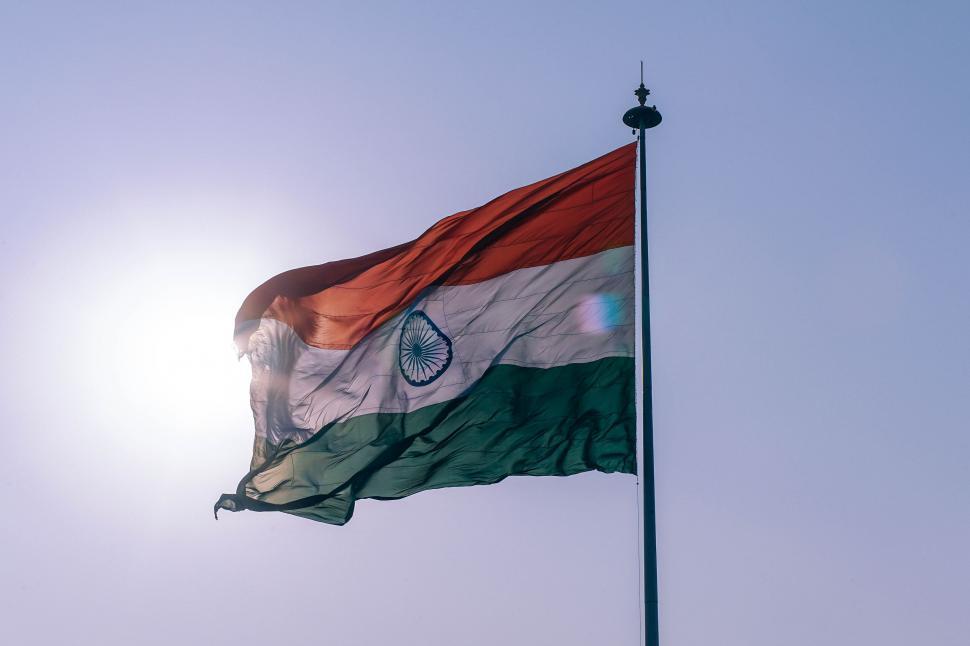
India is home to more than 400 living languages, making it one of the most linguistically complex countries in the world.
The Indian constitution recognizes 22 official languages, including Hindi, Bengali, Telugu, Marathi, and Tamil, each with millions of native speakers. However, hundreds of regional and tribal languages also persist across the subcontinent.
India’s linguistic diversity is a result of its long and layered history of migration, empire, and cultural development. The Indo-Aryan and Dravidian language families dominate, but several others, including Austroasiatic and Tibeto-Burman, are also represented.
English and Hindi serve as link languages, particularly in business, education, and governance, but local languages continue to thrive in daily life, literature, and media.
United States

Although often seen as a predominantly English-speaking country, the United States is surprisingly linguistically diverse. Over 350 languages are spoken within its borders, thanks largely to immigration and indigenous populations.
Spanish is the most widely spoken language after English, with millions of speakers nationwide, particularly in the Southwest and major cities.
In addition to European and Asian languages brought by immigrants, the U.S. is also home to dozens of Native American languages, though many of these are endangered. Cities like New York and Los Angeles are considered among the most linguistically diverse in the world.
Efforts to preserve indigenous and immigrant languages are ongoing, particularly in education and cultural initiatives.
China

China is another country with immense linguistic variety, with around 300 spoken languages. While Mandarin Chinese is the official language and most widely spoken, many regions have their own languages or dialects, such as Cantonese, Shanghainese, Hokkien, and Hakka.
These varieties are often mutually unintelligible, despite being grouped under the broader category of “Chinese.”
China’s diversity stems from its vast geographic expanse and long history of regional development.
Minority languages such as Tibetan, Uighur, and Zhuang are spoken in autonomous regions and among ethnic groups, although there are political and social pressures that sometimes limit their use in public life.


