

Every year, one of nature's most extraordinary phenomena takes place on Christmas Island, an event that draws the attention of nature enthusiasts and scientists alike: the mass migration of red crabs.
Millions of these large, bright red crabs leave their homes in the island's lush forests and embark on a perilous journey toward the ocean to spawn. The scale of this migration, the coordination, and the sheer numbers of crabs making the trek make it a truly mesmerizing sight and an essential part of the island's ecological processes.
While this event is widely regarded as one of the most unique natural occurrences, it also highlights the complex interplay between conservation, wildlife management, and the effects of human activity on the environment.
What Makes the Red Crab Migration So Special?
The migration of the red crabs begins each year with the first rainfall of the wet season, usually between October and November. Male crabs lead the way, followed by the females, as they make their way across roads, beaches, and rocky landscapes toward the ocean.
It is during this migration that the crabs gather in massive numbers, often crossing busy roads and causing traffic disruptions, much to the fascination of tourists who visit the island specifically to witness this event.
What makes this migration so unique is the precise timing and organization involved. The crabs’ movements are influenced by the lunar cycle, and they instinctively know when to leave their burrows to ensure they arrive at the ocean at the right time for spawning, which occurs during the last quarter of the moon.
However, the exact timing can be influenced by external conditions such as the weather and ocean currents.
According to the Christmas Island National Park, in 2025, the annual migration is expected to begin in late October, leading to a major spawning event around November 15 and 16, followed by a second spawning in mid-December. After the spawning, baby crabs usually return to shore 3 to 4 weeks later, with some continuing their return into February, depending on sea conditions.
This forecast is based on climatic indicators, but the timing can vary depending on the weather and ocean conditions. Despite the unpredictability, the crabs’ remarkable ability to align their migration with the lunar cycle demonstrates the awe-inspiring precision of this natural phenomenon.
The Ecological Role of Red Crabs on Christmas Island
The red crabs play an indispensable role in maintaining the ecological balance of Christmas Island. As they travel from the forest to the sea and back, they help disperse seeds, enrich the soil, and sustain the health of the forest.
By moving across the land and interacting with various habitats, the crabs contribute to the island’s biodiversity, providing sustenance for other species and helping to regenerate plant life.
However, the migration also demonstrates how fragile this ecosystem can be. The red crabs' path to the sea requires a safe and secure environment, with minimal disruption from human activity.
This has prompted concerted efforts to protect the crabs and their habitats, ensuring that the migration can continue unhindered by urban development or other forms of environmental stress.
Conservation Challenges and Efforts
Christmas Island’s red crab migration is not only one of nature’s greatest spectacles, but it is also a testament to the importance of effective conservation practices. As the island faces increasing human activity, such as road development, tourism, and infrastructure projects, the red crab population has become vulnerable to disruption.
Road construction, in particular, poses a significant risk to the crabs, as their migration often crosses over highways.
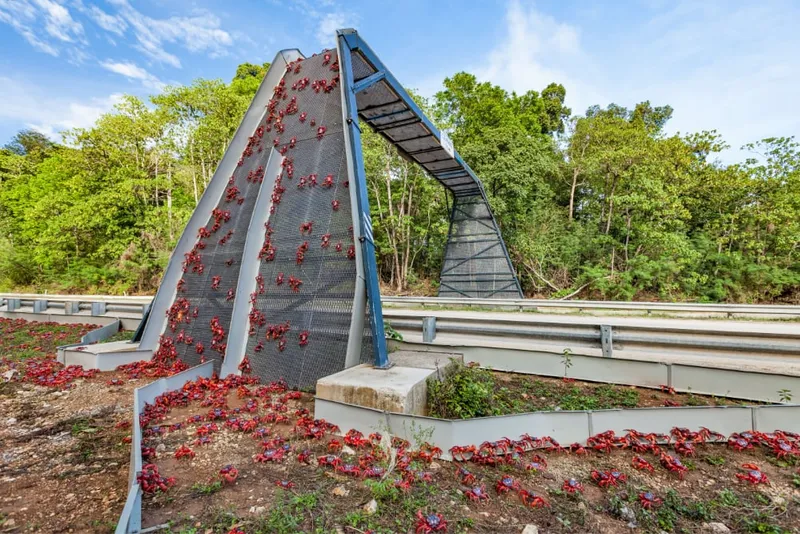
To protect the crabs during their migration, the government has implemented several initiatives, including building “crab bridges” to allow the crabs to cross roads safely, as well as temporarily closing sections of roads during peak migration periods. These efforts are essential in ensuring that the crabs are able to complete their migration without facing undue harm.
In addition to physical barriers, public education has become a critical component of the conservation strategy. Christmas Island’s tourism authorities encourage visitors to follow designated routes and respect the natural environment while exploring the island. By promoting awareness and encouraging sustainable tourism, the island is working to balance conservation with economic interests.
Why Conservation Matters for the Red Crabs
The red crabs are more than just a fascinating attraction for tourists; they are a key species in the island's ecosystem. Their migration helps ensure the continuity of the island's biodiversity, making their preservation essential for maintaining the health of the forest and marine environments.
Without proper conservation, the red crabs could face extinction, disrupting the delicate ecological balance of Christmas Island.
The efforts to protect these crabs also reflect broader environmental concerns that affect not just Christmas Island, but many parts of the world.
Climate change, habitat destruction, and human intervention are all contributing factors that threaten biodiversity. By focusing on the red crabs and their migration, the island’s conservation programs provide a model for how to address these global challenges.
The Future of Christmas Island’s Red Crabs
The red crab migration remains one of the most incredible and awe-inspiring natural events on Earth. As Christmas Island’s largest tourist attraction, the red crab migration brings attention to the need for ongoing conservation efforts and highlights the critical role that these crabs play in the island’s ecosystem.
Through continued conservation work and sustainable tourism, the future of the red crab migration looks promising. By protecting this unique phenomenon, we can ensure that future generations will have the opportunity to experience this natural wonder while maintaining the balance of Christmas Island’s fragile ecosystems.
A Call to Action
Christmas Island’s red crab migration is more than just a remarkable natural event; it is a call to action for all of us to support conservation efforts that protect the biodiversity of our planet. Whether through donations, sustainable tourism, or simply raising awareness, we all have a role in preserving this extraordinary phenomenon for future generations.



