


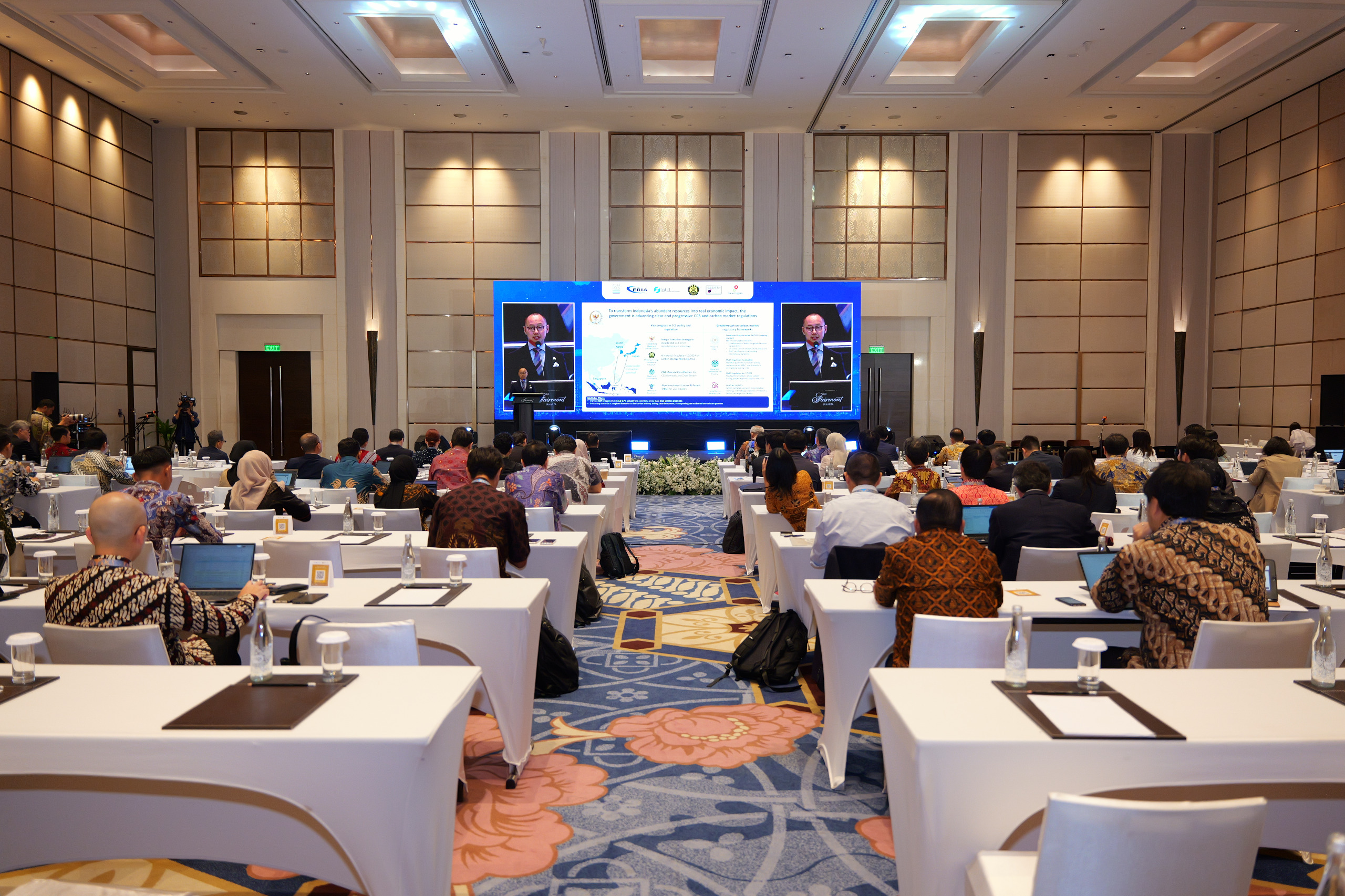
The 5th Asia CCUS Network Forum took place on September 10–11, 2025, in Jakarta, Indonesia, with over 400 participants joining both in person and virtually. This prestigious forum, co-hosted by the Economic Research Institute for ASEAN and East Asia (ERIA), the Ministry of Economy, Trade and Industry (METI) Japan, the Ministry of Energy and Mineral Resources (MEMR) Indonesia, SKK Migas, and the Indonesia Centre of Excellence for CCS and CCUS, brought together experts, government officials, and industry leaders to discuss the critical role of Carbon Capture and Storage (CCS) in the region’s journey towards net zero emissions.
As the global climate crisis accelerates, the forum addressed cross-border CCS as an essential component in mitigating climate change across Asia and the Pacific. The event emphasized the need for international collaboration, with discussions focusing on the development of policy frameworks, advancements in carbon shipping technologies, and innovative carbon recycling solutions that are needed to make CCS a viable solution to global carbon emissions.
A Call for Stronger Regional Cooperation
In his opening speech, ERIA President Tetsuya Watanabe highlighted the importance of multilateral cooperation to tackle the complex challenges of cross-border CCS. Watanabe emphasized that no single country can address these challenges alone. He stressed the need for harmonized regulations, investments in infrastructure, and building trust between governments, industries, and communities. Watanabe called the Asia CCUS Network a key platform for fostering this collaboration and turning ambitious goals into concrete actions.
Indonesia’s commitment to advancing CCS technology and serving as a regional leader in carbon management was evident throughout the forum. Laode Sulaeman, Director General of Oil and Gas at MEMR, underscored Indonesia’s strategic position due to its geological potential and supportive regulatory framework. He also outlined Indonesia's goal to leverage CCS for both emission reduction and sustainable economic growth. The forum served as an opportunity to showcase how cross-border collaboration could enhance the deployment of CCS technologies in the region, ensuring they contribute to global sustainability efforts.
Japan’s Role in Green Transformation and CCS Strategy
H.E. Yuji Muto, Minister of Economy, Trade and Industry (METI) of Japan, shared Japan’s strategy for utilizing CCS as part of its Green Transformation (GX) initiative. Muto emphasized that CCS plays a pivotal role in decarbonizing industries such as steel and chemicals, which are difficult to reduce through other means. Japan is also preparing for CCS operations in the early 2030s, supported by the CCS Business Act and offshore projects like Tomakomai in Hokkaido.
The Minister outlined Japan’s approach to not only reduce carbon emissions but also enhance industrial competitiveness by investing in CCS technologies. He stressed the importance of international collaboration in addressing challenges related to CO₂ transport and developing clear regulations for cross-border CO₂ flows. As part of the Asia CCUS Network, Japan is committed to improving the business environment for CCS projects and accelerating their implementation across the Asia Pacific region.
Collaboration and Innovation in the CCS Sector
Over the course of the two-day forum, several key sessions explored the technological and commercial aspects of CCS. In Session 1, experts discussed the policy and regulatory considerations for cross-border CCS, focusing on the need for international cooperation between CO₂ exporting and storage countries. The panel stressed the importance of creating mutually agreed-upon standards to reduce project costs and ensure the safe and secure long-term storage of CO₂.
Session 2 shifted attention to the commercial viability of cross-border CCS, with representatives from the private sector sharing their experiences and strategies for overcoming challenges in the development of CCS projects. These discussions highlighted the significance of coordinated efforts between private companies, government institutions, and local communities to build a sustainable and financially viable CCS sector.
Technology and Infrastructure for Cost-Effective CO₂ Shipping
In Session 3, the focus turned to CO₂ shipping, a critical component for cross-border CCS. Panelists discussed recent technological developments and operational challenges in CO₂ transportation. They explored how shared utilization of CO₂ shipping infrastructure and the standardization of equipment specifications could reduce costs and increase the efficiency of cross-border CCS projects. Technological innovation in CO₂ shipping is essential for making CCS a more affordable and scalable solution for carbon management.
A key takeaway from this session was the potential of low-temperature and low-pressure CO₂ shipping technology to support long-distance transportation, making it an important piece of the multi-source, multi-sink supply chain that is crucial for cross-border CCS. The session also drew comparisons with the development of LNG (liquefied natural gas) shipping, highlighting the importance of continuous coordination and collaboration in overcoming technical and financial barriers.
Cutting-Edge Carbon Recycling and CO₂ Utilization
The forum’s fourth session delved into carbon recycling, a promising technology for reducing emissions by transforming CO₂ into useful products. Presentations covered groundbreaking advancements in CO₂ separation, concrete manufacturing technologies that utilize captured CO₂, and regulatory frameworks for CO₂ pipeline transportation. The session emphasized the role of carbon recycling in creating a circular economy where CO₂ is not only captured and stored but also repurposed to add value to industries.
By incorporating these innovative technologies, the CCS sector could contribute significantly to the global effort to achieve net zero emissions. The session also highlighted ongoing initiatives in the Asia Pacific region and stressed the importance of collaboration to drive forward the commercialization of carbon recycling technologies.
The Path Forward for Cross-Border CCS Projects
In the final session, experts from the Asia CCUS Network Advisory Group shared updates on their countries' progress in developing CCS regulations, projects, and initiatives. Panelists emphasized that cross-border CCS is already part of many national strategies, with several countries actively exploring ways to implement CCS technologies across borders.
Key discussions included the importance of clear communication with local communities about the economic and environmental benefits of CCS projects, including job creation and investment. The forum also highlighted the growing importance of carbon pricing and green taxonomies to attract financing for decarbonization efforts.
Looking Ahead: Strengthening the Regional CCS Network
The 5th Asia CCUS Network Forum concluded with a commitment to continued collaboration and knowledge sharing among member countries. With strong regional leadership from Indonesia, Japan, and other countries, the Asia CCUS Network aims to drive the development of CCS/CCUS technologies, regulatory frameworks, and financing mechanisms that will make cross-border CCS projects more viable and effective.
As the forum wrapped up, the focus shifted to ensuring that these initiatives translate into real-world projects. The discussions underscored the need for ongoing multilateral engagement, strong public-private partnerships, and continued innovation to make CCS a cornerstone of the global effort to achieve net zero emissions by 2050.


