


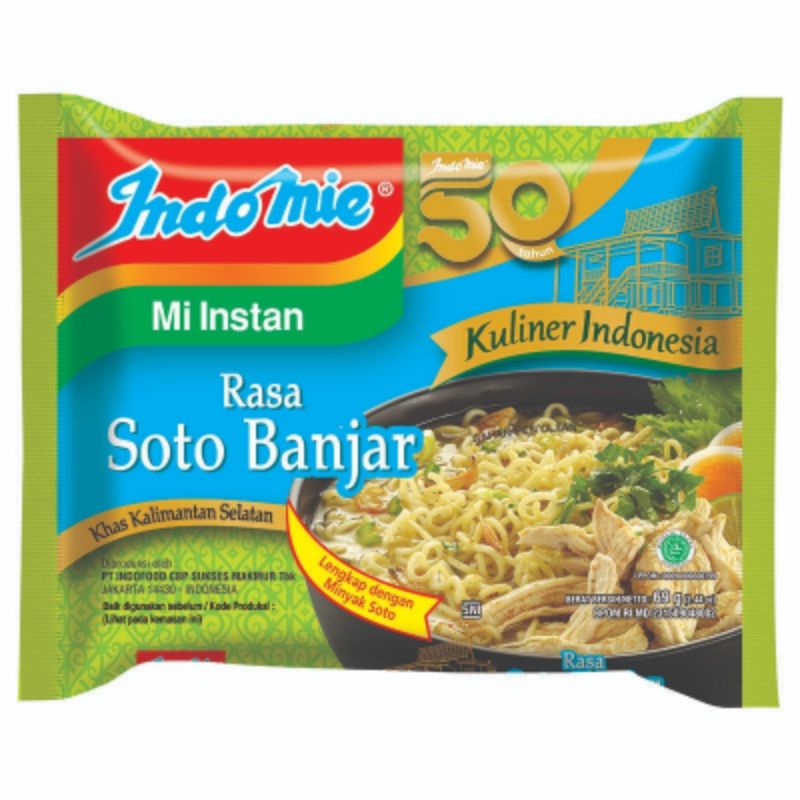
Between August and September 2025, Indomie once again captured international attention. This time, however, it wasn’t for its globally beloved taste, but because of a shocking finding by Taiwan’s Food and Drug Administration (FDA). The agency detected the presence of ethylene oxide (EtO) in the Indomie Soto Banjar Limau Kuit variant.
For Taiwan, this was unacceptable. The country enforces a strict rule: absolutely no trace of EtO is allowed in food. As a result, the product was immediately pulled from shelves, and the government urged citizens to avoid that particular variant.
This raised a big question: how could a product deemed dangerous in Taiwan be considered safe in Indonesia and many other countries?
Different Standards
The answer lies in the variation of standards across countries:
- Taiwan: 0 mg/kg (zero tolerance)
- European Union: limit of 0.1 ppm
- United States: 7 ppm
- Singapore: 50 ppm (for spices)
- Indonesia (BPOM): 85 ppm
So, when Taiwan detected 0.1 mg/kg of EtO in Indomie, the product automatically violated their regulations, even though it was still considered safe under Indonesian standards. Interestingly, the Codex Alimentarius Commission (CAC)—the international food standards body under WHO and FAO—has yet to set a global limit for EtO.
This regulatory gap means a product can be considered “safe” in one country but “non-compliant” in another.
Indonesia’s and Indofood’s Response
In response to the issue, Indonesia’s National Agency of Drug and Food Control (BPOM) reaffirmed that Indomie is safe for consumption domestically. The product is legally registered and meets both national and international food safety standards.
PT Indofood CBP Sukses Makmur (ICBP), the manufacturer, also addressed the problem, stating that all their instant noodles are produced in ISO 22000/FSSC 22000-certified facilities, carry the Indonesian National Standard (SNI) label, and are distributed to more than 30 countries.
Indofood further clarified that the product tested in Taiwan was not part of their official exports but had entered the country through a third party or unauthorized importer.
Concerns in Nigeria
This controversy has sparked reactions far beyond Asia, even reaching Nigeria, a country where Indomie has become a staple alternative food. The National Institute for Cancer Research and Treatment (NICRAT) there voiced serious concern, warning that if Indomie does indeed contain EtO, the consequences could be severe.
Due to the large quantities of instant noodles being consumed, particularly by children, NICRAT fears that cancer cases in Nigeria could rise significantly in the long term. These concerns are not without reason, 78,000 Nigerians died from cancer in 2020 alone.
What Is Ethylene Oxide?
In simple terms, ethylene oxide (EtO) is a colorless, flammable gas with a sweet smell. It is highly versatile, used in the chemical industry to produce antifreeze, plastics, detergents, and adhesives; in medicine to sterilize heat-sensitive medical equipment; and in the food industry to sterilize spices and dry ingredients.
But EtO has a darker side. When it reacts with water or naturally occurring salts in food, it can form a byproduct called 2-chloroethanol (2-CE). Unlike gaseous EtO, which evaporates easily, 2-CE is more stable and can remain in food, including instant noodles.
Its effects on the human body cannot be ignored. In the short term, consuming EtO can cause digestive issues such as stomach pain, diarrhea, and mild poisoning symptoms. Over the long term, excessive exposure has been linked to higher risks of blood cancers, stomach cancer, and chronic inflammatory bowel diseases.
EtO is also mutagenic, meaning it can damage DNA and cause genetic mutations, some of which may be passed on to future generations. This is why the International Agency for Research on Cancer (IARC) classifies EtO as a Group 1 carcinogen, meaning it is proven to cause cancer in humans.
Diverging Global Regulations
Countries regulate EtO very differently. Germany banned its use as early as 1981, followed by the European Union in 1991 with a complete ban.
However, countries like Indonesia, the United States, India, and Canada still allow its use under certain limits.
These regulatory differences are what make the Indomie case so complex. Manufacturers must adjust to multiple safety standards, while consumers often receive inconsistent information about whether a product is “safe” or “unsafe.”


