If you ever visit Myanmar or see photos of its people, you may notice something striking that many women and children have a yellowish paste on their faces. It looks like face powder with a golden glow. You might wonder, what is that? And why does everyone wear it?
That paste is called Thanaka, a traditional cream made from tree bark. This beauty practice has been part of Myanmar’s culture for over a thousand years, and it is still widely used today.
So, what is the story behind this tradition, and why do people in Myanmar continue to wear it every day? Let’s take a closer look at this ancient natural beauty secret.
What is Thanaka?
Thanaka is a natural cosmetic paste commonly used in Myanmar. It is made by grinding the bark of the Thanaka tree (Limonia acidissima), also known as the wood-apple tree, which grows mainly in central Myanmar and parts of India and Sri Lanka.
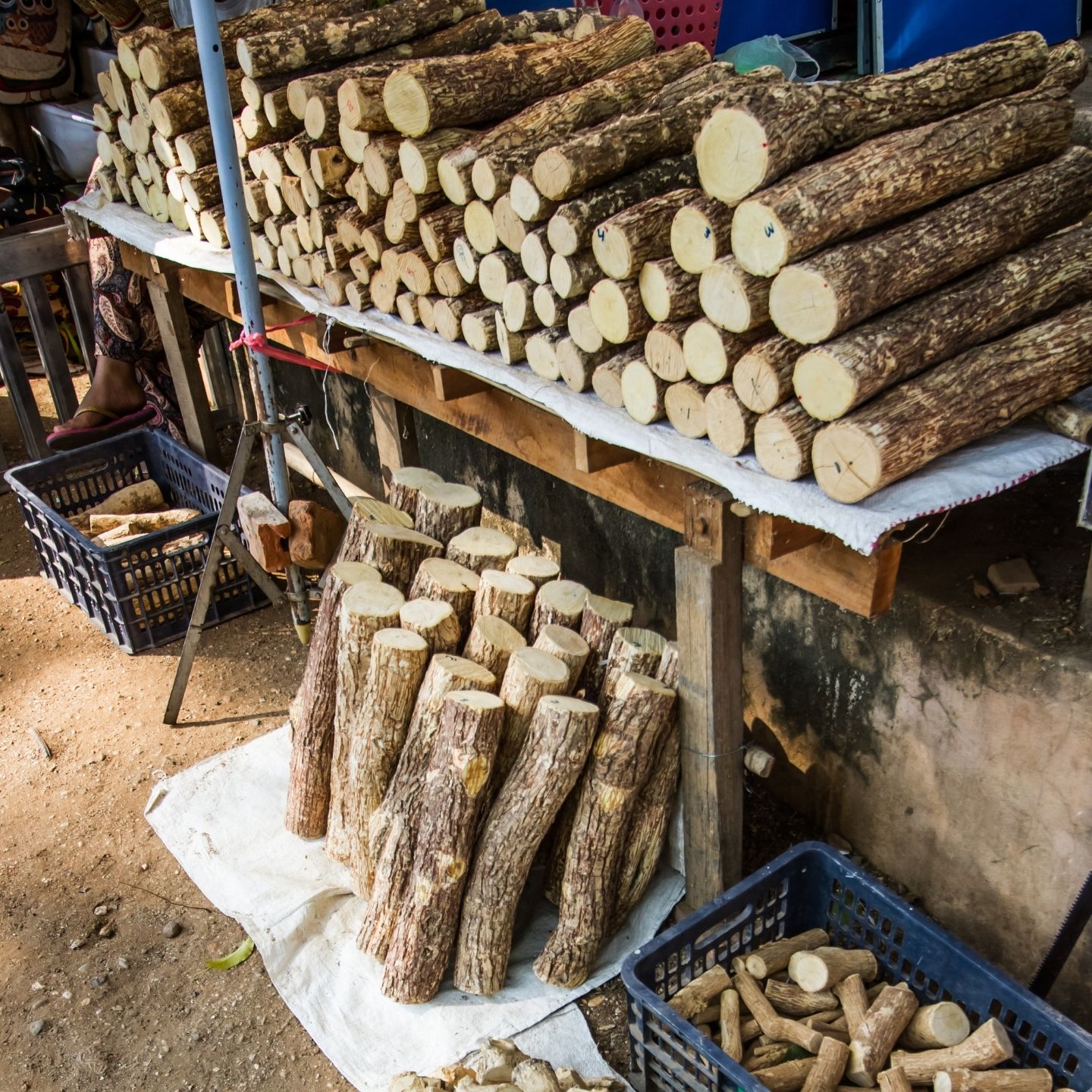
To make Thanaka, the bark is ground on a circular stone slab called a kyauk pyin and mixed with a little water until it forms a smooth, yellowish paste. Only mature trees, typically at least 30 to 35 years old, are considered suitable for producing high-quality Thanaka.
People often apply it on their cheeks, nose, or entire face, sometimes in artistic patterns such as leaf or circular designs. It smells like wood and feels cool on the skin. Many people in Myanmar also love its soft sandalwood-like scent, which makes them feel calm and relaxed.
A Deep Roots of Thanaka
Myanmar people have been preserving the tradition of wearing Thanaka for generations. Temple murals from the Bagan era in the 11th century depict women wearing the paste, and literary references to Thanaka can be found in 14th-century Burmese poetry.
Historically, Thanaka has been more than a beauty product, but also valued for its protective function. Living in a tropical climate, the Burmese people used Thanaka as a natural sunblock and skin soother. Over time, it evolved into a cultural symbol of purity and natural beauty.
Men, women, and children alike wear Thanaka on their faces, necks, arms, and legs. It is part of daily life as they apply it after morning showers, during the day, and sometimes even before bedtime. This routine reflects how deeply Thanaka is embedded in Myanmar’s way of life and cultural identity.
Why People Still Wear Thanaka Today
The main reason Thanaka remains popular is its natural skincare benefits. It helps protect the skin from harsh sunlight and provides a refreshing cooling sensation. Many believe it can help prevent acne, rashes, and even sunburn.
From a medical perspective, Thanaka is considered one of the most organic and eco-friendly cosmetics, safe for both people and the environment.
Read also: From Leaves to Bamboo: 5 Eco-Friendly Packaging Materials in Southeast Asia
Beyond skincare, Thanaka carries deep cultural significance. For many Burmese, it symbolizes pride and authenticity. Older generations often say that a woman’s beauty feels incomplete without Thanaka. Wearing it is a way of honoring one’s heritage and showing respect to ancestors.
Whether in rural villages or modern cities like Yangon, people of all ages still wear Thanaka every day at home, in schools, and even at festivals. It is not just about appearance, but about belonging and identity.
Thanaka in the Modern World
Today, Thanaka continues to adapt to modern times. It is available in commercial forms such as creams, lotions, and soaps, often produced by local cosmetic brands using natural ingredients.
Myanmar’s government and cultural organizations are also working to preserve and promote Thanaka as part of the nation’s intangible cultural heritage. There have even been efforts to nominate Thanaka for inclusion in UNESCO’s Intangible Cultural Heritage list.
On social media, young influencers have embraced Thanaka by combining it with modern make up style. They turn his ancient practice into a renewed symbol of national pride and modern identity.
As a result of this, it is undeniably true that Thanaka is far more than just a cosmetic, but a living tradition that connects Myanmar’s past and present. For over a thousand years, it has reflected the country’s connection to nature, beauty, and cultural pride.
References:
- https://www.myanmar.gov.mm/news-media/news/latest-news/-/asset_publisher/idasset354/content/myanma-thanaka-a-natural-cosmetic-and-a-cultural-heritage
- https://apnews.com/article/myanmar-cosmetic-paste-unesco-culture-heritage-64c53d97f017c0425f3539ee36b9c8ac
This article was created by Seasians in accordance with the writing rules on Seasia. The content of this article is entirely the responsibility of the author.