


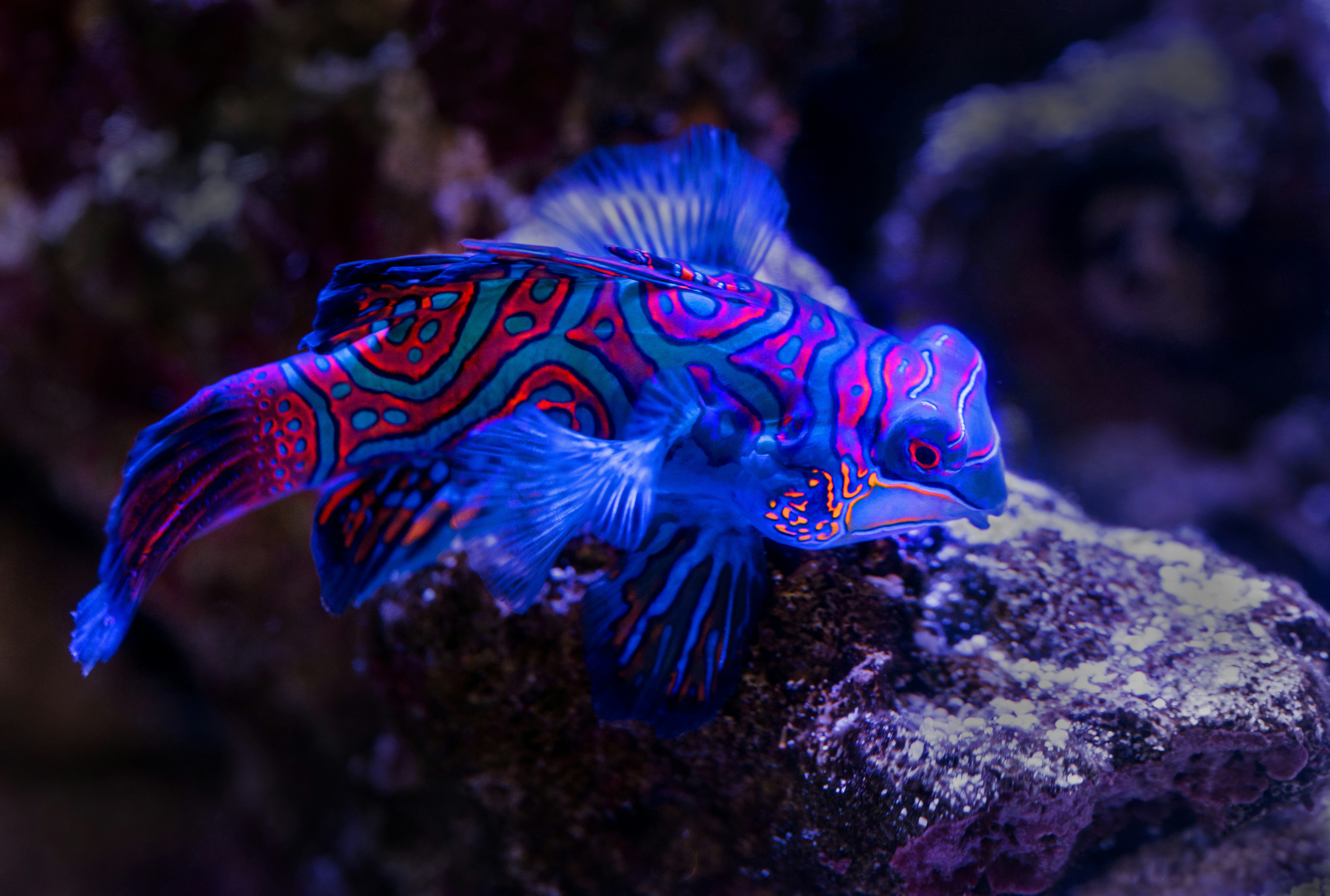
If you’ve ever seen a photo of a Mandarin fish (Synchiropus splendidus), you might think it was painted by hand, because its colors are so unreal they almost look photoshopped. Swirls of blue, orange, and green flow across its small body like strokes of watercolor. But this tiny tropical fish is very much real and earned a reputation as one of the most mesmerizing creatures in the ocean. We can find their species across the tropical waters of Southeast Asia and the Pacific. The Mandarin fish is not only beautiful, but also has strange behaviours, from the way it eats and mates to the way it defends itself.
They’re tiny, but unforgettable
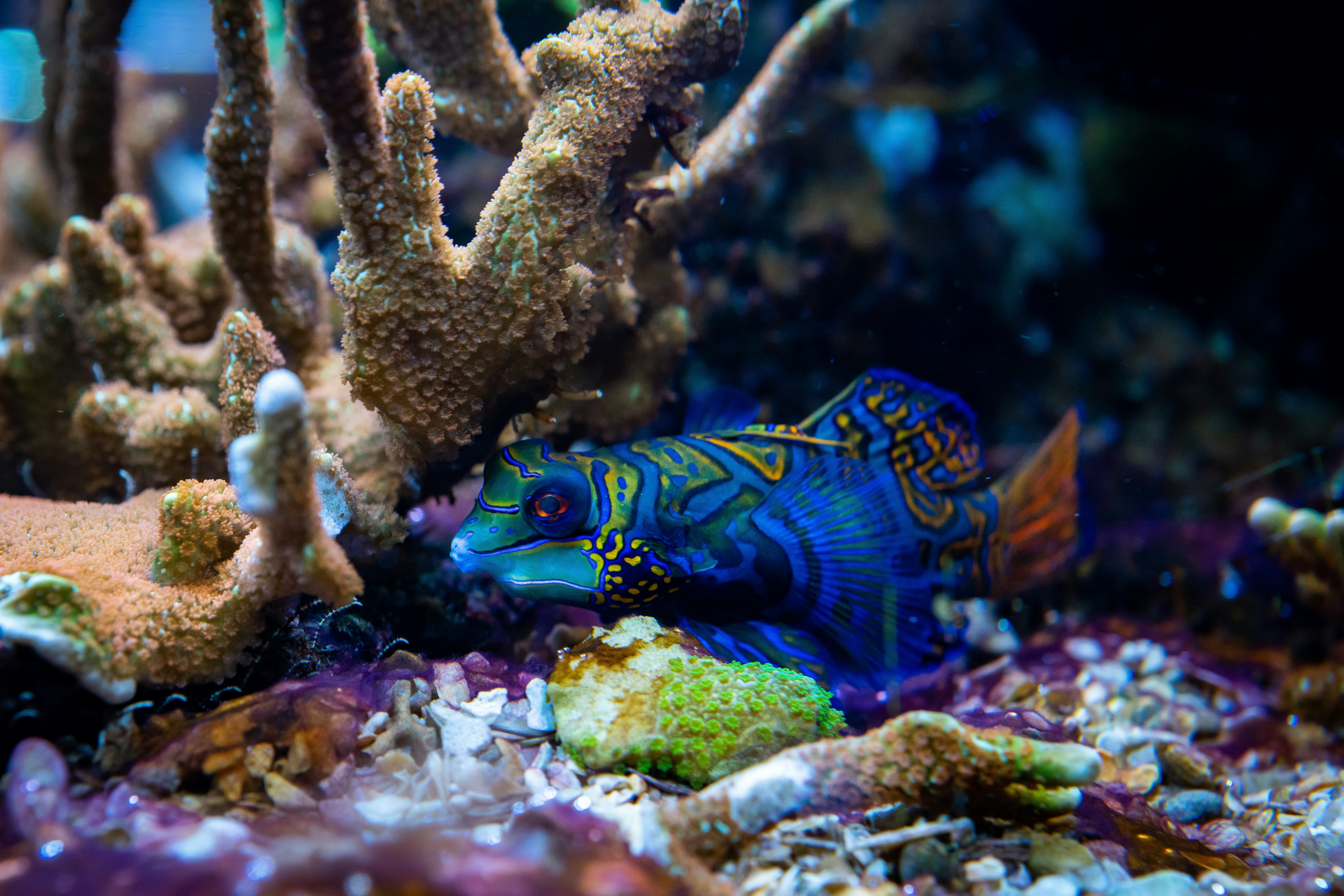
At first glance, you might not believe such vibrant colors belong to a fish no longer than 6-8 centimeters, the Mandarin fish may be small, but its presence is impossible to ignore. Its body glows with intense blues, greens, oranges, and yellows. Colors so vivid that divers often stop mid-swim just to stare. You’ll find them mostly around Indonesia, the Philippines, and parts of Australia, living in shallow coral reefs and lagoons where the water’s calm and warm. During the day, they usually hide inside coral branches or under rocks, peeking out only when they feel safe.
Their color is one of a kind
Here’s a fun science fact! Almost all animals that look blue don’t actually produce blue pigment. Instead, their color comes from how light reflects off microscopic structures in their skin. But not the Mandarin fish! It’s one of the few creatures on Earth that actually produces a true blue pigment. That’s why its electric-blue skin looks so deep and vivid. It’s not just reflection, it’s genuine color.
No scales, but a clever defense
Unlike most fish, Mandarin fish don’t have scales at all. But instead, they protect themselves in a different way. Their skin is coated with a thick, slimy mucus that smells and tastes terrible to predators. So while they look deliciously colorful, they’re actually one of the least appetizing meals in the reef.
They’re picky eaters
Mandarin fish are what you might call “foodies” of the coral reef. They spend their day slowly hovering just above the sand, picking tiny crustaceans and worms from the seabed. They don’t eat flakes or dead food. They only eat microscopic snacks called copepods and amphipods. That’s why they’re really difficult to keep in aquariums. Unless a tank is full of live rock and microorganisms, they can easily starve despite having plenty of space.
Love blooms at sunset
Every evening, Mandarin fish perform one of the most beautiful mating rituals in the ocean. Males start to show off, fluttering their fins and dancing around the females. When a female chooses her partner, they rise together from the coral, gently touching belly to belly. For a few seconds, they float upward in perfect harmony before releasing eggs and sperm into the open water. A brief moment of connection before they drift apart again. The mating rituals are quiet and over in less than a minute.
The boys are flashier than the girls
Like any other fish where the male is more wonderful than the female, you can find the difference between a male and female Mandarin fish, when you look closely at the fins. Males are usually larger and have an elongated, pointed first dorsal fin, which they proudly raise during courtship displays. It’s a bit like a peacock’s tail. A signal to say, “ Please, pick me!”
Hard to spot, but not rare
Even though divers love them, Mandarin fish aren’t endangered. They’re just elusive. They prefer to come out around dusk, when the light is soft and shadows hide them from predators. If you dive in places like Komodo, Raja Ampat, or the Philippines, you might be lucky enough to see their evening dance but you’ll have to be patient and gentle to get close.
A symbol of healthy reefs
The Mandarin fish may be small, but it plays a big role in its ecosystem. It helps keep populations of tiny invertebrates in check and serves as a sign of healthy reef life. Where Mandarin fish thrive, coral reefs are usually alive and well. Their beauty make them a perfect symbol of why ocean conservation is so important, because once we lose the reefs, we lose countless wonders like them.
The Mandarin fish might be small and quiet, but it represents everything about life beneath the waves. It’s proof that the ocean’s artistry isn’t just about size or strength. It’s about color, rhythm, and balance.
Sources: Dragon Dive Komodo | Georgia Aquarium | Ocean Blue Project
This article was created by Seasians in accordance with the writing rules on Seasia. The content of this article is entirely the responsibility of the author.


