


After nearly 30 years of being considered missing, the flat-headed cat (Prionailurus planiceps) has finally been detected again in Thailand. The rare species was last recorded in 1995 and had since been classified as “possibly extinct.”
This assumption was overturned after camera traps installed in the Princess Sirindhorn Wildlife Sanctuary in southern Thailand captured evidence of the species’ presence throughout 2024 and into early 2025.
As part of an ecological survey that began in 2024, the conservation organization Panthera, working alongside Thai authorities, recorded a total of 29 detections, 13 in 2024 and 16 in 2025.
The findings were announced on 26 December, coinciding with Thailand’s National Wildlife Protection Day. Although the exact number of individuals cannot yet be determined, the frequency of detections indicates that the species has persisted and may exist in relatively significant concentrations within the area.
A Rare Species Living in Hard-to-Reach Habitats
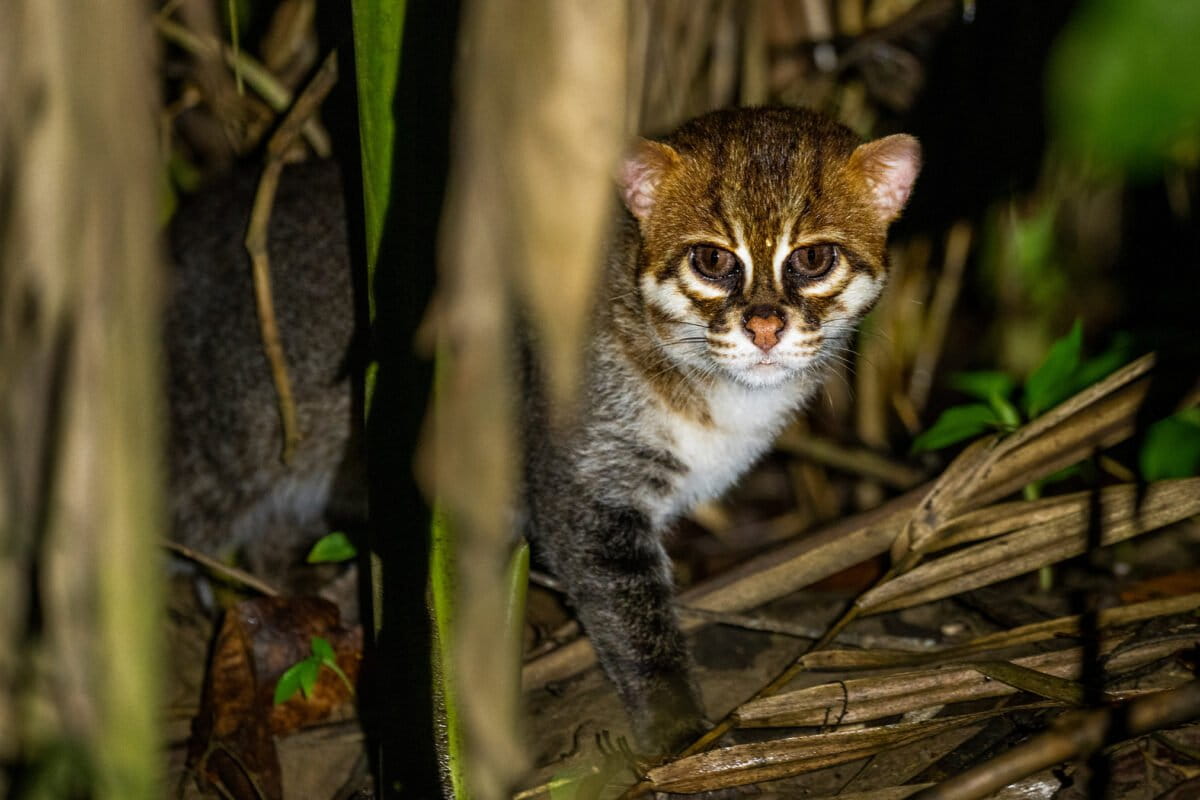
The flat-headed cat is one of the rarest and least-studied wild cat species in the world.
It is small, weighing around two kilograms, and is distinguished by its flattened head, closely set round eyes, and partially webbed feet that help it navigate wet environments. These adaptations make the species highly dependent on peat swamps, flooded forests, and freshwater mangroves.
Unlike most wild cats, the flat-headed cat is a shallow-water hunter, feeding primarily on fish, frogs, and shrimp. Its nocturnal, elusive nature and preference for extreme terrain mean it is rarely encountered by humans.
Research in peat swamp ecosystems is further complicated by difficult access, chest-deep water, and dense vegetation, which severely limit field observation.
Another challenge stems from the species’ lack of distinctive body markings. Unlike many other wild cats, the flat-headed cat has no prominent patterns, making it difficult for researchers to distinguish individuals in camera trap footage.
Despite these limitations, the relatively high number of detections at Princess Sirindhorn Wildlife Sanctuary suggests that the area plays a crucial role as a core habitat for the species in Thailand.
Ongoing Conservation Threats
One of the most critical findings was footage of a female flat-headed cat with her offspring. This evidence is particularly encouraging, as the flat-headed cat is known to have a low reproductive rate and typically gives birth to only a single cub.
The presence of a cub indicates that the population is not merely surviving, but is still reproducing in the wild.
Globally, the International Union for Conservation of Nature (IUCN) estimates that only around 2,500 adult flat-headed cats remain in the wild. The species is classified as Endangered, with primary threats including the loss of wetland habitats, forest fragmentation, and human pressures such as hunting and environmental degradation.
In Thailand, peat swamp ecosystems have long been fragmented due to land conversion and development, significantly reducing the available habitat for the species.
The survey conducted at Princess Sirindhorn Wildlife Sanctuary forms part of the largest study ever undertaken on the flat-headed cat in Thailand and will serve as a key reference for the next IUCN assessment, led by Panthera in 2026.
Despite the renewed sense of hope, researchers stress that these findings represent only an initial step. Ongoing threats, including peatland fires, pollution, diseases transmitted by domestic animals, and the potential for illegal wildlife trade, continue to pose serious risks to the area.
The rediscovery of the flat-headed cat underscores that species long unseen are not necessarily extinct. With consistent habitat protection and sustained research efforts, even the most elusive wildlife species still have a chance to survive amid the mounting pressures of landscape change in Southeast Asia.


