


Indonesian modest fashion brand TAZA officially opened its solo exhibition, A Tale of Tomorrow – Where Virtue Meets Responsibility, from 9 to 15 January 2026 in Jakarta. Hosted at D’Gallerie, South Jakarta, the exhibition offers more than a showcase of clothing—it presents fashion as a reflection of responsibility, intention, and long-term impact.
The exhibition was inaugurated by Yuke Sri Rahayu, Deputy for Cultural Creativity and Design at Indonesia’s Ministry of Creative Economy, alongside Ashila Ramadhani, Founder of TAZA, and Afina Maharani, Co-Founder of TAZA. Together, they marked the opening of a space designed to encourage visitors to slow down and reconsider how everyday choices—especially in fashion—shape tomorrow.
Fashion as an Ethical Journey
For TAZA, A Tale of Tomorrow is not framed as a celebration of trends, but as a moment of contemplation. Founder Ashila Ramadhani described the exhibition as an invitation to reflect on the meaning behind every decision, from material selection to production processes and long-term responsibility.
Rather than positioning garments as mere consumer goods, the exhibition highlights fashion as an “amanah”—a trust that carries consequences beyond aesthetics. It acknowledges the people, values, and communities involved in the brand’s journey while imagining a future of modest fashion grounded in sincerity, care, and purpose.
Support from the Creative Economy Sector
The exhibition also reflects broader conversations within Indonesia’s creative economy. Yuke Sri Rahayu emphasized that initiatives like this demonstrate how local brands can operate with integrity and long-term vision. According to her, creative spaces should not only respond to market trends but also help define values that guide future generations.
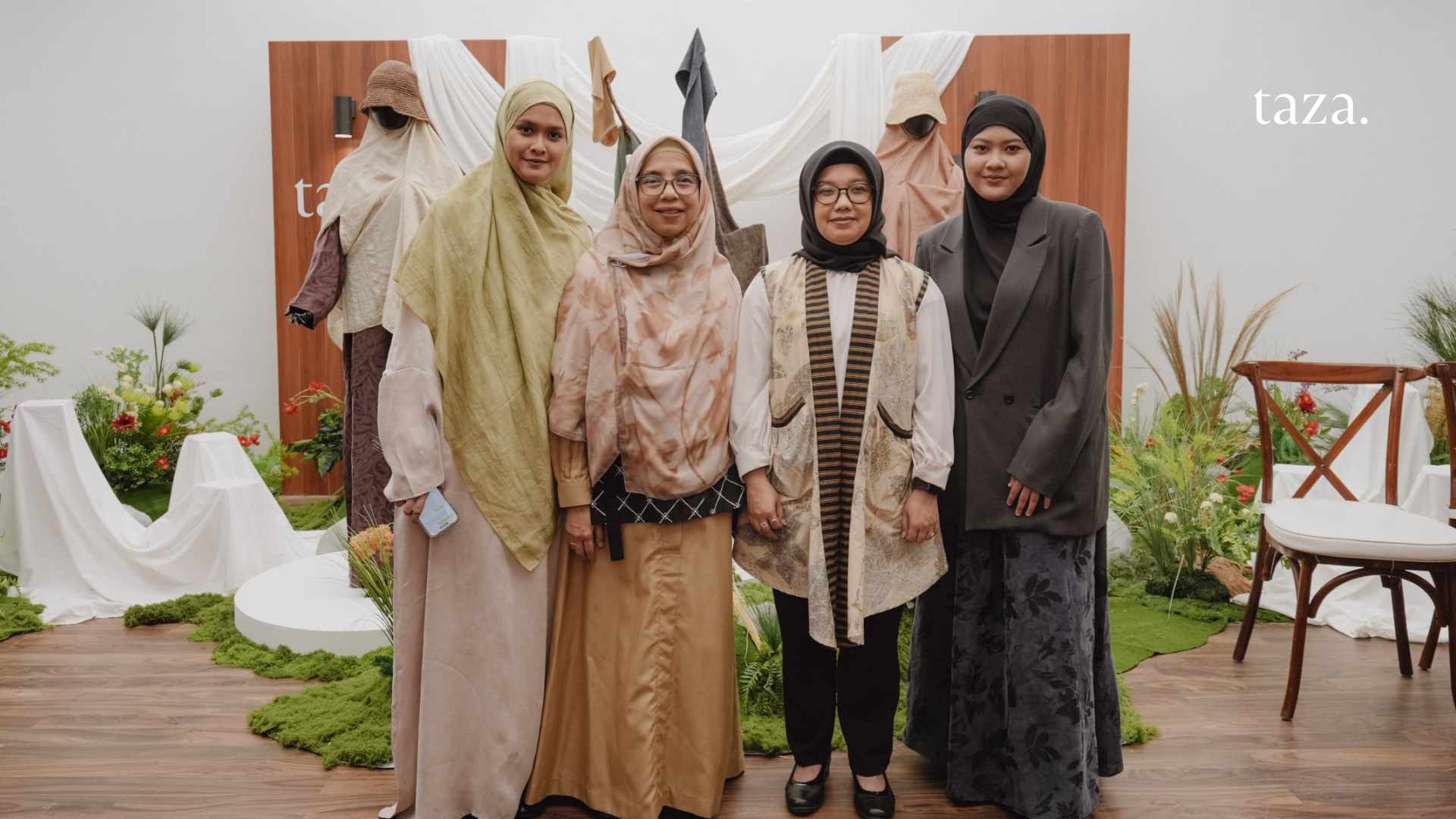
From the government’s perspective, exhibitions such as A Tale of Tomorrow contribute meaningfully to strengthening Indonesia’s fashion subsector—particularly by encouraging responsible creativity and reinforcing the position of local brands in both domestic and global contexts.
Three Core Values: Commitment, Assurance, and Comfort
At the heart of the exhibition are three guiding principles that define TAZA’s approach: commitment, assurance, and comfort. These values shape how the brand views clothing—not only as something to wear, but as something that should allow freedom of movement, emotional ease, and mindful living.
This philosophy is reflected in TAZA’s emphasis on thoughtful material choices, ethical processes, and an awareness of sustainability. Every design decision is presented as part of a conscious process rather than a rushed response to fashion cycles, reinforcing the idea that responsibility begins long before a garment reaches its wearer.
Five Exhibition Zones, One Narrative
Rather than functioning as a conventional gallery, A Tale of Tomorrow is structured as a journey through five interconnected spaces, each representing a different layer of meaning:
-
The Shared Home introduces the idea of Earth as a shared responsibility, inviting visitors into an immersive reflection on humanity’s relationship with nature.
-
The Hands Behind pays tribute to the people involved in TAZA’s journey—family, team members, and collaborators—emphasizing that creation is always collective.
-
The Piece That Gets You showcases TAZA’s collections as expressions of value, where aesthetics, comfort, and responsibility intersect.
-
You centers the wearer, highlighting how garments gain meaning through lived experiences and continued use.
-
The Ones to Come closes the exhibition by inviting visitors to consider the future as a result of the conscious choices made today.
Each space is designed to engage visitors emotionally rather than visually alone, encouraging reflection instead of consumption.
An Invitation to Grow Together
Co-Founder Afina Maharani explained that the exhibition aims to leave visitors with a sense of warmth and belonging. The goal is not to impress, but to foster closeness—between brand and audience, creator and wearer, present and future.
By curating intimate visiting sessions and limiting capacity on selected dates, TAZA sought to create a personal experience where stories could be absorbed without distraction. On the final days, the exhibition was opened purely as a narrative space, allowing visitors to engage fully with the ideas presented, free from commercial focus.
Fashion Beyond the Present
A Tale of Tomorrow positions modest fashion as part of a larger ethical conversation—one that extends beyond fabric and form. Through reflection, storytelling, and intentional design, the exhibition frames fashion as a living process shaped by responsibility, relationships, and long-term vision.
Rather than offering definitive answers, TAZA’s exhibition leaves visitors with a quiet but powerful question: what kind of tomorrow is being shaped by the choices we make today?


