


The Ubud Food Festival (UFF) will return to Bali from 28 to 31 May 2026, bringing together chefs, farmers, producers, and food lovers from Indonesia and around the world for four days of culinary celebration. With the theme “Farmers: Guardians of Land and Sea,” this year’s festival highlights the individuals and communities whose work sustains the region’s vibrant food culture—from farmers cultivating crops in volcanic soil to fishers harvesting the bounty of Indonesia’s vast seas.
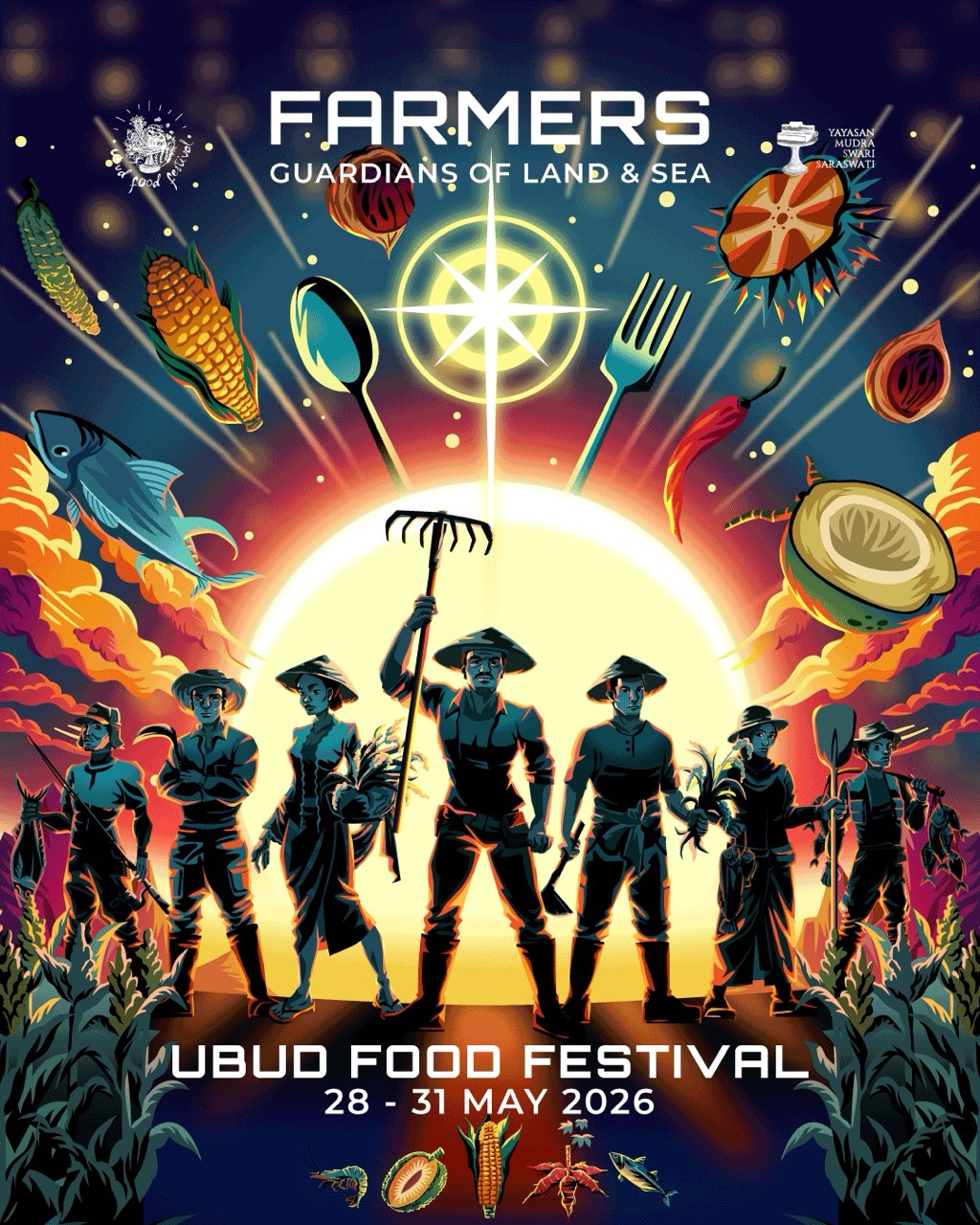
Honouring the Hands that Feed Us
Held at the open-air venue of Taman Kuliner in Ubud, the festival will feature cooking demonstrations, food talks, masterclasses, culinary tours, and a lively food market showcasing dozens of vendors. These events are designed not only to delight visitors but also to highlight the interconnected food ecosystem that links farmers, chefs, and consumers. Festival founder and director Janet DeNeefe has emphasized that farmers are at the heart of the festival’s message, describing them as protectors of biodiversity and guardians of culinary knowledge passed down through generations.
A Global Line-Up of Culinary Talent
The 2026 programme brings together an impressive lineup of culinary talents from Indonesia and abroad. Among the international highlights is Bangkok-based Chef Prin Polsuk, whose acclaimed restaurant Samrub Samrub Thai is known for reviving historic Thai recipes and heirloom ingredients. His work reflects a growing movement in Southeast Asia to rediscover traditional culinary knowledge while adapting it for modern audiences.
Joining him is Australian chef Ben Devlin, owner of Pipit in Byron Bay, who is renowned for his approach to sustainable seafood and wood-fired cooking that celebrates coastal produce. Also appearing is Kate Reid, founder of Melbourne’s celebrated Lune Croissanterie, whose pastries have gained international recognition for their precision and craftsmanship.
Another notable guest is Spanish-born chef Frank Camorra, founder of Melbourne’s iconic MoVida group, known for introducing modern Spanish tapas to Australian dining culture. Representing Indonesia’s contemporary culinary scene is Chef Jovan Koraag, whose restaurants explore bold reinterpretations of Manado cuisine, showcasing the vibrant flavours of North Sulawesi.
Celebrating Producers and Sustainable Food Systems
Beyond chefs and culinary performances, the festival places strong emphasis on the producers who form the foundation of the food system. Among the figures highlighted this year is Balinese cocoa advocate Agung Widyastuti, whose work in sustainable cacao farming has strengthened local agricultural communities and promoted environmentally responsible practices.
Her initiatives demonstrate how agriculture, sustainability, and cultural heritage are deeply intertwined in Indonesia’s culinary landscape. By highlighting farmers and producers, the festival encourages audiences to appreciate the full journey of food—from soil and sea to the dining table.
About the Ubud Food Festival
Since its founding, the Ubud Food Festival has grown into one of Southeast Asia’s most influential culinary gatherings. The annual event attracts thousands of visitors, chefs, and food enthusiasts eager to explore Indonesia’s diverse culinary traditions. The programme typically includes chef collaborations, intimate dining experiences, cultural performances, workshops, and a vibrant open-air food market offering a wide range of Indonesian street food.
Beyond its celebratory atmosphere, the festival also serves as a platform for dialogue on sustainability, food heritage, and the future of gastronomy.
The Rich Landscape of Indonesian and Southeast Asian Cuisine
Indonesia’s cuisine is widely recognized as one of the richest and most diverse in the world. Influenced by centuries of trade, migration, and cultural exchange, Indonesian food blends indigenous traditions with Indian, Chinese, Middle Eastern, and European influences. Dishes such as rendang, sate, nasi goreng, and the countless varieties of sambal showcase the archipelago’s mastery of spices and complex flavours.
More broadly, Southeast Asian cuisine—from Thailand and Vietnam to Malaysia and the Philippines—continues to gain international attention for its balance of sweet, sour, salty, and spicy elements. The region’s culinary traditions emphasize fresh herbs, fermented ingredients, and deep respect for seasonal produce.
As global interest in regional ingredients and sustainable sourcing continues to grow, Southeast Asian food is increasingly recognized as a model for the future of gastronomy. By celebrating farmers and highlighting culinary traditions rooted in local ecosystems, the Ubud Food Festival 2026 reminds us that the future of food begins with respect for the land, the sea, and the communities that nurture them.


