

Indonesia’s cultural heritage continues to inspire younger generations, especially at a time when digital lifestyles and global trends increasingly shape the way people understand identity and history. On Wednesday, May 13, Kawan GNFI, in collaboration with Seasia, organized a special visit to the Indonesia Heritage Society (IHS) office in Jakarta, bringing together young participants from across the Greater Jakarta area, as well as one participant from Dili, Timor-Leste.
The gathering became more than just a casual visit. It evolved into a meaningful cultural exchange where participants explored Indonesia’s historical legacy, museum culture, and heritage preservation efforts from fresh and youthful perspectives. In an era dominated by fast-moving content and short attention spans, the event reminded attendees that heritage remains relevant, dynamic, and deeply connected to the future.
Discovering Indonesia Beyond Textbooks
Throughout the session, participants were introduced to the role of the Indonesia Heritage Society in preserving and promoting Indonesia’s cultural wealth. Established in 1970, the organization has long played an important role in cultural education, heritage tours, and public awareness initiatives involving museums, historical sites, and Indonesian traditions.
For many attendees, the experience offered a new understanding of Indonesian history beyond what is typically learned in schools or seen on social media. Discussions ranged from heritage conservation and museum engagement to the importance of documenting traditions for future generations.
One participant described the visit as “a memorable and eye-opening experience learning about Indonesian heritage from different points of view as a young person.” The statement reflected a growing curiosity among Indonesian youth to reconnect with their roots while navigating a rapidly globalizing world.
Christine Kristiati from the Indonesia Heritage Society also welcomed the enthusiasm shown by the participants. “It’s so much fun to have young people coming over to our place. Their energy, comedic characters, curiosity, and critical thinking about Indonesian heritage are really unmatched,” she said during the program.
The cultural experience became even more memorable as participants were also given the opportunity to taste various traditional Indonesian snacks, commonly known as jajan pasar. For many of them, it was their first time trying getuk, a traditional Javanese sweet treat made from mashed boiled cassava mixed with sugar. The simple yet authentic culinary experience added another layer of cultural appreciation to the visit.
Breaking Into Stories of Old Jakarta
One of the most engaging moments during the visit was the interactive discussion and presentation session, where participants were divided into three smaller groups to explore different heritage-related issues connected to Jakarta’s historical development. The breakout discussions encouraged participants to actively exchange ideas, analyze historical transformations, and connect the past with present-day urban realities.
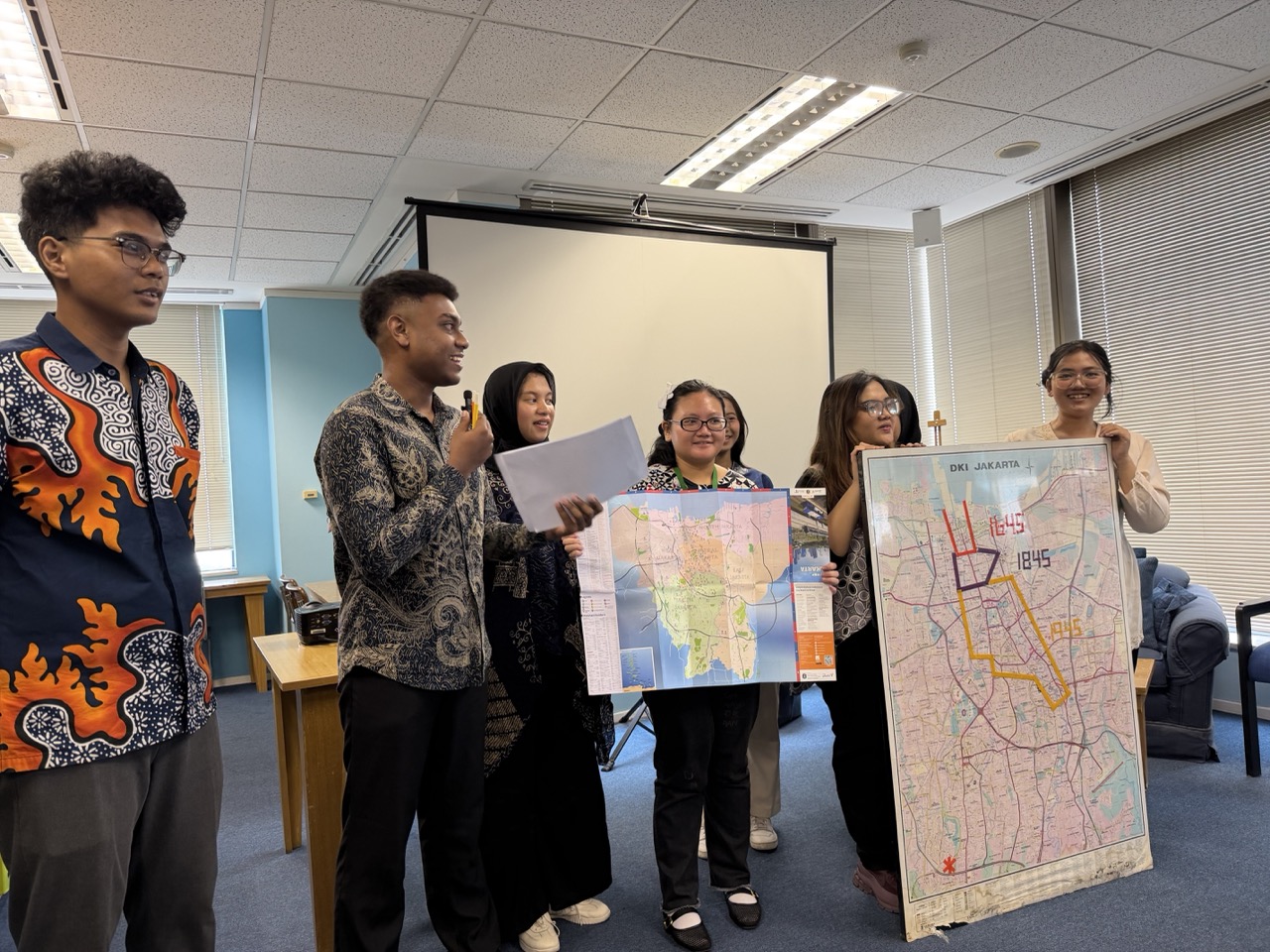
Each group focused on a different topic. One group explored the evolution of Jakarta’s public transportation system, tracing its transformation from colonial-era mobility networks to the modern integrated transportation system seen today. Another group discussed the changing function of government buildings in Kota Tua, particularly how former Dutch administrative offices eventually evolved into Indonesia’s modern “Balai Kota” or City Hall after independence. Meanwhile, the third group examined historical figures during the colonial period whose influence was closely linked to land ownership and property rights, highlighting how colonial structures shaped social and economic hierarchies that still leave traces in Jakarta today.
The session allowed participants not only to learn history, but also to critically reflect on how heritage, governance, urban planning, and social issues remain interconnected in contemporary Indonesia.
A Nation Rich in Heritage
Indonesia possesses one of the richest cultural landscapes in the world. According to UNESCO, the country currently has 10 UNESCO World Heritage Sites, including Borobudur Temple Compounds, Prambanan Temple Compounds, and the Cultural Landscape of Bali Province. Indonesia is also home to more than 400 museums spread across the archipelago, ranging from historical museums and cultural galleries to maritime and contemporary art institutions.
The growing interest in museums and heritage tourism has become increasingly visible in recent years. Data from Indonesia’s Ministry of Education, Culture, Research, and Technology shows that museum visits have gradually recovered following the pandemic period, especially among students and young adults who are now seeking more interactive and community-based cultural experiences.
Minister of Culture Fadli Zon recently emphasized the importance of involving younger generations in heritage preservation efforts. “Culture is not merely about preserving the past, but also about shaping the future identity of the nation,” he stated during a national cultural forum earlier this year.
When Heritage Meets the Digital Generation
Indonesia’s cultural sector currently stands at an interesting crossroads. On one hand, digitalization has created new opportunities for cultural promotion through online exhibitions, virtual museum tours, and heritage-focused content creation. Young Indonesians are increasingly using platforms such as Instagram, TikTok, and YouTube to introduce local traditions, culinary heritage, and historical narratives to wider audiences.
However, modernization also brings challenges. Many heritage sites across Indonesia face issues related to urban expansion, environmental degradation, limited funding, and declining public awareness. In some areas, younger generations are becoming less familiar with local traditions as global entertainment and consumer culture dominate everyday life.
This is where programs like the Kawan GNFI and Seasia visit become increasingly important. By creating informal yet educational spaces for dialogue, young people are encouraged not only to learn history but also to become active participants in preserving cultural identity.
The participation of a visitor from Dili, Timor-Leste, also highlighted Southeast Asia’s shared historical and cultural connections. It demonstrated how heritage discussions can foster regional understanding and people-to-people diplomacy beyond national borders.
Building Tomorrow Through Memory
The future of Indonesia’s heritage preservation efforts depends heavily on whether younger generations choose to engage with their cultural roots. Heritage is no longer simply about ancient temples or museum collections. It is about storytelling, identity, creativity, and collective memory in an increasingly interconnected world.
As Indonesia continues to position itself as a cultural powerhouse in Southeast Asia, initiatives involving youth communities, educational organizations, and cultural institutions will play an essential role in ensuring that history remains alive and meaningful.
The visit to the Indonesia Heritage Society office may have lasted only a few hours, but for many participants, the conversations and reflections offered something far more lasting: a renewed appreciation for Indonesia’s heritage and a deeper understanding that preserving culture is ultimately about preserving the soul of a nation itself.