February 28, 2026, marked a dramatic turning point in Iran's bilateral relations with the United States. On that day, a joint US-Israeli military operation against Iran officially began, triggering an open conflict that lasted for more than two months.
This event not only fundamentally changed the security landscape of the Middle East but also triggered a global political realignment whose impacts are still felt today.
The Road to War and Ceasefire
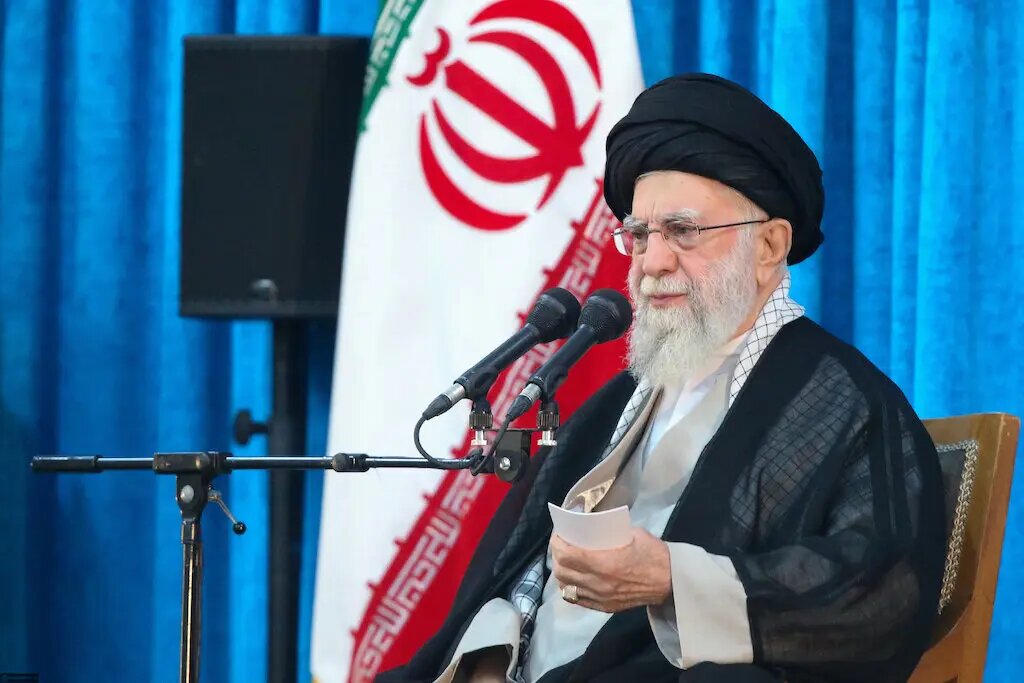
The military operation launched on February 28, 2026, killed Iran's then-Supreme Leader, Ayatollah Ali Khamenei, in a US-Israeli airstrike. The loss of this leader, who had been in power for decades, triggered political turmoil in Tehran and a devastating wave of retaliation.
Iran responded with a massive missile and drone attack targeting US bases across the region. It revealed that Iran and its proxies successfully attacked at least 16 US military facilities in eight countries, including Qatar, the United Arab Emirates, Bahrain, Kuwait, Iraq, Saudi Arabia, Jordan, and Oman.
The extent of the damage was reportedly significant, with some facilities completely destroyed, a scale of damage US officials called unprecedented.
The conflict lasted until April 7, 2026, when President Donald Trump ordered a two-week ceasefire that was later extended. On May 1, 2026, Trump officially declared to Congress that hostilities had ended, noting that there had been no armed contact between US and Iranian forces since April 7.
However, he emphasized that the US military was continuing to adjust its forces in the Middle East in anticipation of potential threats from Iran and its proxies.
Iran's New Leadership Under Mojtaba Khamenei
The power vacuum following the death of Ali Khamenei was immediately filled by his son, Mojtaba Khamenei, who was elected supreme leader on March 9, 2026. Since taking office, Mojtaba has communicated only through written statements and has not made any public appearances, leading to speculation about his health and the regime's internal dynamics.
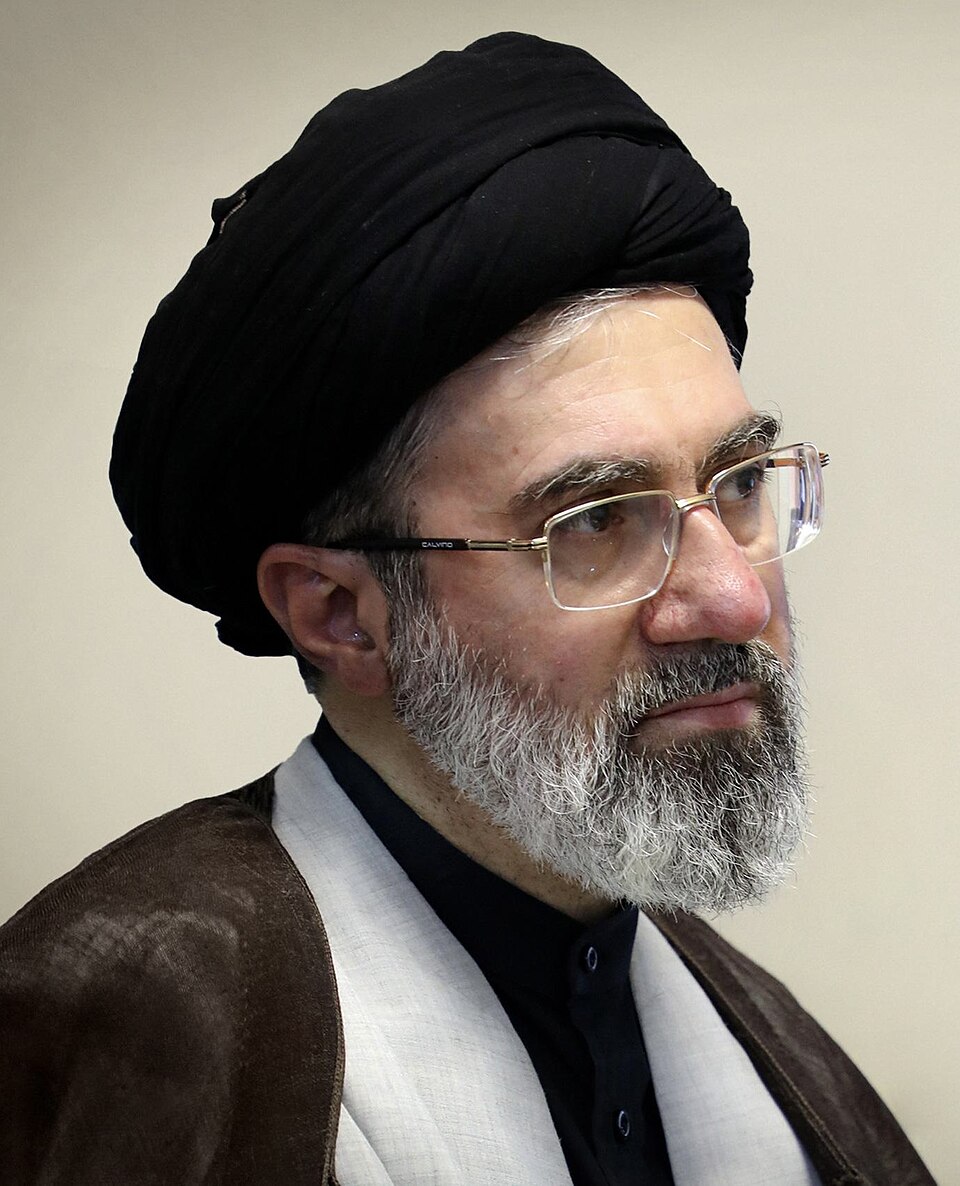
In his first statement commemorating Persian Gulf National Day on April 30, 2026, Mojtaba Khamenei firmly stated that the future of the Gulf region would be free from US presence. He emphasized that the presence of foreign powers, particularly the United States, has been a source of instability in the region.
He further announced a new management plan for the Strait of Hormuz, which includes a reformed legal framework, which he said would bring stability, progress, and economic benefits to all countries in the region.
Mojtaba also vowed to continue protecting Iran's nuclear and missile capabilities amid US efforts to limit these forces through military and diplomatic pressure. In a speech broadcast on Iranian state television, Mojtaba stated that the US's only place in the Persian Gulf was at the bottom of its waters and that a new chapter was being written in the region's history.
Impact on Global Politics & Power Polarization
The February 2026 conflict has triggered serious global polarization. This can be understood as the formation of a new axis of power known as CRINK, a strategic alliance between China, Russia, Iran, and North Korea.
If these four powers move in a coordinated manner against the Western bloc, the world risks entering a phase of global confrontation resembling the Cold War, but with far greater economic complexity.
This situation is exacerbated by Iran's threat to completely close the Strait of Hormuz. This sea route, which carries approximately 20 percent of global oil supplies and nearly a third of liquefied natural gas trade, is the world's energy artery.
Disruption of this route has the potential to trigger a spike in oil prices to an extreme range of US$150–200 per barrel, which would trigger a domino effect on transportation costs, the manufacturing industry, and even the global food sector.
Brent crude oil prices reportedly reached US$126 per barrel on April 30, 2026. The Trump administration is said to be considering various diplomatic and policy options to encourage Iran to end its blockade of this energy trade route.
US Military Response: Emergency Arms Sales
In a swift response to the dynamics of the conflict, the Trump administration has taken the controversial step of expediting arms sales worth more than US$8.6 billion to Middle Eastern allies.
Secretary of State Marco Rubio authorized these transfers using emergency powers, which allow sales without standard congressional oversight, and is the third time the administration has used such powers during the conflict with Iran.
The sales include Patriot missile systems worth more than US$4 billion to Qatar, advanced air defense systems worth approximately US$2.5 billion to Kuwait, and precision weapons systems worth nearly US$1 billion to Israel. This decision has drawn criticism from Democratic members of Congress who have accused the Trump administration of bypassing checks and balances.
Shifting Regional Security Dynamics
One of the most significant post-conflict developments was the emergence of discourse on the formation of a joint defense pact by four Muslim countries: Pakistan, Egypt, Turkey, and Saudi Arabia. This pact, which resembles a version of NATO for Muslim-majority countries, aims to create a regional security system independent of Israeli threats.
This discourse intensified after Israel's attack on Doha, Qatar in September 2025, which demonstrated that no Middle Eastern country is immune from attack. Arab countries now realize they will never be immune from Israeli attacks and are beginning to question the effectiveness of the external security umbrella they have relied on, particularly from Washington.
Resistance from Traditional US Allies
In the aftermath of the conflict, the US faced resistance from key European allies. Italian Prime Minister Giorgia Meloni refused to support US military operations against Iran by denying access to the Sigonella airbase and Italian airspace.
At the same time, Pope Leo repeatedly called for peace in the Middle East and criticized Trump’s war policy toward Iran, drawing backlash from the US president.
Amid growing tensions, Secretary of State Marco Rubio visited Rome and the Vatican on May 6–8, 2026, to discuss the Middle East crisis and repair strained diplomatic ties.
By May 2026, the Middle East remained in a fragile stalemate. Although a ceasefire held, negotiations over Iran’s nuclear program and the security of the Strait of Hormuz were still deadlocked.
Both sides maintained firm red lines: the US threatened further military action if Iran rejected its demands, while Iran insisted on preserving its nuclear and missile capabilities. Trump also warned of possible attacks on Iranian civilian infrastructure, including power plants, raising legal and humanitarian concerns.
After February 28, 2026, the region entered a more uncertain era. While open conflict had subsided, underlying tensions persisted amid a more assertive leadership in Tehran, deepening global polarization, and growing skepticism among traditional US allies toward Washington’s Middle East strategy.
This article was created by Seasians in accordance with the writing rules on Seasia. The content of this article is entirely the responsibility of the author.