


For centuries, the Irrawaddy River has carried more than water across Myanmar. Flowing over 2,000 kilometers from the northern highlands to the Andaman Sea, the river has shaped kingdoms, trade routes, spiritual traditions, and the everyday lives of millions of people. Even today, amid Myanmar’s political uncertainty and economic hardship, the Irrawaddy remains the country’s emotional and economic lifeline.
Along its riverbanks, daily life continues with a rhythm that has endured for generations.
The River That Connects a Nation
In Myanmar, rivers are not simply geographical features. They function as highways, markets, workplaces, and gathering spaces. For many rural communities disconnected from modern road systems, the Irrawaddy remains the primary connection to the outside world.
From Mandalay to the vast Irrawaddy Delta, ferries transport passengers, food supplies, monks, motorcycles, and livestock from one riverside settlement to another. Wooden cargo boats loaded with rice, vegetables, fish, and teak wood continue supporting local trade networks that predate modern infrastructure.
According to the Asian Development Bank, nearly 70 percent of Myanmar’s population still lives in rural areas, many of them relying heavily on river-based agriculture and transport systems. In the delta region especially, waterways remain more important than highways.
Unlike the hyper-modern riverfront developments seen in some Southeast Asian cities, the Irrawaddy still preserves a more intimate relationship between people and water. Floating markets emerge at dawn, while fishermen cast nets under golden sunsets that have changed little for centuries.
Floating Communities and River Traditions
Life along the Irrawaddy reflects a culture deeply shaped by adaptation and resilience. In many villages, children travel to school by small wooden boats, while floating vendors sell vegetables, cooking oil, dried fish, and household goods directly from canoes.
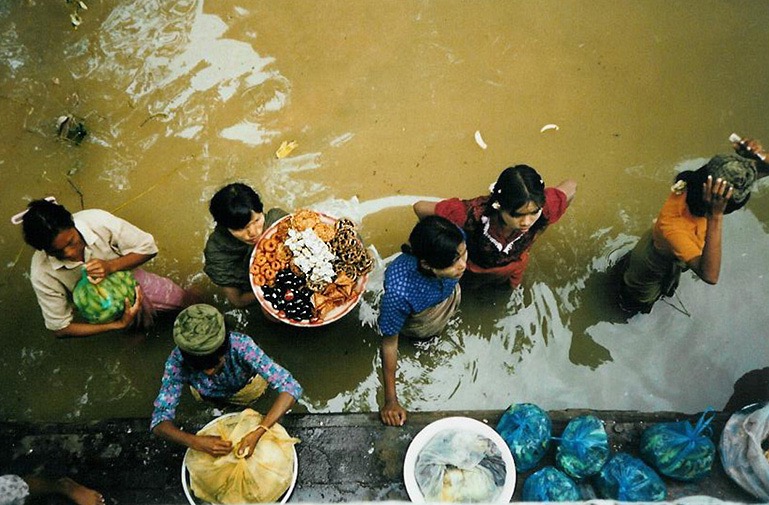
The river also sustains one of Myanmar’s most remarkable traditions: cooperative fishing with endangered Irrawaddy dolphins. Near communities north of Mandalay, fishermen communicate with dolphins through tapping sounds and vocal signals. The dolphins then help herd fish toward the nets, creating a rare example of centuries-old cooperation between humans and wildlife.
A fisherman from the Ayeyarwady region, U Min Htut, described the river simply: “The Irrawaddy is our road, our market, and our home. Without the river, many villages would disappear.”
International travelers often describe river journeys through Myanmar as deeply emotional experiences. Slow ferries passing pagodas, bamboo villages, and mist-covered riverbanks offer a version of Southeast Asia that feels quieter and less commercialized than neighboring countries.
Between Survival and Uncertainty
Yet life along the Irrawaddy also faces growing challenges. Environmental degradation, illegal mining, overfishing, and climate change increasingly threaten fish stocks and river ecosystems. Sedimentation and changing water levels disrupt transportation and agricultural cycles that communities depend upon.
At the same time, Myanmar’s broader social and political instability continues affecting local livelihoods and economic opportunities. Despite these conditions, river communities persist through strong communal networks and traditional survival systems.
Myanmar expert and historian Thant Myint-U once noted that “Myanmar’s future cannot be separated from the rivers that shaped its civilization.” His observation reflects how deeply the Irrawaddy remains connected to national identity.
There are also growing opportunities through sustainable tourism, river conservation, and community-based cultural experiences. Some local organizations are promoting eco-tourism and heritage tourism along the Irrawaddy while encouraging environmental awareness among younger generations.
Where the Water Still Carries Memory
The Irrawaddy River ultimately represents more than geography. It is a living archive of Myanmar itself — carrying stories of migration, trade, spirituality, hardship, and survival across generations.
In a country often viewed internationally through political headlines alone, life along the river reveals another reality: one defined by continuity, quiet resilience, and enduring human connection.
As wooden ferries continue crossing the wide brown waters and riverside villages wake each morning to the sound of engines and prayer chants, the Irrawaddy remains what it has always been — the flowing heart of Myanmar’s civilization.


