


Thailand's current monarch, King Vajiralongkorn, is known internationally as Rama X. The same applies to his predecessors in the Chakri Dynasty, all of whom are recorded in history with the same royal name followed by a sequential number.
To many people, this may seem like a simple naming convention. In reality, it is rooted in a long historical tradition that stretches from ancient Hindu epics and the concept of divine kingship to a decision made by a Thai monarch in the early twentieth century that changed how the world refers to Thailand's rulers.
To understand why the title has become so deeply associated with Thai kings, it is necessary to trace how the name Rama entered Southeast Asian royal culture long before the Chakri Dynasty was established.
A Legacy More Than Seven Centuries Old
The influence of Rama in Thailand did not begin in 1782. It dates back much earlier. When King U Thong founded his new capital on March 4, 1351, he named it Ayutthaya, derived from Ayodhya in northern India, the legendary birthplace of Rama, the hero of the Hindu epic Ramayana. He later adopted the royal name Ramathibodi.
In other words, the name Rama had been embedded in the Siamese monarchy since the fourteenth century, not merely as a cultural symbol but as a source of political legitimacy. This was closely linked to the concept of devaraja, or the divine king, which entered the region through the influence of the Khmer Empire.
The idea of devaraja spread from the Tamil Chola rulers to the Hindu kingdoms of Java in present-day Indonesia before being adopted by Jayavarman II of the Khmer Empire in Cambodia.
Even after Khmer rulers transitioned from Hinduism to Buddhism, they retained the practice. Thai Buddhist kingdoms, many of which had previously been Khmer vassals, later inherited the same tradition.
Within this framework, the king was not merely a political leader. Through the influence of Hindu and Brahmin traditions at the royal court, Rama came to symbolize the divine connection of the Thai monarchy, reflecting its status as an incarnation of Vishnu.
A king who ruled justly was regarded as the earthly embodiment of Rama. The title, in other words, was a claim to sacred legitimacy.
Ramakien: When a King Rewrote an Epic About Himself
The connection between the name Rama and the Thai monarchy was further reinforced through Ramakien (รามเกียรติ์), which literally means "The Glory of Rama." It is Thailand's version of the Ramayana, and its significance extends far beyond that of a literary work.
Ramakien reflects the ideals of the Thai monarchy. Through the influence of Hindu and Brahmin traditions at the royal court, Rama came to symbolize the divine connection between Thai kingship and its sacred status as an incarnation of Vishnu.
The version of Ramakien that is widely known today was not simply inherited from the past. It was the result of a deliberate literary project.
Its first complete version was compiled in poetic form by King Rama I between 1797 and 1798, during the early Bangkok period, as part of a broader effort to revive literature and national identity following the fall of Ayutthaya. This edition consisted of more than 53,300 verses.
One King's Decision That Standardized Everything
Although the connection between the Thai monarchy and the name Rama had existed for centuries, the official numbering system of "Rama I, Rama II, Rama III..." that we know today did not emerge until the early twentieth century.
The first Chakri monarch to officially refer to himself as Rama was Phra Mongkutklao, better known as King Vajiravudh, the sixth king of the dynasty.
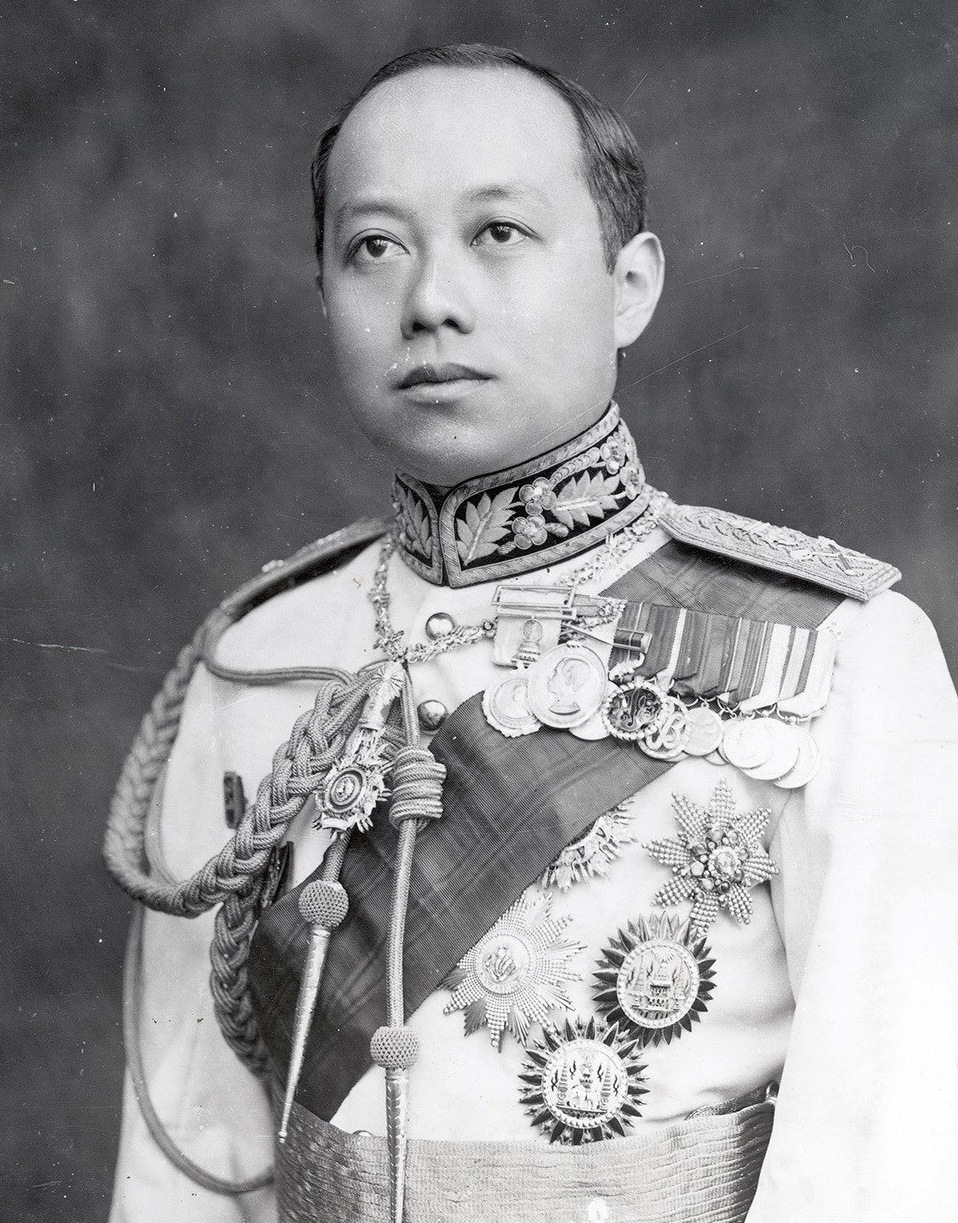
He was also the first Thai king to receive an education abroad. He studied history and law at Oxford University, underwent military training at Sandhurst, and even served for a period in the British Army.
Through this background, Vajiravudh became familiar with the European practice of numbering monarchs who shared the same regnal name. He later applied the same logic to the Chakri Dynasty, styling himself as Rama VI and retroactively assigning numbers to all of his predecessors.
What makes this especially remarkable is that the title "Rama I" was not the original name of the dynasty's founder. It was a posthumous title bestowed by Vajiravudh upon the first Chakri king. In other words, the system was projected both backward and forward at the same time. One king effectively decided that all his predecessors, as well as all future successors, would bear the same royal name.
The result is the naming convention that remains in use today.


