Have you ever noticed how unique the name Kuala Lumpur is?
In the local Malay language, the word "Kuala" means a place where two rivers meet, while "Lumpur" simply means mud. When you put them together, the name translates to "muddy confluence."
This perfectly describes how the city started at the junction of the Klang and Gombak rivers. Long ago, these rivers were the main highways for travel and trade. Because of this, a kuala was a natural place for villagers to meet.
Some experts say the city should have been named "Kuala Gombak" because people usually named these areas after the smaller river. However, the name Kuala Lumpur was the one that stayed.
Other people believe the original name was "Pengkalan Lumpur," which means a muddy landing place. Over time, early miners shortened it to Kuala Lumpur.
The History of Kuala Lumpur
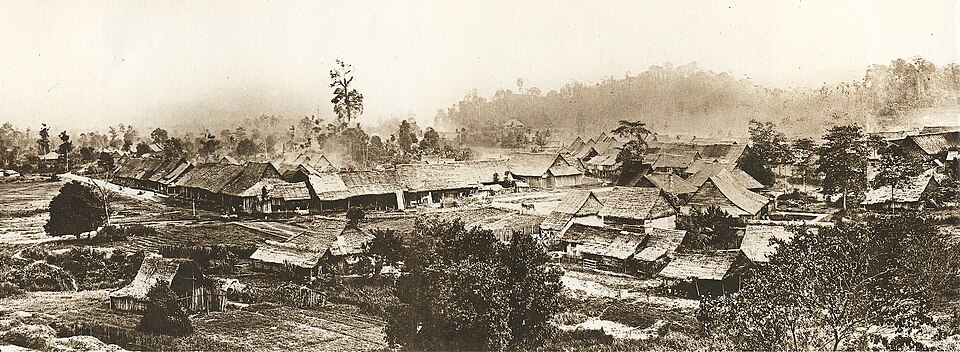
The history of this great city began in the middle of the 19th century as a small, rough village focused on the tin mining industry. In 1857, Raja Abdullah, the local leader of Klang, sent a group of 87 Chinese miners up the river to look for tin.
When they arrived at the junction of the Klang and Gombak rivers, they saw that the water was very muddy. However, their search was successful because they found rich tin ore nearby.
This discovery started the systematic mining work that would change the entire Klang Valley. Even so, the early days were very hard. The small village faced frequent fires, deadly diseases, and constant violence between rival groups.
Historians still debate who the real founder of the city was, and different stories highlight different leaders. Some people give credit to Raja Abdullah for opening the mines. Others point to Sutan Puasa, a businessman and leader from the Mandailing community who was very influential in the area during the 1830s.
Another important leader was Yap Ah Loy, the third Kapitan China. People remember him as the man who rebuilt Kuala Lumpur after it was almost completely destroyed by a civil war and natural disasters.
He told people to build houses with bricks and tiles instead of wood to make them safe from fires. Under his leadership, the village changed from a temporary mining camp into a permanent town where businesses could grow.
Becoming a National Capital
As the city grew, British colonial administrators noticed its importance and decided to make it their central base. In the late 1800s, Kuala Lumpur became the capital of the Federated Malay States.
The British began building large, grand buildings for their government. One of the most famous landmarks from this time is the Sultan Abdul Samad Building, which was finished in 1897. Its unique design blends British, Indian, and Islamic styles, and it remains a strong symbol of the city's history today.
Another famous building is Masjid Jamek, built in 1908. It stands exactly where the two muddy rivers meet. It served as the main mosque of the city for many decades.
Kuala Lumpur officially became the national capital when the country gained independence in 1957. At Independence Square (Dataran Merdeka), right in front of the Sultan Abdul Samad Building, the British flag was lowered for the last time to mark the birth of a free nation.
Since that day, the city has grown into a modern metropolis filled with tall skyscrapers and advanced infrastructure.