Deep in Cambodia’s Siem Reap province, a native silkworm produces cocoons with a natural golden yellow color. Unlike most silk, the color does not come from synthetic dyes or chemical treatment.
For centuries, this silk was part of the Khmer Empire’s textile production, used in ceremonial garments and royal fabrics. But decades of conflict significantly reduced its production and continuity.
When Cambodia's Looms Fell Silent
Cambodia’s silk industry faced major disruption during the Khmer Rouge era from 1975 to 1979. Many skilled weavers were killed, mulberry plantations were destroyed, and weaving tools were lost or repurposed during the conflict.
By the 1990s, traditional silk knowledge had sharply declined. A UNESCO backed survey later found that many of the remaining master weavers were already elderly. While younger generations had limited access to the techniques.
Alongside the loss of artisans, many traditional Khmer weaving patterns also disappeared, as they had been passed down orally rather than documented.
What Makes Cambodia's Golden Silk Different?
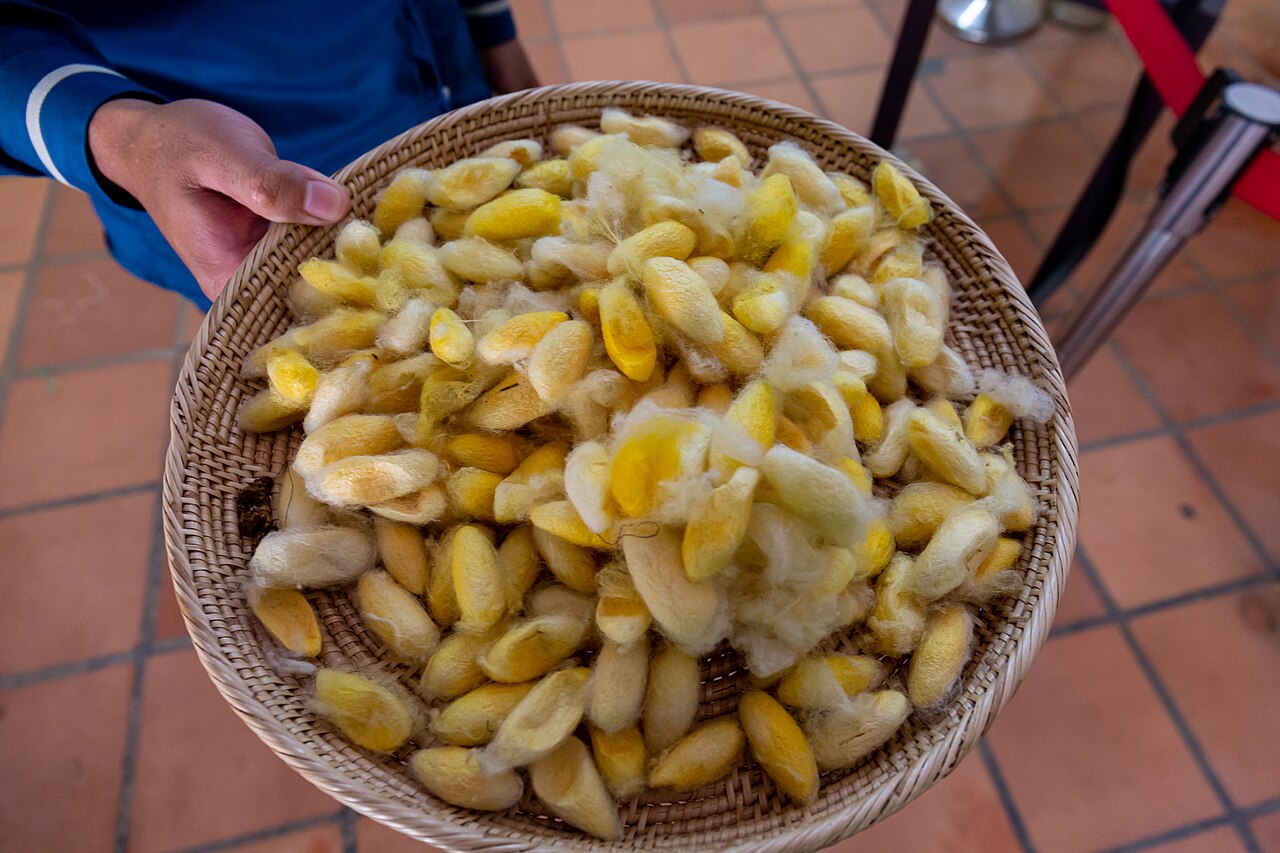
Cambodia’s golden silk comes from an indigenous strain of silkworm known as Bombyx mori polyvoltine. Its cocoon naturally produces yellow silk fibers, giving the fabric its distinctive golden tone.
The production process is less productive than industrial silk farming. Each cocoon yields around 300 to 400 meters of thread, lower than hybrid white silkworms, which can produce up to 1,400 meters.
That lower output has shaped Cambodia’s silk supply chain. Today, the country imports around 95% of its raw silk, mainly from Vietnam, according to industry estimates.
The Groups Preserving a Traditional Craft
Several organizations have contributed to preserving Cambodia’s traditional golden silk production.
The Institute for Khmer Traditional Textiles (IKTT), founded in 1996, began its work after surveys showed that many remaining master weavers were elderly. The organization later established a weaving community north of Siem Reap, combining silk farming, weaving education, and cultural preservation. Since then, hundreds of weavers have trained there.
Golden Silk Pheach, established in 2002, focused on restoring the endangered golden silkworm and traditional weaving methods. The organization spent years studying historical carvings, written records, and interviewing older artisans to reconstruct earlier weaving techniques. Today, it employs more than 100 Cambodians, most of them women.
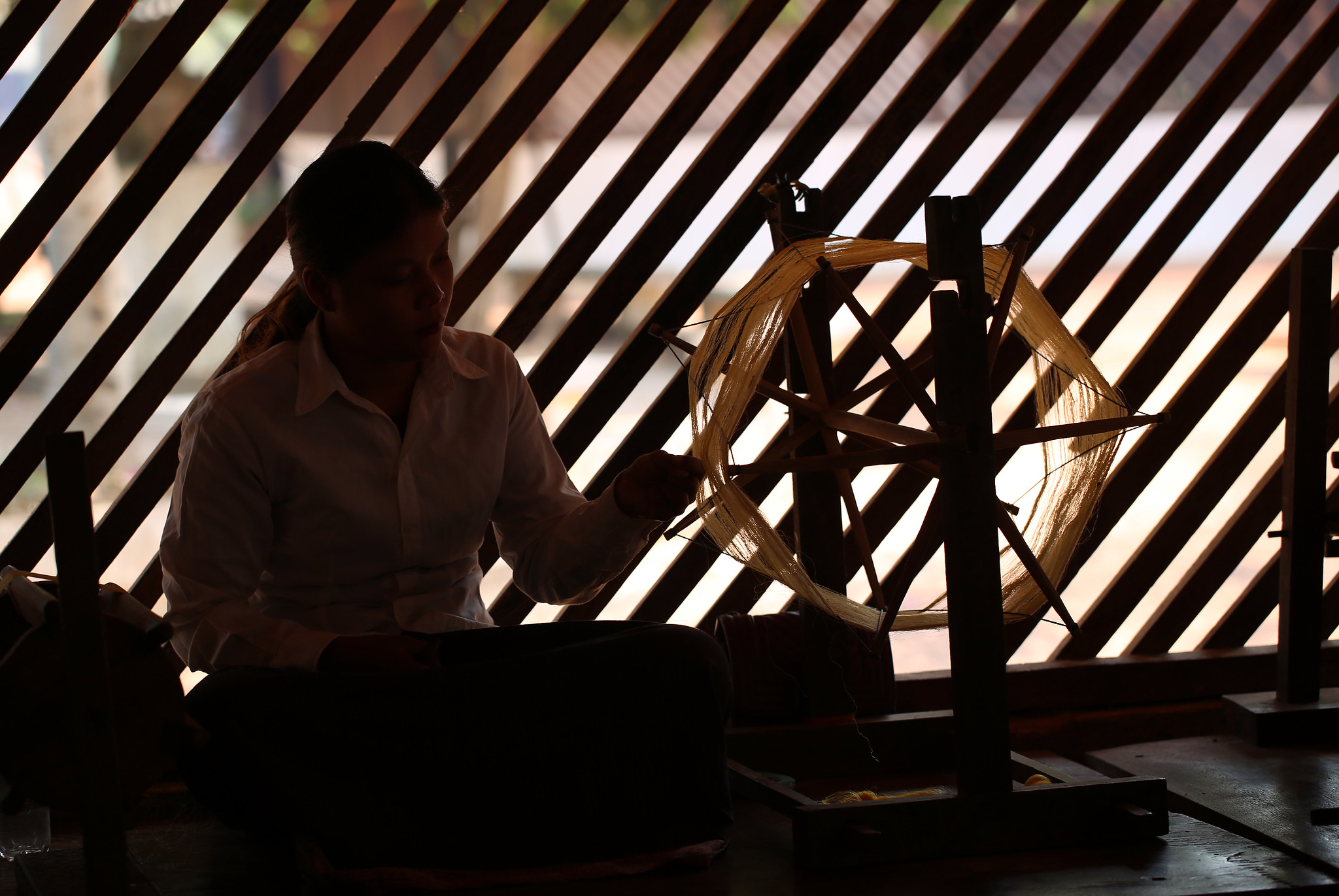
Meanwhile, Artisans Angkor expanded silk production on a wider scale, operating dozens of rural workshops and employing hundreds of artisans across Siem Reap province.
Why Golden Silk Still Matters Today
Cambodia’s silk industry remains a source of employment. Around 20,000 weavers are currently active across the country, particularly in Siem Reap and southern provinces.
Tourism also contributes to the market for handwoven silk products. In 2019, Cambodia recorded US$4.9 billion in tourism receipts, equivalent to 18.2% of GDP the highest share among ASEAN+3 economies. By 2024, international arrivals reached 6.7 million, slightly above pre pandemic levels.
The recovery in tourism has coincided with continued demand for heritage based products, including handwoven silk. Golden silk products are sold in premium markets and purchased by collectors, international visitors, and textile focused fashion buyers.
How the Knowledge Survived
Traditional silk weaving in Cambodia is still taught largely through direct practice rather than formal manuals. At IKTT, senior artisans many of whom retained their skills through Cambodia’s years of conflict continue to teach younger weavers by working alongside them at the loom.
This method of knowledge transfer has maintained techniques that were historically passed down across generations. Today, Cambodia’s golden silk remains a textile tradition with a long historical presence in the country, linking contemporary craftsmanship with earlier Khmer textile practices.