


Nakhon Ratchasima, more commonly known as Khorat, is the Thai province with the largest number of registered Buddhist temples: 2,179 as of 2024, according to data from the National Office of Buddhism. Yet beneath its cassava fields and irrigation ponds lies another heritage that is far older.
The Khok Kruat Formation, which stretches beneath the Khorat Plateau, is one of Southeast Asia’s most productive sedimentary layers for dinosaur fossils. It was formed during the Early Cretaceous period approximately 113 to 120 million years ago.
This region of northeastern Thailand has long been recognized by paleontologists as a dinosaur discovery hotspot. Since the first species was formally described in 1986, Thailand has accumulated 14 officially named dinosaur species, four of which were discovered in Khorat alone.
The latest discovery was confirmed in May 2026, and it is the largest yet.
Fields Hiding Cretaceous Secrets
The Khok Kruat Formation is not a museum-style excavation site. Instead, it lies beneath active agricultural land and is often exposed only when farmers dig small reservoirs or when heavy machinery is used for infrastructure projects.
This was the case in Suranaree, a subdistrict of Khorat, where a local farmer uncovered fossilized bones while excavating a pond in the early 2000s.
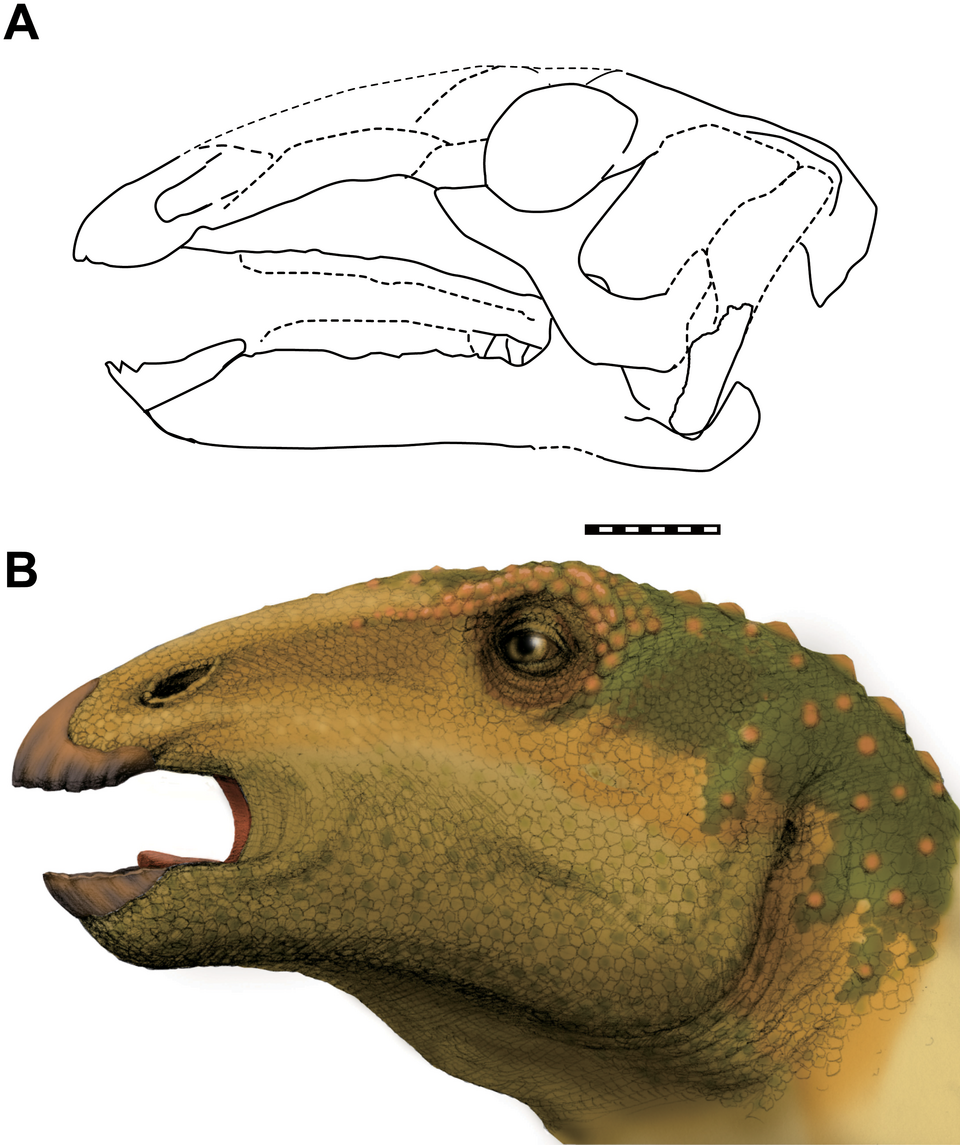
The discovery eventually led to the scientific description of Sirindhorna khoratensis in 2015, a herbivorous hadrosauroid dinosaur that lived around 120 million years ago. The species was named in honor of Maha Chakri Sirindhorn.
A similar pattern led to the discovery of Siamraptor suwati in 2019. Fossils from four different individuals were recovered, including parts of the skull, vertebrae, pelvis, and leg bones.
The fossils were excavated at the Ban Saphan Hin site during a joint Thai–Japanese field project conducted between 2007 and 2009.
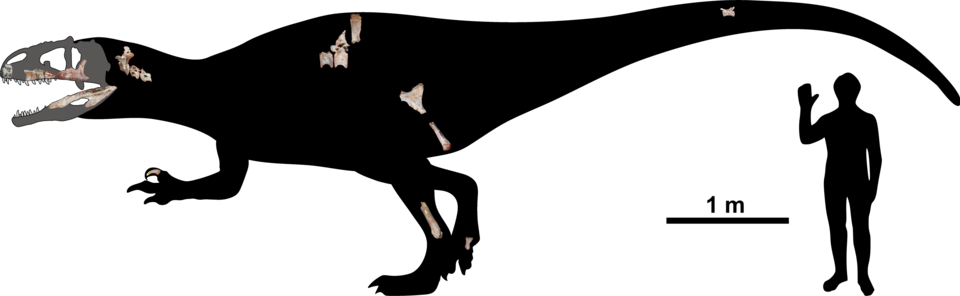
Researchers from Nakhon Ratchasima Rajabhat University identified the animal as a large carnivore belonging to the Carcharodontosauria, a group better known from discoveries in South America and Africa.
It was the first carcharodontosaurian dinosaur ever discovered in Southeast Asia, with an estimated body length of more than eight meters.
Southeast Asia’s Last Giant
May 2026 brought a discovery that reshaped our understanding of the region’s prehistoric ecosystems.
A joint team from University College London, Mahasarakham University, Suranaree University of Technology, and Sirindhorn Museum announced the identification of Nagatitan chaiyaphumensis, a long-necked sauropod that is now recognized as the largest dinosaur ever discovered in Southeast Asia.
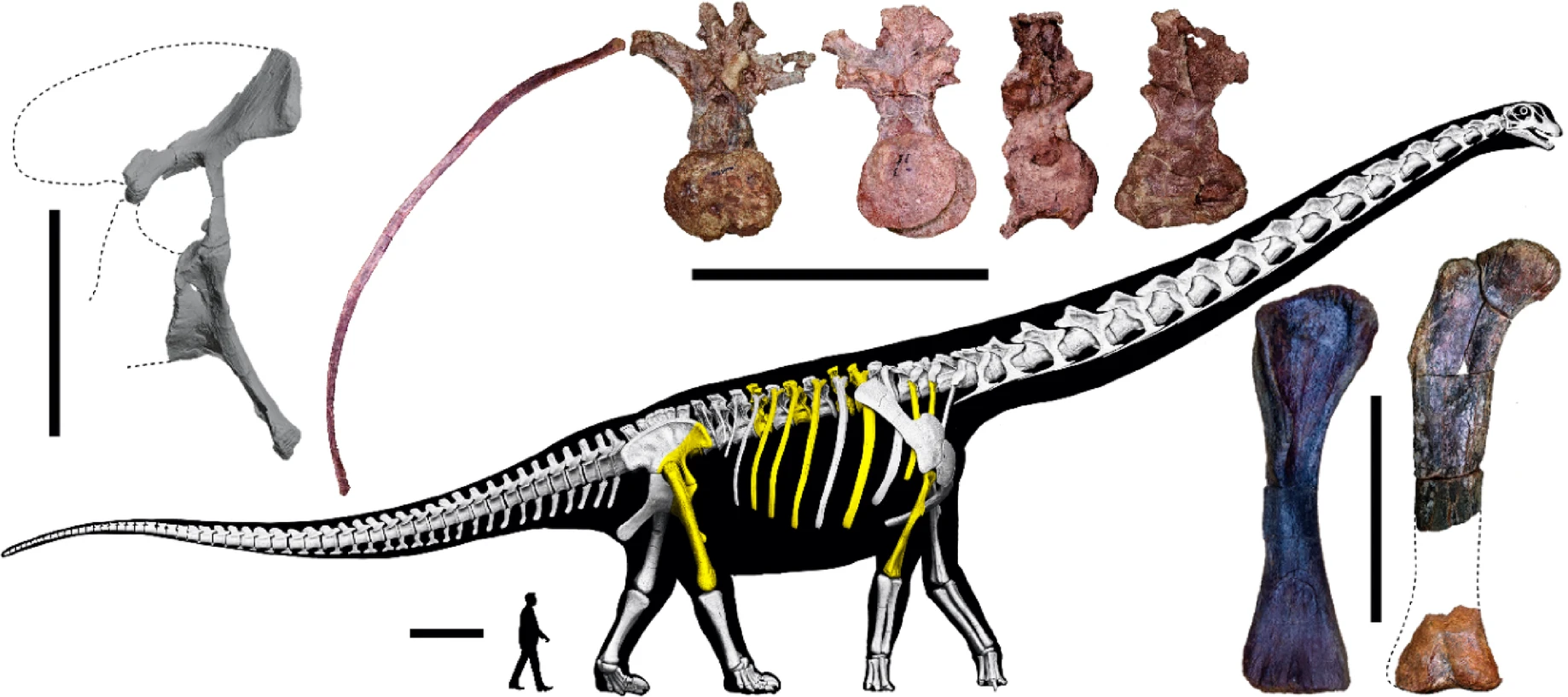
Its fossils were found in Chaiyaphum, a neighboring province of Khorat. Although the discovery was not made in the same province, it came from the same Khok Kruat Formation, the geological unit that has yielded nearly all major dinosaur discoveries in the region.
The dinosaur is estimated to have weighed 27 tonnes, measured 27 meters in length, and lived approximately 113 million years ago.
Researchers have described it as the “last titan” because its fossils were discovered in the youngest dinosaur-bearing rock layers currently known in Thailand.
This is significant because the geological layers above it were already deposited in a shallow marine environment, suggesting that Nagatitan may have been among the last giant sauropods to inhabit the region—and potentially the last one that can be found there.
Its discovery did not begin with a scientific survey. In 2016, a local resident named Thanom Luangnan noticed unusual rocks protruding from the edge of a community pond.
Only a decade later were the remains formally identified as belonging to a new species.
Read also: Nagatitan, The New Dinosaur Dubbed Southeast Asia’s “Last Titan” Found in Thailand
A Museum Built on Dinosaur Bones
Khorat’s fossil wealth eventually led to the creation of a dedicated research institution.
In 1994, provincial authorities allocated an initial conservation budget after large quantities of petrified wood, later recognized as the largest concentration in Southeast Asia, began disappearing into private collections.
The result was the establishment of the Northeastern Research Institute of Petrified Wood and Mineral Resources under Nakhon Ratchasima Rajabhat University. The institution is now better known as the Khorat Fossil Museum, which officially opened in 2008.
The museum has since evolved into a hub for international collaboration.
The Fukui Prefectural Dinosaur Museum has partnered with the institution since the early 2000s because of similarities in geological age and faunal composition between Khorat and Japan’s Fukui Prefecture. That collaboration contributed to the discoveries of Sirindhorna khoratensis and Siamraptor suwati.
The UCL team that described Nagatitan in 2026 has also noted that a substantial collection of sauropod fossils from the region remains formally undescribed.
Some of those specimens may ultimately prove to represent entirely new species.
References:
- Boonchai, N., Grote, P. J., & Jintasakul, P. (2022). A new look at Cenozoic fossil wood from Thailand. Geosciences, 12(8), 291. https://doi.org/10.3390/geosciences12080291
- Chokchaloemwong, D., Jintasakul, P., & Azuma, Y. (2015). A new basal hadrosauroid dinosaur from the Lower Cretaceous Khok Kruat Formation in Nakhon Ratchasima Province, Northeastern Thailand. PLOS ONE, 10(12), e0145904. https://doi.org/10.1371/journal.pone.0145904
- Chokchaloemwong, D., Hattori, S., Cuesta, E., Jintasakul, P., Shibata, M., & Azuma, Y. (2019). A new carcharodontosaurian theropod (Dinosauria: Saurischia) from the Lower Cretaceous of Thailand. PLOS ONE. https://doi.org/10.1371/journal.pone.0222489
- CNN. (2026, 15 Mei). New species of giant dinosaur identified from remains found in Thailand. https://www.cnn.com/2026/05/15/science/titan-new-dinosaur-discovered-thailand-intl-scli
- Khorat Fossil Museum. (2024). Journey into Thailand's living prehistoric. Khaoyai Connect. https://www.khaoyaiconnect.com/en/content/51
- Sethapanichsakul, T., Manitkoon, S., Suteethorn, S., Deesri, U., Chanthasit, P., Lallensack, J. N., & Barrett, P. M. (2026). The first sauropod dinosaur from the Lower Cretaceous Khok Kruat Formation of Thailand enriches the diversity of somphospondylan titanosauriforms in Southeast Asia. Scientific Reports, 16, 12467. https://doi.org/10.1038/s41598-026-47482-x
- Smithsonian Magazine. (2026, 15 Mei). A man spotted strange-looking rocks near a pond in Thailand. They turned out to be the bones of a massive new dinosaur species. https://www.smithsonianmag.com/smart-news/a-man-spotted-strange-looking-rocks-near-a-pond-in-thailand-they-turned-out-to-be-the-bones-of-a-massive-new-dinosaur-species-180988744/
- The Nation Thailand. (2024, 14 Agustus). Isaan province takes crown for most temples in Thailand. https://www.nationthailand.com/news/general/40040571
- Discover Wildlife. (2026, 14 Mei). Colossal dinosaur discovered in Thailand. The 27-tonne giant was as long as a blue whale. https://www.discoverwildlife.com/dinosaurs/nagatitan-chaiyaphumensis-thailand


