


In many parts of Southeast Asia, electric vehicles are associated with climate goals, technological innovation, and industrial transformation. In Myanmar, however, the story is markedly different. The country's transition toward electric mobility has been driven less by environmental aspirations and more by economic necessity.
Amid fuel shortages, foreign currency pressures, and evolving trade policies, electric vehicles have emerged as a strategic tool for reducing dependence on imported petroleum and managing economic vulnerabilities. While challenges remain significant, Myanmar's EV market has become one of the region's most intriguing and complex transitions.
A Policy-Driven Shift Toward Electrification
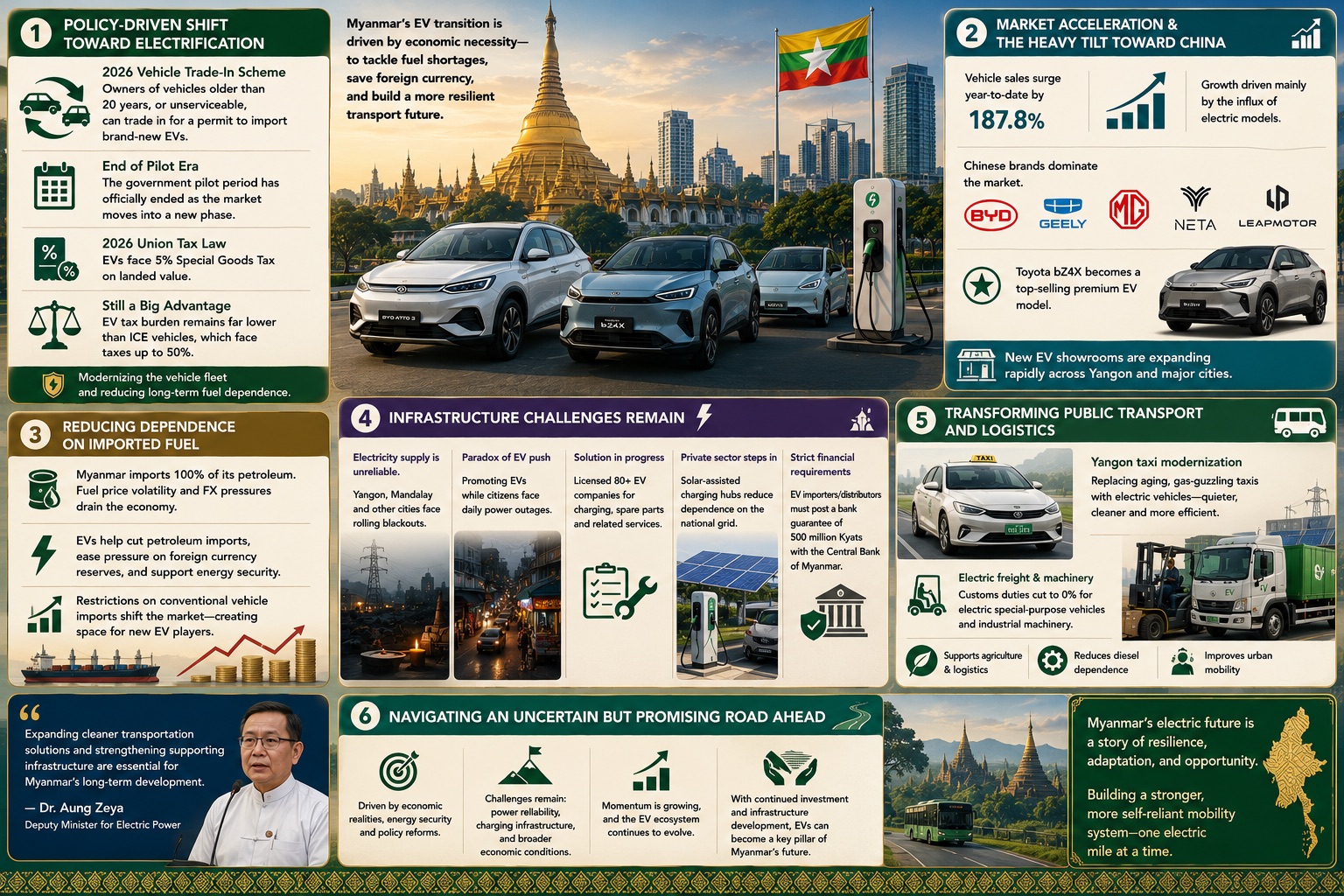
Myanmar's EV journey has accelerated through strong government intervention. One of the most notable developments has been the introduction of a vehicle trade-in scheme that allows owners of aging vehicles to surrender cars more than 20 years old in exchange for permits to import new electric vehicles.
At the same time, authorities have moved beyond the sector's initial pilot phase. While EVs now face a five-percent Special Goods Tax under the 2026 Union Tax Law, this remains significantly lower than the tax burden imposed on conventional internal combustion vehicles, which can face rates of up to 50 percent.
These policies are designed not only to encourage EV adoption but also to modernize the country's vehicle fleet and reduce long-term fuel dependence.
Chinese Brands Power Market Growth
The transformation of Myanmar's automotive market has been swift. Vehicle sales have increased dramatically, with year-to-date figures showing growth of nearly 188 percent, largely fueled by the arrival of electric models.
Chinese manufacturers have emerged as the dominant force. Brands such as BYD, Geely, MG, Neta, and Leapmotor have rapidly expanded their presence across major urban centers, particularly Yangon.
Interestingly, despite the strong influx of Chinese brands, the Toyota bZ4X has also gained popularity among consumers seeking premium electric vehicles. The changing market reflects a broader shift in consumer preferences as buyers increasingly explore alternatives to traditional petrol-powered vehicles.
Across Yangon, new EV showrooms have become a more common sight, illustrating how quickly the automotive landscape is evolving.
Reducing Dependence on Imported Fuel
One of the strongest motivations behind Myanmar's EV strategy lies in energy security.
The country imports all of its petroleum products, making fuel supplies highly sensitive to international market conditions and foreign currency availability. As fuel prices fluctuate and economic pressures intensify, reducing petroleum imports has become an important national objective.
Electrification offers a potential solution. By encouraging greater use of electricity instead of imported fuel, policymakers hope to reduce pressure on foreign exchange reserves while improving long-term economic resilience.
The shift has also influenced investment patterns. Restrictions on conventional vehicle imports have altered the business environment for established automotive manufacturers, while opening opportunities for new entrants focused on electric mobility.
Infrastructure Challenges Remain
Despite rapid policy support, Myanmar faces one of the most difficult challenges confronting any EV market: electricity supply.
Major cities such as Yangon and Mandalay continue to experience periodic power shortages and rolling blackouts. This creates an obvious paradox—promoting electric vehicles in a country where electricity availability remains inconsistent.
To address this issue, authorities have licensed more than 80 specialized EV companies focused on charging infrastructure, spare parts, and related services. Private investors have also begun developing solar-assisted charging facilities designed to reduce dependence on the national grid.
The government has simultaneously introduced strict financial requirements for EV importers and distributors, including substantial bank guarantees intended to ensure that only serious and financially capable companies participate in the sector.
Transforming Public Transport and Logistics
The impact of electrification is increasingly visible in public transportation. Yangon has become a focal point for replacing older taxis with modern electric vehicles, providing commuters with quieter and more efficient transportation options.
Beyond passenger transport, the government has also reduced customs duties on electric industrial vehicles and machinery. These measures aim to encourage adoption within agriculture, logistics, and freight transportation, sectors that traditionally rely heavily on diesel fuel.
Deputy Minister for Electric Power Dr. Aung Zeya has previously emphasized the importance of expanding cleaner transportation solutions while strengthening supporting infrastructure, highlighting the government's long-term commitment to developing the EV ecosystem.
Navigating an Uncertain but Promising Road Ahead
Myanmar's EV transition is unfolding under circumstances unlike those found elsewhere in Southeast Asia. It is shaped by economic realities, energy security concerns, and policy-driven reforms rather than purely environmental motivations.
While significant challenges remain—including electricity reliability, charging infrastructure, and broader economic conditions—the momentum behind electric mobility continues to grow. If infrastructure development can keep pace with market demand, Myanmar's EV sector could become an important component of the country's broader economic adaptation.
In many ways, Myanmar's electric future is not simply a story about new vehicles. It is a story about resilience, adaptation, and a nation's effort to navigate complex challenges while embracing new opportunities for the road ahead.


