Walk through a neighborhood in Viet nam after sunset, and one sound often stands out. Not traffic or construction, but singing.
In Viet nam, karaoke is no longer limited to entertainment venues. It has become part of everyday life. Its presence is visible across generations, income groups, and locations from urban centers to rural communities.
How It Started
Karaoke first entered Viet nam in the late 1980s and early 1990s, during the country’s Đổi Mới reforms. As Viet nam opened its economy, imported electronics became easier to access. This included cassette systems, televisions, amplifiers, and microphones.
By the 1990s, karaoke businesses began appearing in major cities like Ho Chi Minh City and Hanoi. At first, these were commercial venues modeled after similar businesses in Japan and other East Asian countries.
But the spread did not stop there.
As audio equipment became cheaper, karaoke moved into homes. The rise of DVD players in the 2000s, followed by Bluetooth speakers and smart TVs in the 2010s, made home karaoke much more accessible.
This lowered the barrier for participation. By the 2020s, karaoke no longer depended on dedicated venues. A portable speaker and smartphone were often enough.
That helped turn karaoke into a regular social activity rather than an occasional outing.
A Social Ritual Across Generations
To understand karaoke in Viet nam, you also need to understand nhậu, a term that translates loosely as "drinking together" but describes something much broader. Nhậu is a full social experience, eating, drinking, talking, and laughing, often without any particular occasion needed.
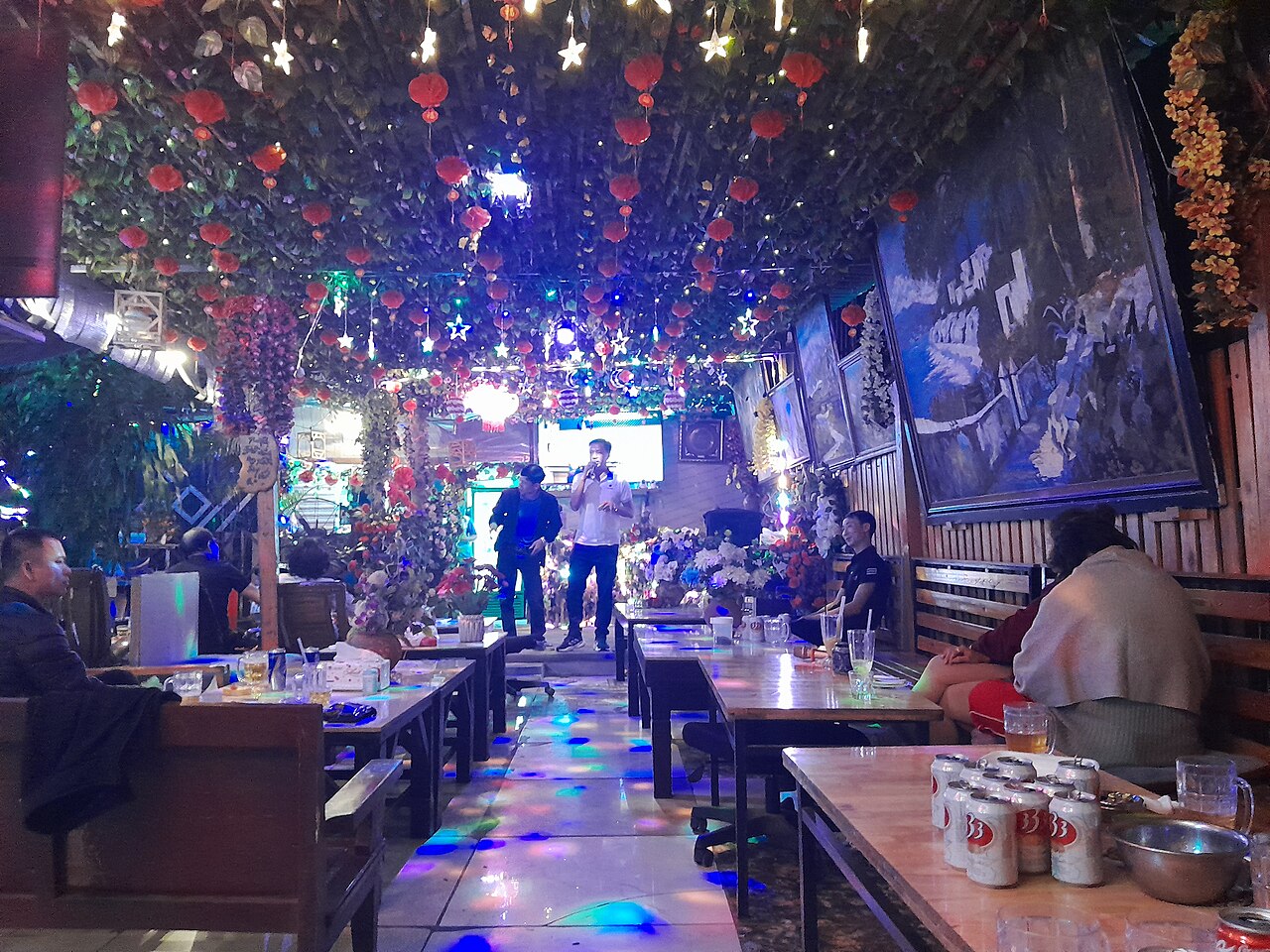
As documented across Vietnamese cultural sources, nhậu sessions regularly unfold alongside karaoke, with the microphone passing from hand to hand between rounds of beer and shared dishes.
That connection runs deep. As Saigoneer's Jessi Giang Pham has noted, Vietnamese drinking culture centers on togetherness, shared tables, food, and company. Karaoke slots directly into that.
In Southern Viet nam especially, karaoke is described as erupting naturally out of nhậu sessions, not planned, but expected. The combination turns a simple night out into something communal and participatory, where singing ability matters far less than showing up.
This is also why karaoke in Viet nam crosses generations. A grandfather, his adult children, and grandchildren can share the same microphone at a Tet gathering each with their own era of songs, all in the same room.
A Nationwide Industry
The commercial side of karaoke also grew rapidly.
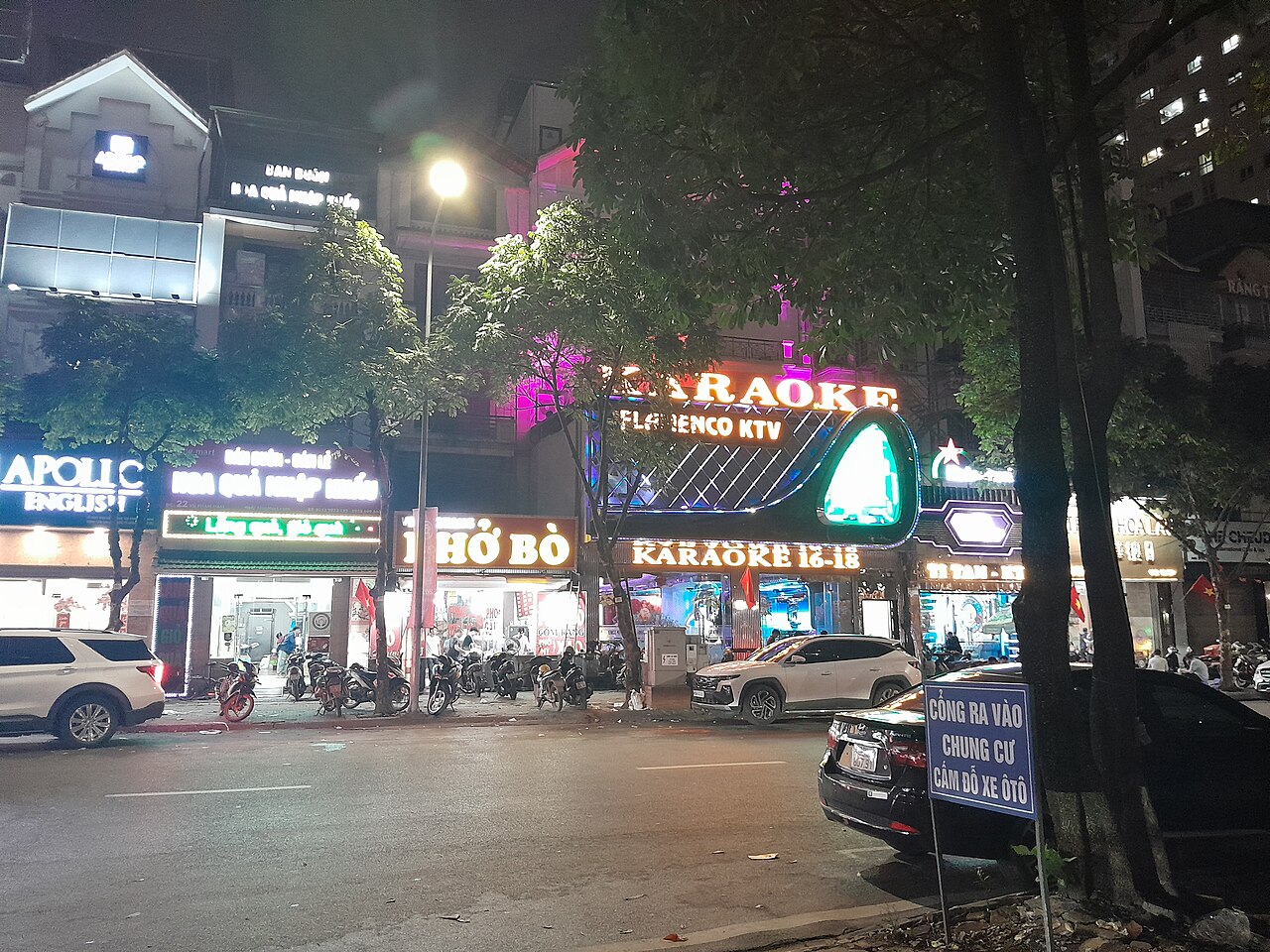
Karaoke businesses range from small family run rooms to multi floor entertainment complexes. Private karaoke rooms are often rented by the hour, making them affordable for group gatherings. This business model made karaoke widely accessible.
Its expansion also created supporting industries, including sound systems, microphone sales, room design, and food and drink services.
In September 2022, a karaoke bar fire in Bình Dương killed 32 people, becoming one of the deadliest entertainment venue fires in Viet Nam in recent years.
After the incident, authorities conducted nationwide inspections, revealing that the country had more than 15,000 licensed karaoke establishments at the time. Thousands of venues were temporarily shut down for failing fire safety standards, exposing just how widespread the industry had become.
The Noise Challenge
Its popularity has also created a new urban issue. Noise.
Portable speakers and home karaoke systems have led to growing complaints in major cities. In places like Ho Chi Minh City, local authorities regularly receive complaints about loud singing in residential neighborhoods.
Viet nam has noise regulations, but enforcement has become stricter in recent years. In 2025, Decree 282/2025/ND-CP increased penalties for excessive noise, including karaoke related disturbances in residential areas.
This reflected how karaoke had expanded beyond licensed venues into homes and public spaces.
A Sound Embedded in Daily Life
Today, karaoke in Viet nam exists across multiple spaces, private rooms, homes, sidewalks, restaurants, and village gatherings. Its growth followed Viet nam’s economic opening, the spread of affordable consumer electronics, and changing patterns of social interaction.
What began as imported entertainment became a nationwide habit.