Travelling between Hanoi and Ho Chi Minh City by train currently takes around 30 to 35 hours.
Viet Nam wants to cut that journey to just about five hours.
To make it happen, the country is preparing to build its first ever high-speed railway, an ambitious project that could cost US$67.3 billion, making it the largest infrastructure investment in Viet Nam’s history.
A Railway Across the Country
In November 2024, Viet Nam’s National Assembly approved the investment policy for the North-South High-Speed Railway, a 1,541 kilometer line connecting Hanoi and Ho Chi Minh City.
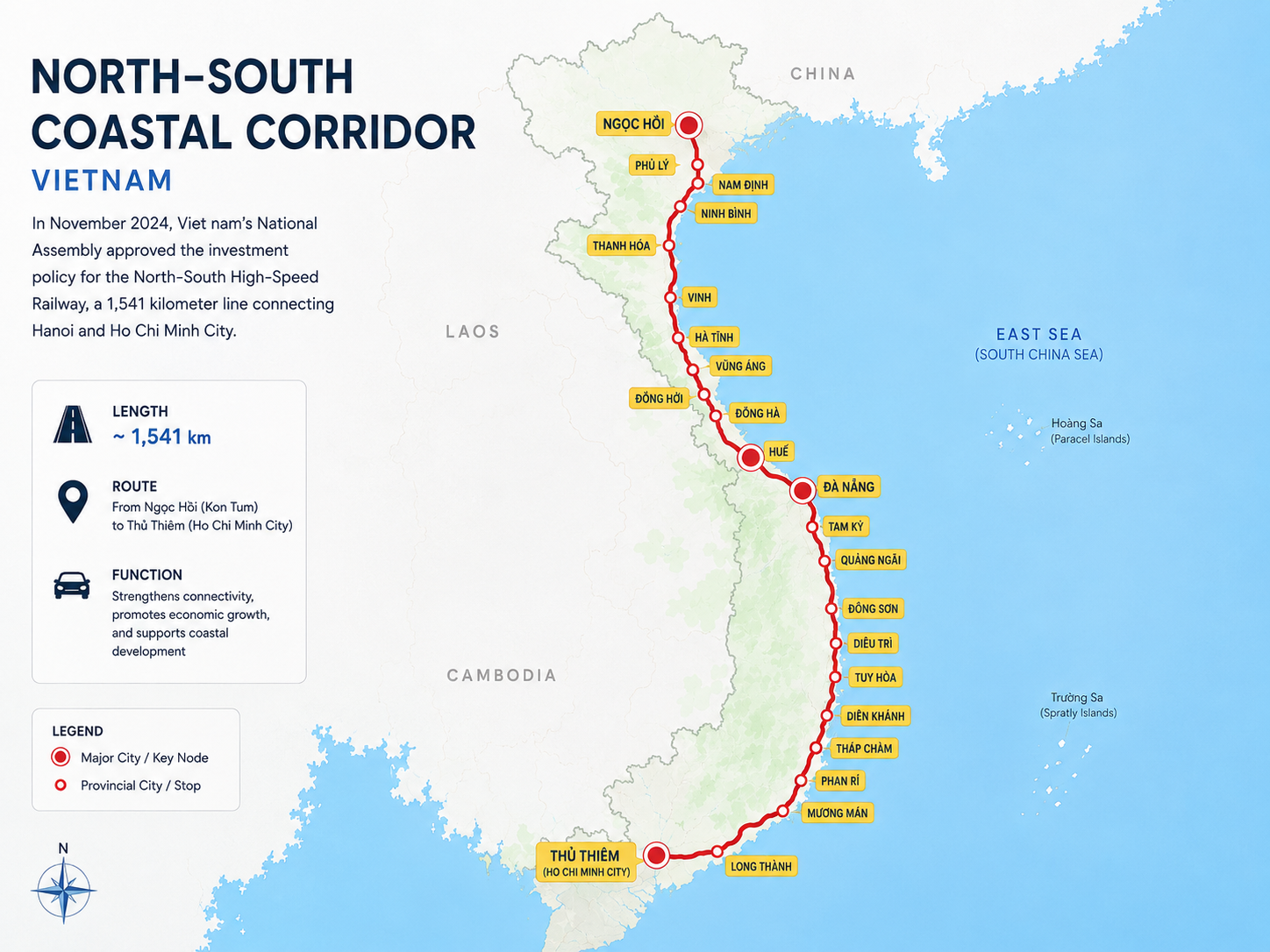
Designed for speeds of up to 350 km/h, the railway will pass through 20 provinces and centrally governed cities, linking Viet Nam’s two largest economic centres with a modern electrified rail network.
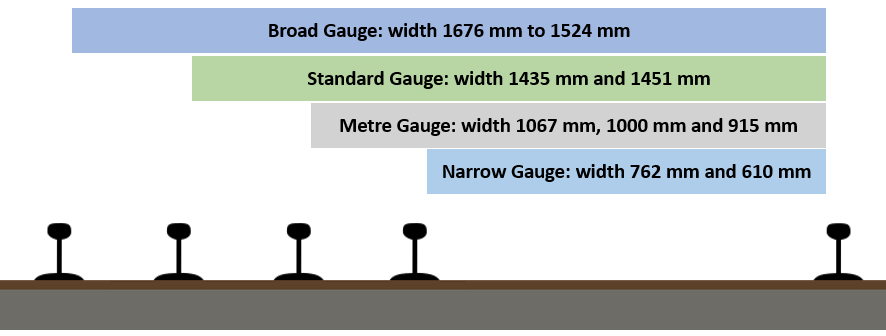
The line will run on a new dual track, standard 1,435mm gauge, separate from Viet Nam’s existing meter gauge network, with 23 passenger stations and five freight stations planned along the route.
The total estimated investment stands at 1.713 quadrillion Vietnamese dong, equivalent to approximately US$67.3 billion.
Just How Big Is US$67 Billion?
The project’s scale becomes even clearer when compared with other national figures.
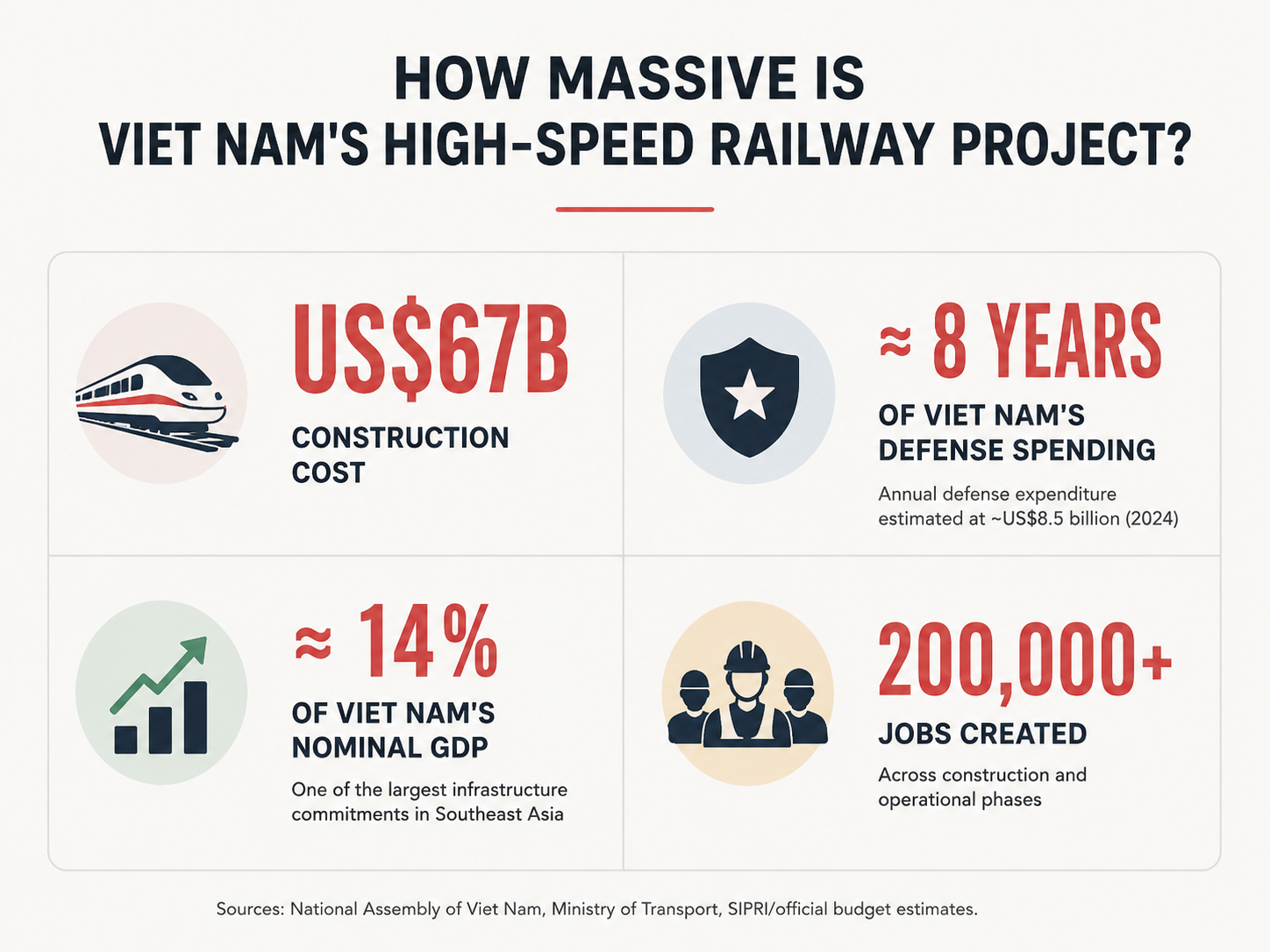
Viet Nam’s annual defense expenditure is estimated at around US$8.5 billion as of 2024, meaning the railway’s construction cost is equivalent to roughly 8 years of defense spending at current levels.
It also represents roughly 14% of Viet Nam’s nominal GDP, making it one of the largest infrastructure commitments ever undertaken by a Southeast Asian country.
The project is also expected to generate more than 200,000 jobs across its construction and operational phases, according to Viet Nam’s Ministry of Transport.
Why Build a New Railway?
Viet Nam already has a railway connecting Hanoi and Ho Chi Minh City.
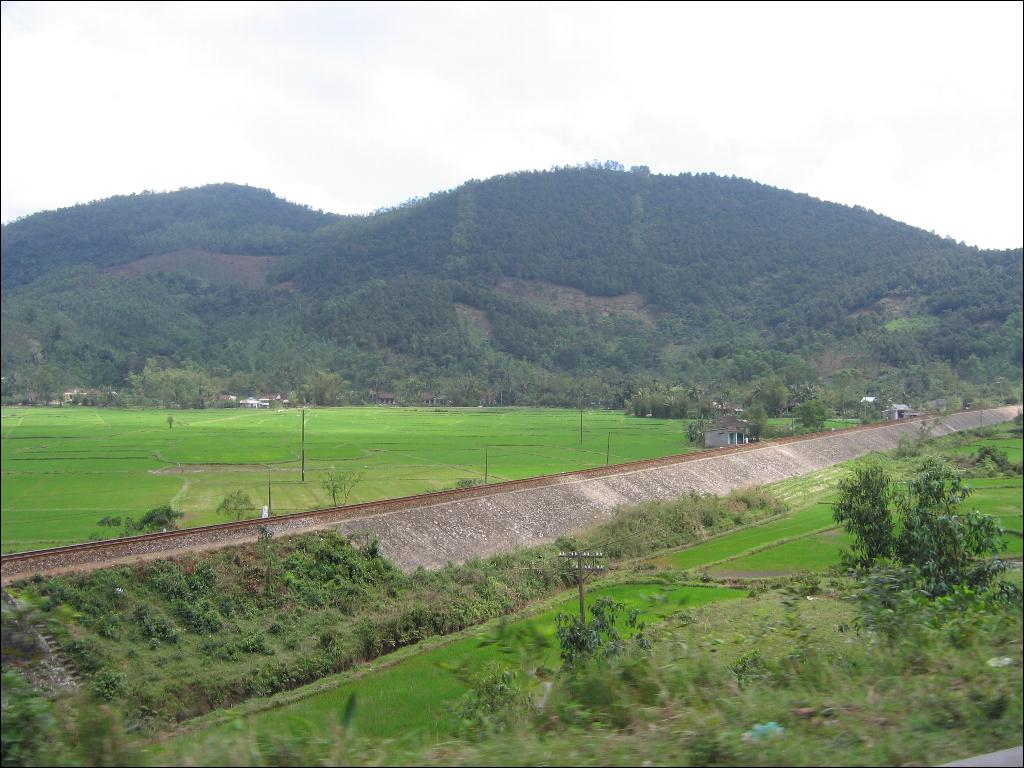
The problem is that much of today’s North-South Railway follows an alignment built during the French colonial period, with major sections completed in the 1930s. That existing line stretches roughly 1,729 kilometers, longer than the new high-speed route, since it winds through more terrain.
Although the line has been upgraded over the decades, its design limits both speed and capacity.
At the same time, Viet Nam’s economy has expanded dramatically. According to the World Bank, the country’s nominal GDP grew from about US$31 billion in 2000 to nearly US$477 billion in 2024, while demand for passenger transport has continued to rise.
The Ministry of Transport projects that by 2050, the north-south corridor will face unmet passenger demand of over 122 million trips a year. Rather than continuing to upgrade a century old railway, Viet Nam has chosen to build an entirely new high-speed line.
More Than Faster Trains
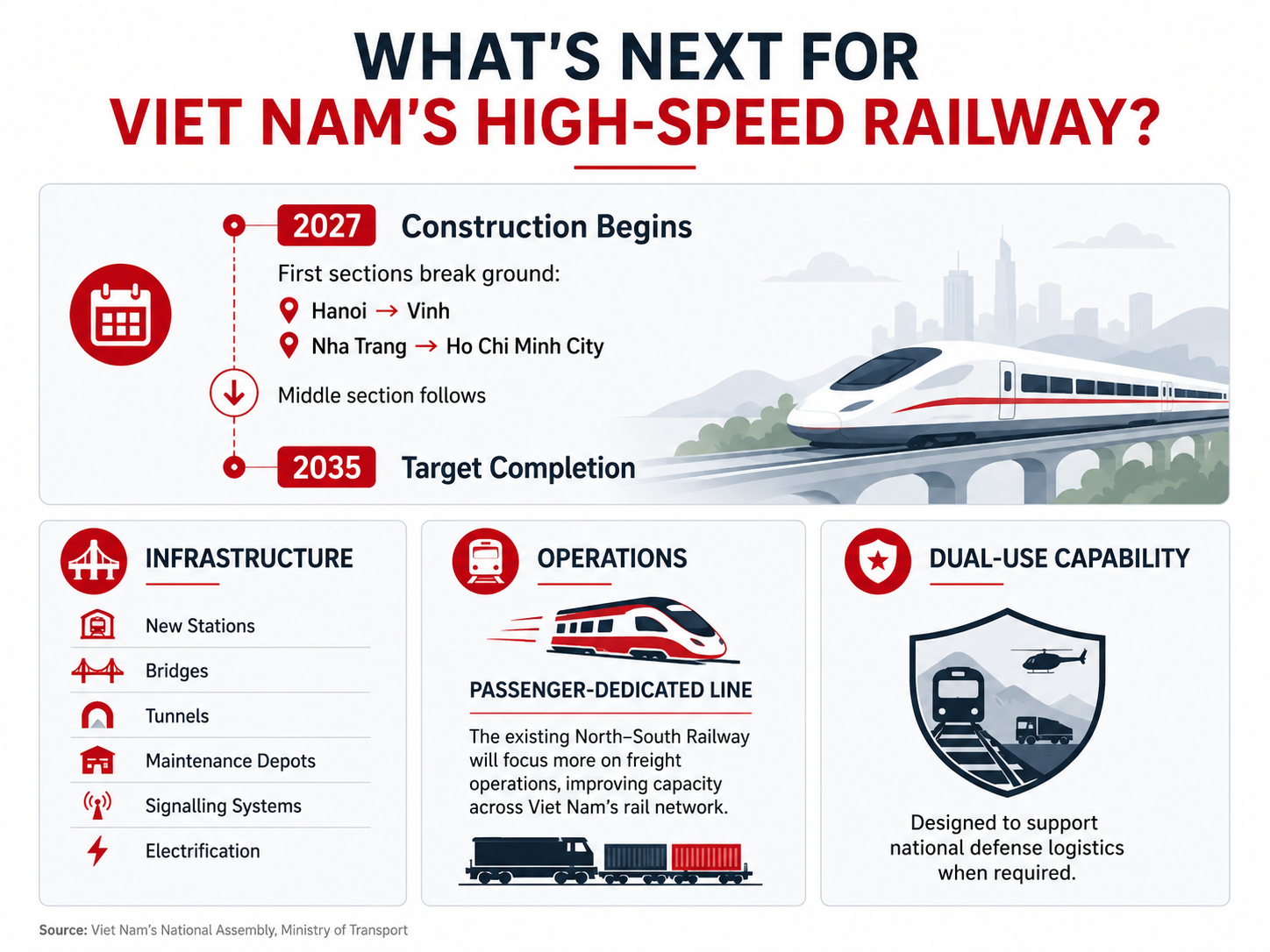
The project is expected to begin construction in 2027, with completion targeted by 2035. The first sections Hanoi to Vinh in the north, and Nha Trang to Ho Chi Minh City in the south are slated to break ground first, with the middle section following shortly after.
Beyond laying 1,541 kilometers of track, it will require entirely new stations, bridges, tunnels, maintenance depots, signalling systems, and electrification infrastructure.
The railway is designed primarily for passenger services, allowing the existing North-South Railway to focus more heavily on freight operations. Separating passenger and freight traffic is expected to improve capacity across Viet Nam’s rail network.
The new line is also built with dual use capability, allowing it to support national defense logistics when needed.
Viet Nam’s Biggest Infrastructure Bet
For Viet Nam, the North-South High-Speed Railway is more than a transportation project.
It is a long term investment intended to support a growing economy, connect the country’s two largest cities more efficiently, and modernise a rail corridor that has served Viet Nam for nearly a century.
At US$67.3 billion, no other infrastructure project in the country’s history has approached this scale. If completed on schedule, it will stand not only as Viet Nam’s first high-speed railway, but also as one of the most ambitious transport projects ever built in Southeast Asia.