Here's something most people never think about, when you scroll Instagram or send a WhatsApp messages to a friend overseas, that message almost certainly travels through a cable lying on the ocean floor, not a satellite.
Roughly 95% of the world's intercontinental internet traffic moves this way, because undersea cables are simply cheaper, faster, and more stable than anything in space.
You're Reading This Thanks to Cables Under the Sea
Southeast Asia sits right in the middle of this hidden web. As of 2025, there are 597 active or under construction submarine cable systems worldwide, linking 1,712 landing points.
A huge chunk of that network passes straight through this region. Singapore alone hosts 17 active cable systems across eight cable stations, with a combined bandwidth capacity of over 410 Tbit/s, enough to move unimaginable amounts of data every second.
Indonesia isn't far behind, its waters hold more than 55,000 kilometers of submarine cable within its exclusive economic zone. 115,000 kilometers nationwide, according to Indonesia's Ministry of Communication and Informatics.
Four official landing stations anchor this network, Batam, Manado, Jayapura, and Kupang.
Why Malacca Matters
Picture the Strait of Malacca as a narrow shortcut between the Indian and Pacific Oceans.
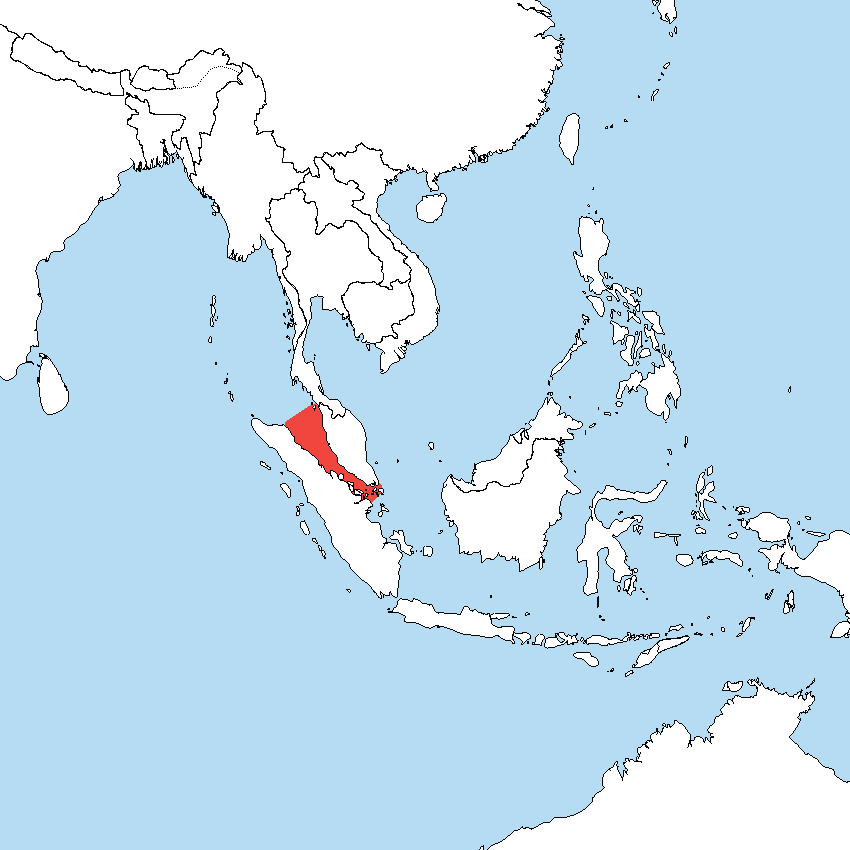
The fastest, most economical route for ships moving between the two. Between 80,000 and 90,000 vessels pass through it every single year, based on data from the Carnegie Endowment for International Peace.
Major global cable systems run right alongside all that traffic, including SEA-ME-WE 5, a nearly 20,000 kilometer cable connecting Singapore all the way to France, capable of carrying 36.6 Tbit/s and SEA-ME-WE 4, which links Singapore, Malaysia, Thailand, India, Pakistan, and parts of the Middle East and Europe.
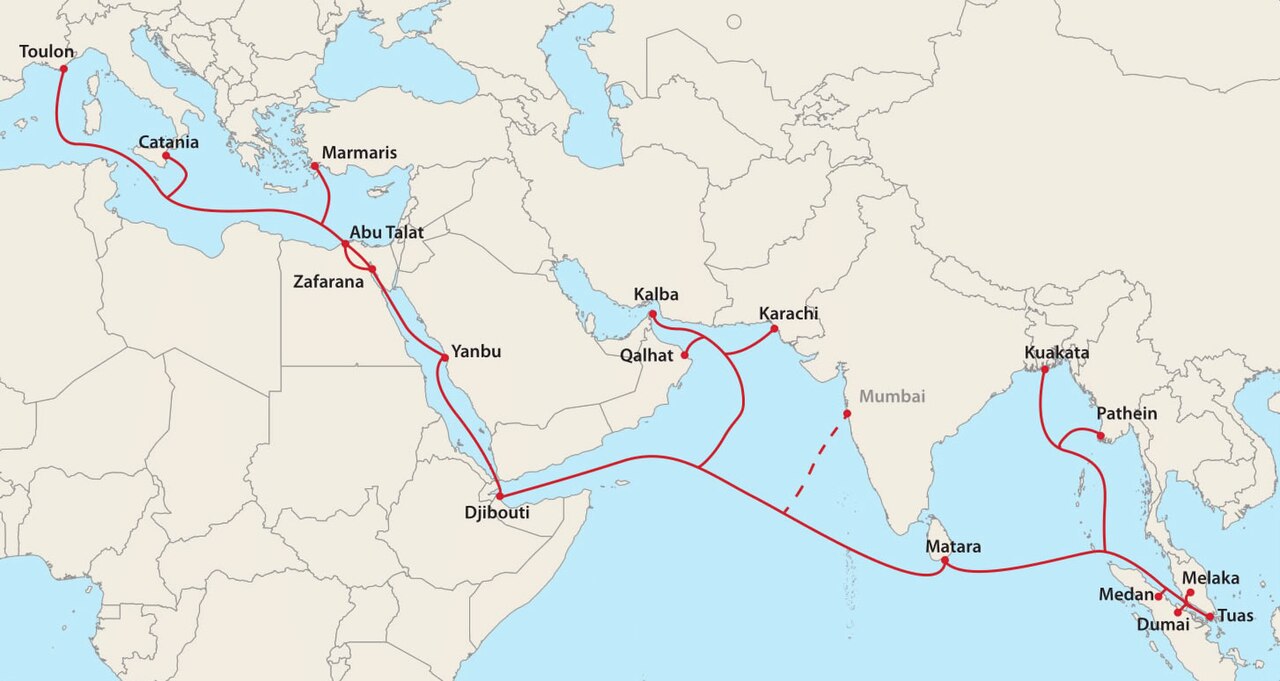
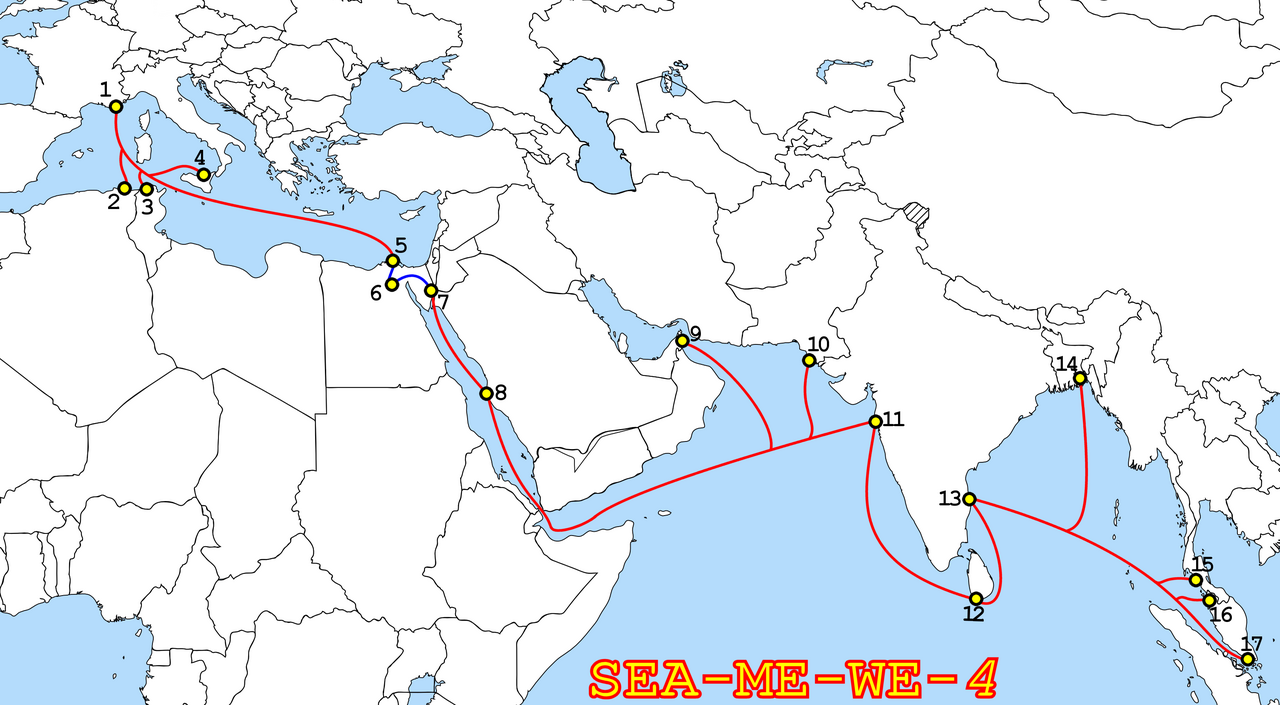
That much ship traffic, packed into a narrow strait, comes with a catch. Many cables laid in the early 2000s sit buried just one meter below the seabed or less, leaving them dangerously exposed to dragging ship anchors and fishing gear.
When Things Go Wrong
In April 2024, SEA-ME-WE 5 was damaged in Indonesian waters inside the Malacca Strait.
What should've been a 3 day repair turned into several weeks, slowed down by regulatory red tape including Indonesia's cabotage policy. Bangladesh felt it directly, forced to lean on its only backup connection, SEA-ME-WE 4, plus land based fiber routed through India.
Go back further, to December 2006.
Two 7 magnitude earthquakes off Taiwan triggered underwater sediment flows that snapped more than twenty cable segments across eight systems in the Luzon Strait.
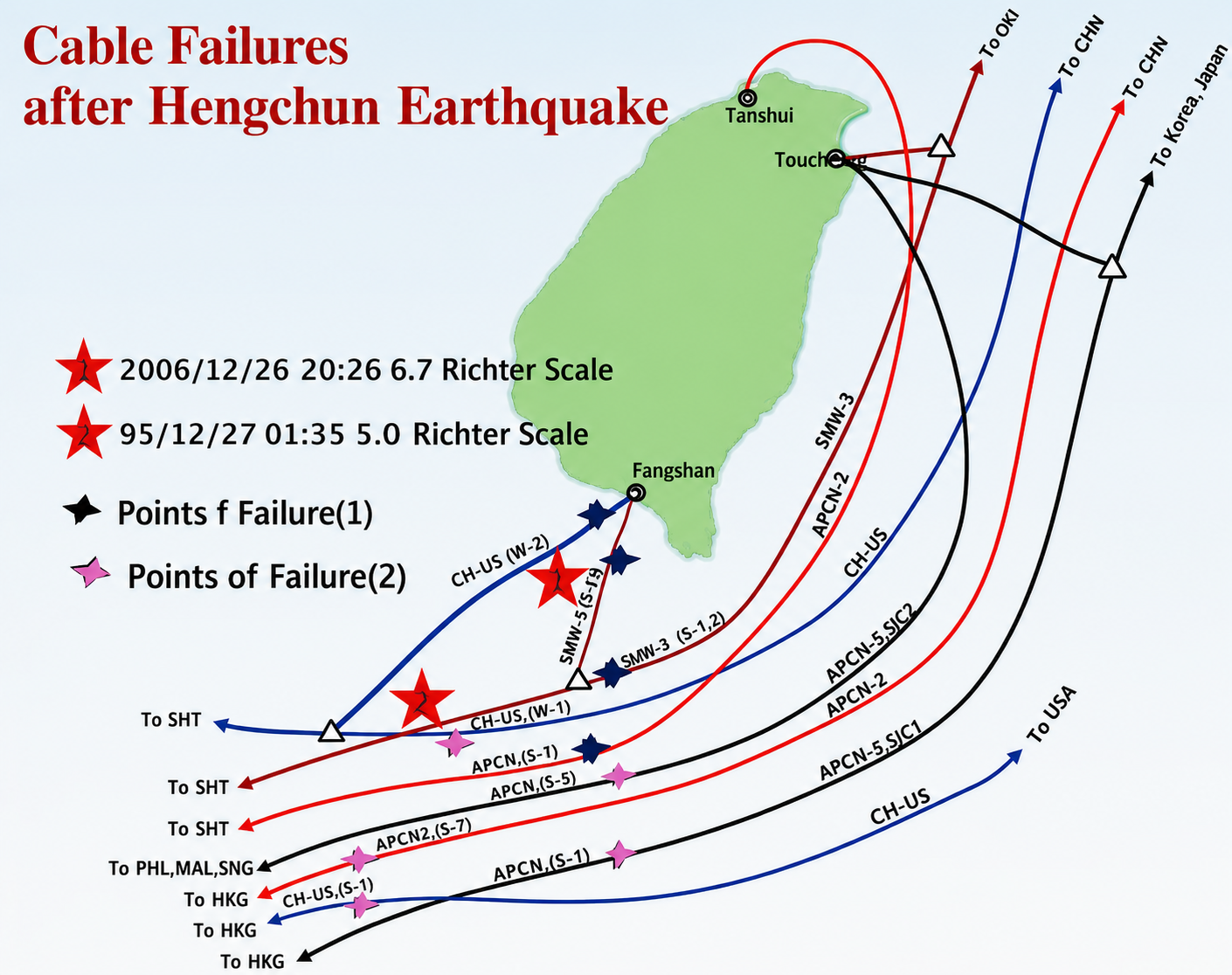
Malaysia, Singapore, and Thailand all felt the communication blackout, and the backup cables that absorbed the rerouted traffic got clogged too.
Building Resilience
These cascading disruptions from the Malacca Strait to the Luzon Strait lay bare the fragile intersection of geopolitical bureaucracy, nature, and global digital infrastructure.
Recognizing these high stakes vulnerabilities, regional hubs have begun tightening their maritime policies to safeguard connectivity. Singapore's IMDA enforces no anchor zones in the Malacca and Singapore Straits.
Requires cables to be buried, keeps minimum spacing rules between cables and other marine activity, and demands immediate damage reporting with faster repair permits.
Indonesia regulates cable and pipeline placement through Ministerial Decree (Kepmen KP) 14/2021.
Malaysia brought back a cabotage exemption in June 2024 so foreign repair ships can fix domestic cables faster, a move pushed by tech companies needing quicker turnarounds.