


On September 5, 1987, the Burmese government withdrew three banknote denominations from circulation without offering a single cent in compensation. Overnight, around 80 percent of the country's cash in circulation became worthless.
The reason was neither inflation nor a monetary crisis, but the personal belief of Burma's sole ruler, Ne Win, in the power of the number nine.
Ne Win had ruled Burma as its sole leader since the 1962 coup through the Burma Socialist Programme Party (BSPP). The decision to invalidate his own people's money was not an isolated act driven by economic calculation, but one episode in a long pattern of state policies shaped by numerology and astrology.
A Pattern Dating Back to 1970
Seventeen years before the demonetization, Ne Win had already made a major state decision based on similar beliefs. In December 1970, he ordered Burma to switch from left-hand to right-hand traffic, reportedly following the advice of an astrologer who claimed the country had become politically "too far to the left."
Many believe Ne Win misinterpreted the advice, which was actually intended to encourage him to abandon socialism rather than change the direction of traffic.
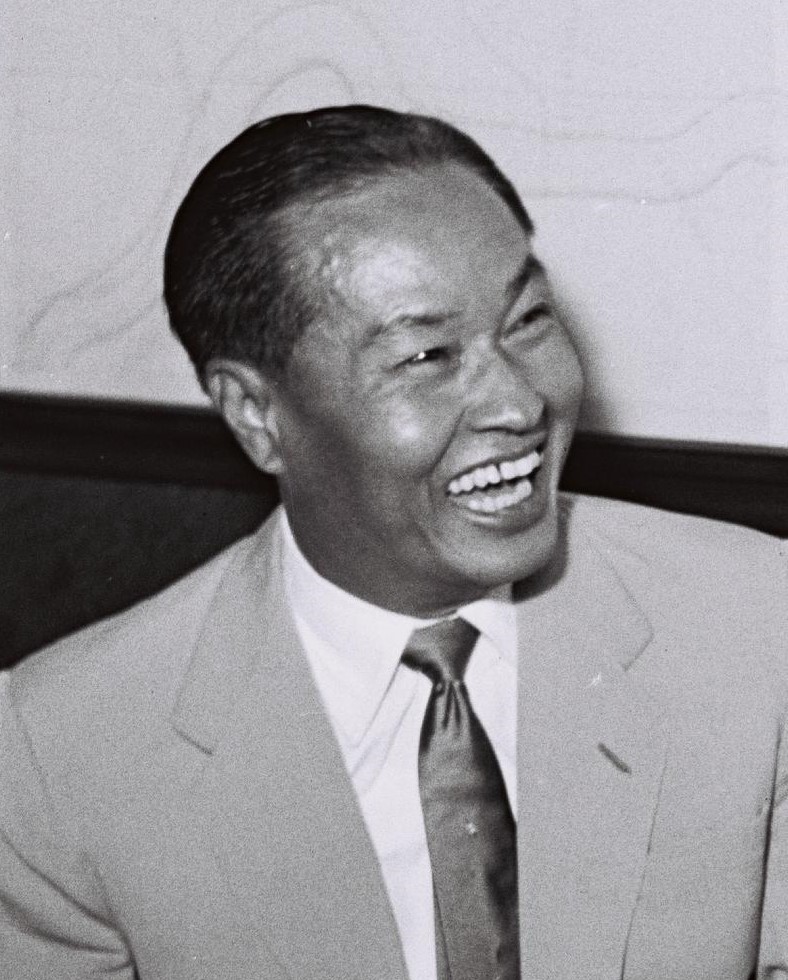
According to a study by I.A. Zaitsev (2024) published in the journal Asia and Africa Today, practices such as astrology, numerology, and protective rituals known as yadaya became an integral part of how Myanmar's military elite made decisions.
These practices are rooted in the Buddhist concept of karmic legitimacy and continued long after Ne Win's era.
Not the First Attempt
This habit of making state decisions based on personal beliefs had already extended to a far more sensitive matter, the public's money itself, two years before the better-known events of 1987.
On November 3, 1985, state radio and newspapers suddenly announced that the 20-, 50-, and 100-kyat banknotes would cease to be legal tender effective immediately, without any prior warning.
Citizens were given a short period to exchange the old banknotes at banks, but only 25 percent of the value they deposited was reimbursed in new currency. The remaining 75 percent simply disappeared.
A week later, on November 10, 1985, the government introduced three replacement denominations that were highly unusual by international standards: 25, 35, and 75 kyat. Many believe the 75-kyat banknote was issued specifically to commemorate Ne Win's 75th birthday.
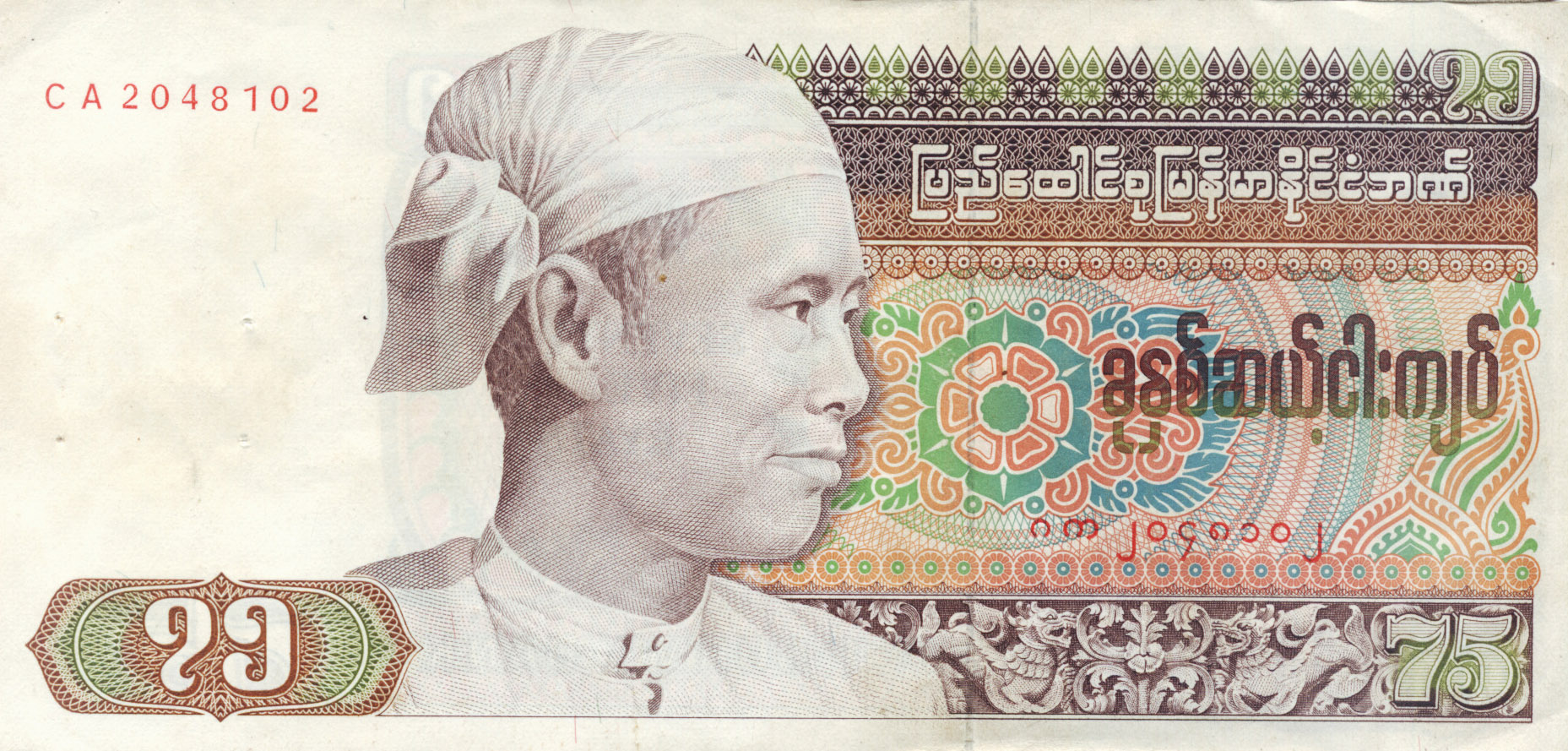
These banknotes, including those introduced to celebrate the ruler's own birthday, proved to be short-lived. Less than two years later, the government withdrew them as well, this time in a far harsher manner than it had in 1985.
The People's Money for the Sake of the Number Nine
On September 5, 1987, Sein Lwin, Secretary of the Revolutionary Council, announced over the radio that the 25-, 35-, and 75-kyat banknotes, which had been in circulation for only two years, would cease to be legal tender effective immediately.
Unlike the 1985 demonetization, however, the government offered no exchange scheme whatsoever. There was no compensation, no grace period to exchange the old banknotes at banks. They instantly became worthless pieces of paper.
Since most Burmese kept their savings in cash at home rather than in state banks, which they had already lost trust in after the 1985 demonetization, the impact was devastating. Around 80 percent of the country's money in circulation disappeared overnight.
To replace the invalidated banknotes, the government introduced new 45- and 90-kyat denominations, both divisible by nine, with digits that also add up to nine (4+5=9).
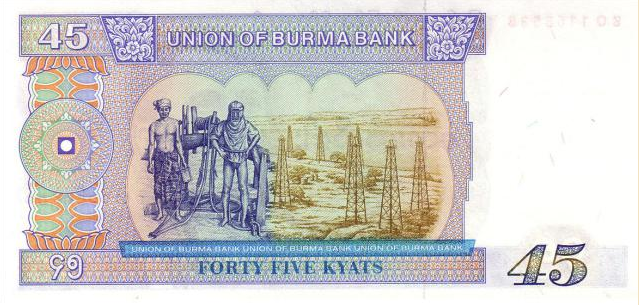
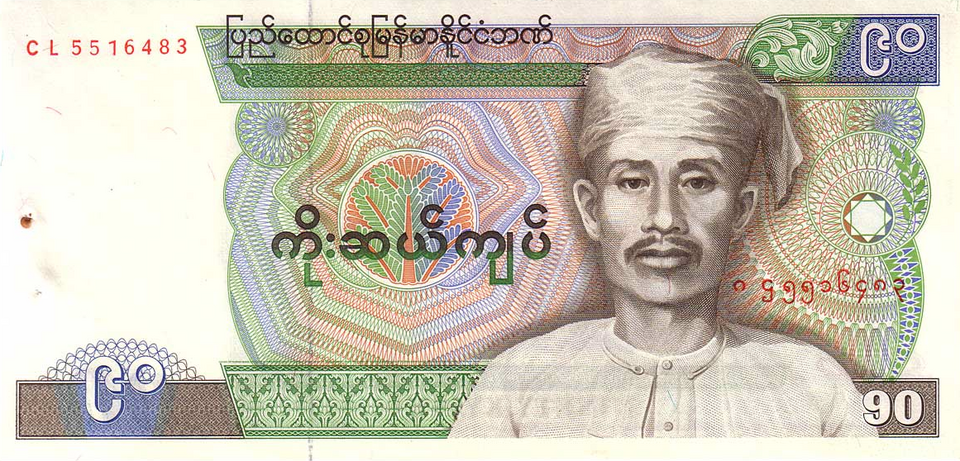
Nine was Ne Win's personal lucky number. He reportedly believed it would help him live to the age of 90. He eventually died in 2002 at the age of 92.
Ironically, just two months before the demonetization, the same government had applied to the United Nations for Least Developed Country status because Burma's economy was already on the brink of collapse.
The UN approved the request on July 8, 1987, less than two months before that same government invalidated 80 percent of its own country's money supply in the name of the number nine.
From Rangoon University to Nationwide Protests
The effects were felt immediately on university campuses. Many students at Rangoon University suddenly lost their savings and could no longer afford to pay their tuition fees.
The first demonstrations broke out there in September 1987. Although relatively small, they foreshadowed a much broader wave of public anger.
That anger continued to build throughout 1988. After security forces opened fire on student protesters during demonstrations in March and June, Ne Win resigned as chairman of the BSPP on July 23, 1988, claiming indirect responsibility for the violence.
His successor was Sein Lwin, the same official who had signed the demonetization order the previous year. Rather than calming the situation, his appointment sparked an even larger wave of protests.
A Date Chosen for Its Numerological Significance
The movement reached its peak on August 8, 1988. On August 1, the All Burma Students' Democratic League publicly called for a nationwide general strike to take place on that date.
The date was deliberately chosen because the combination of four eights, 8/8/88, was considered auspicious in Burmese Buddhist tradition and was known as the Four Eights. The call culminated in the mass demonstrations that later became known as the 8888 Uprising.
Millions of students, Buddhist monks, civil servants, and ordinary citizens took to the streets to protest military rule.
The military violently suppressed the demonstrations between August 8 and 12, 1988. Although the uprising was crushed, it marked the beginning of the collapse of the one-party system that had ruled Burma since 1962.


