Did you know that the oldest Chinatown in the world is actually located in the Philippines?
This title belongs to Binondo. It is a bustling district in Manila. The Spanish colonial government established this area in 1594 during the early years of their rule over the islands.
The 9th Governor-General of the Philippines was Luis Pérez Dasmariñas. He built the settlement to keep a close eye on Chinese immigrants. The colonial authorities only allowed immigrants who converted to Catholicism to live there.
However, the strong social clan networks of the Chinese migrants turned the isolated site into a commercial area built on a uniquely strategic piece of land.
Tight Shophouses on Flood-Proof Hills
The name Binondo comes from the ancient Tagalog word binundok. The term literally means hilly or mountainous. The name directly describes the original landscape of the area centuries ago.
The original settlement sat on a small hill. High ground naturally protected merchants from Manila's seasonal floods.
Early traders chose an elevated area to keep valuable trading stock safe. Geographic advantages secured long-term business survival for the community.
Today the dense district covers less than one square kilometer of land. Busy neighborhoods like Tondo, Santa Cruz, and San Nicolas tightly enclose the borders. Central positioning makes Binondo a natural crossroads for the entire city.
Many people move through a tiny pocket of Manila every single day. Extreme lack of space forced the district to grow vertically. Decades-old shophouses stand packed shoulder-to-shoulder along every narrow street.
Taoist Altars Facing Catholic Spires

Binondo presents a unique visual contrast. Visitors will not find a similar atmosphere in any other Chinatown.
An ancient Catholic church stands just a short walk away from a traditional Taoist offering altar. The absolute heart of a spiritual mix is the Minor Basilica of Saint Lorenzo Ruiz.
Stone walls of an old basilica show a rare blend of two completely different worlds. Architects modeled the building after Chinese pagodas while keeping the core layout of a European church. Unique design choices give the neighborhood a deeply historical atmosphere.
The church holds great historical value as the birthplace of Saint Lorenzo Ruiz. He was the first Filipino saint. Local communities have practiced rituals from both religions simultaneously for centuries. Dual faith remains a completely natural part of daily life for residents.
Deep cultural tolerance is the exact reason why Binondo has kept an authentic identity alive. The younger generation proudly continues daily ancestral customs with great respect. Living history remains the main reason why travelers from all over the world fall in love with the district.
Museum Dioramas Behind Bustling Market Aisles
Travelers who want a quick look into a storied past can visit the Chinatown Museum. It is located inside the Lucky Chinatown Mall.
There are space charts that shows Chinatown timeline from a muddy swamp to a financial powerhouse. Interactive displays feature life-sized replicas of 19th-century Chinese-Filipino shophouses.
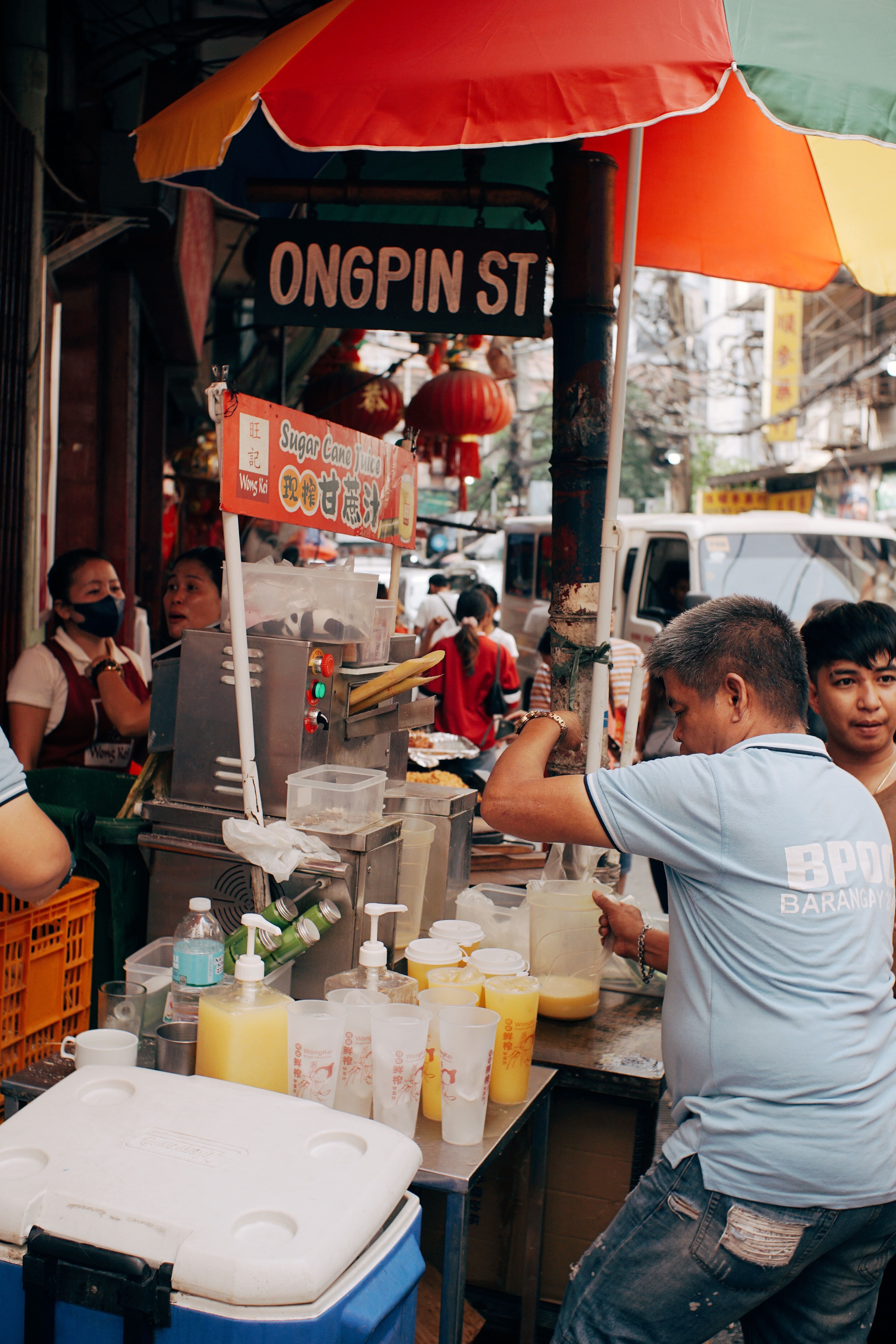
Right outside museum doors, the vibrant street market energy hits onlookers along Ongpin Street.
Many street food stalls line the narrow paths next to traditional vendors under colorful awnings. Rows of local merchants squeeze green sugarcane stalks through pressing machines to sell freshly squeezed juice to thirsty passersby.
Original founding families still run most food spots and traditional stands in the area. Owners keep old culinary recipes strictly hidden within the clan to preserve an original taste. A mix of rich history at the museum and authentic flavors on the plate keeps street life incredibly vibrant.