The fishing cat (Prionailurus viverrinus) is a unique predator inhabiting the wetlands of South and Southeast Asia. The wild cat spends almost its entire life cycle around swamp and river ecosystems.
Living in an aquatic environment demands highly specific bodily adaptations. Their anatomy has evolved to support hunting activities inside the water.
Physical Adaptations of a Skilled Swimmer
Fishing cats possess partially webbed toes. This foot structure expands like natural oars to propel the body efficiently through water. Conversely, regular cats have separate toes designed specifically for climbing or hunting on dry land.
The underside of their paws features exceptionally thick pads. This physical trait provides extra strong grip to prevent the wild animal from slipping while walking in swampy areas. The combination of webbing and thick pads serves as the main key to their agility on slippery terrain.
Their base coat color is dominated by a dull olive-grey to brownish-grey tint. The entire body surface is covered with a pattern of black oval spots arranged longitudinally. This color pattern helps them blend with dense vegetation and water shadows when stalking prey from the edges.
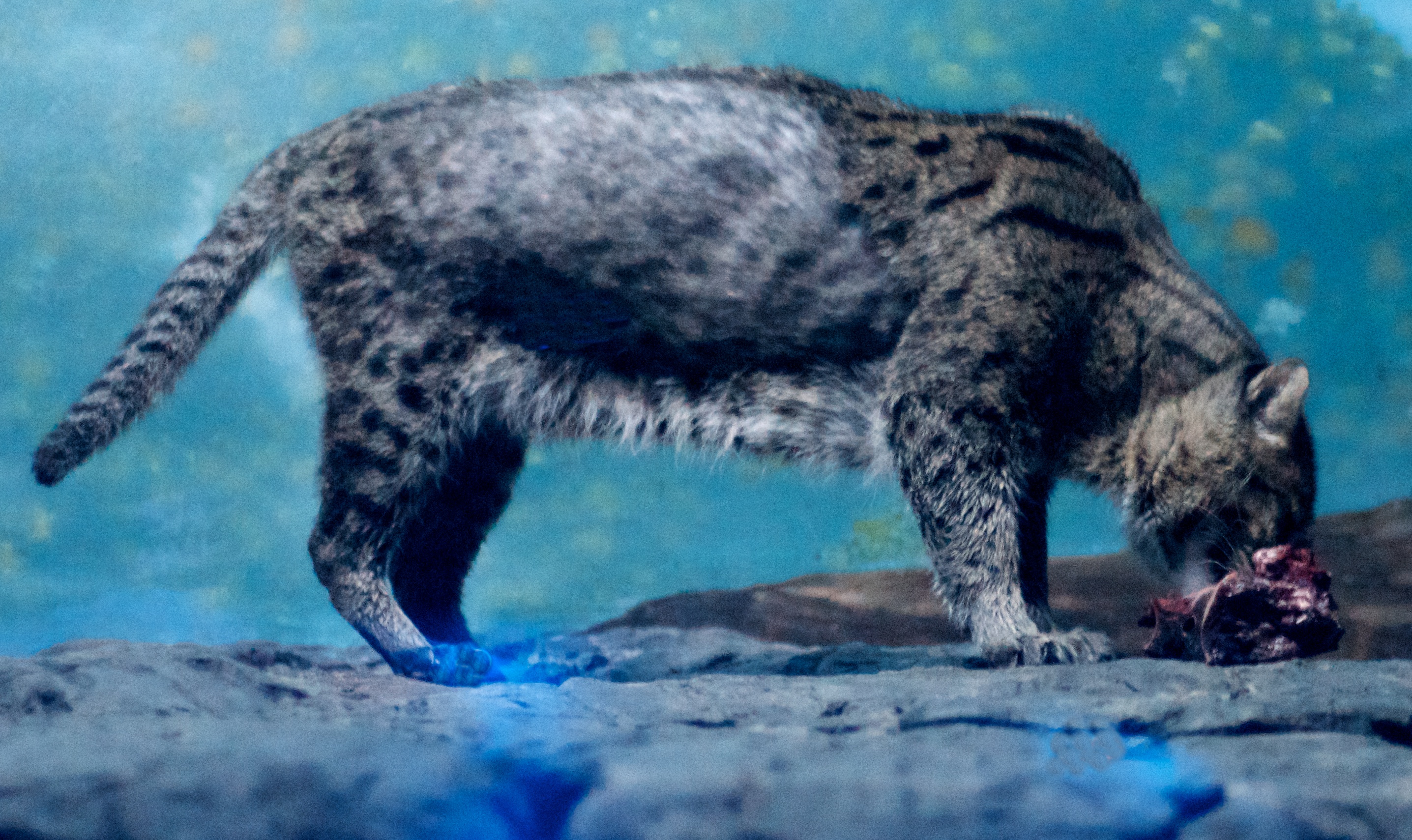
Their fur is double-layered. A dense undercoat prevents water from directly touching the skin when they dive. The outer coat acts as an additional protective barrier that dries quickly.
Their tails tend to be shorter than those of other wild cats. This body part functions as an automatic rudder when turning in water. A slightly elongated head shape helps them cut through water currents with ease.
The body size of a fishing cat is twice as large as an ordinary domestic cat. Their body length from head to the tip of the tail can reach around 80 centimeters. A stocky posture provides extra strength to fight against strong water currents.
Adult male cats can reach a weight of around a dozen kilograms. Short and sturdy limbs strengthen their footing on slippery areas. This physical structure distinguishes them strikingly from other types of wild cats.
Hunting Strategies in the Wetlands
The primary prey of the wild cat consists of freshwater fish. They frequently wait quietly by the edges of rivers or swamps.
Fishing cats occasionally tap the water surface gently using their paws. The foot movement mimics the flapping of insects to lure fish closer. When the fish is off guard, an accurate strike is instantly unleashed toward the water.
Their diving ability is highly remarkable. Fishing cats can strike targets down to the bottom of shallow waters. The sensitive whiskers of the animal function to detect prey movement in murky water.
Wetlands in the Southeast Asian region provide an abundant food supply. The balance of the swamp ecosystem heavily influences their survival. The availability of fresh fish in the wild remains the main determinant of the food chain.
Aside from targeting fish, fishing cats also occasionally hunt birds and mice on dry land around the water to fulfill their feeding needs.
Real Threats Behind Habitat Depletion
Land conversion stands as the greatest challenge to fishing cat conservation. Many swamps have now transformed into shrimp ponds and dense settlements.
Their population in the wild continues to experience a significant decline. The International Union for Conservation of Nature or IUCN has placed the species on the Red List under the vulnerable category. The fragmentation of mangrove forests leaves groups of cats isolated from one another.
The global conservation organization notes that the population decline is triggered by the destruction of aquatic ecosystems. The downward trend is expected to continue if environmental damage is not immediately halted. The room for wild animals to move outside protected areas narrows from year to year.